Gutscheinbedingungen

**Gültig bis 14.09.2026 auf Spielzeug, Schreibwaren, Filme, Geschenke & Trends, Musik, tolino eReader & Zubehör, Hörbücher, nicht preisgebundene Bücher und Kalender in der Thalia App. Einzelne Artikel können ausgeschlossen sein. Aufgrund der Buchpreisbindung sind deutschsprachige Bücher und eBooks ausgenommen. Zusätzlich ausgenommen sind Abos & Flatrates, Games, Geschenkkarten/-boxen, Shelfies, Software, Zeitschriften sowie einzelne Artikel von tonies®. Pro Einkauf einmal einlösbar. Nur gültig mit im Onlineshop hinterlegter Bonuscard. Click & Collect nur bei Onlinevorabzahlung möglich. Keine Barauszahlung. Nicht kombinierbar mit anderen Aktionen und Gutscheinen. Gutschein wird auf max. 500€ Bestellwert angerechnet. Nicht gültig für Versandkosten und Services.

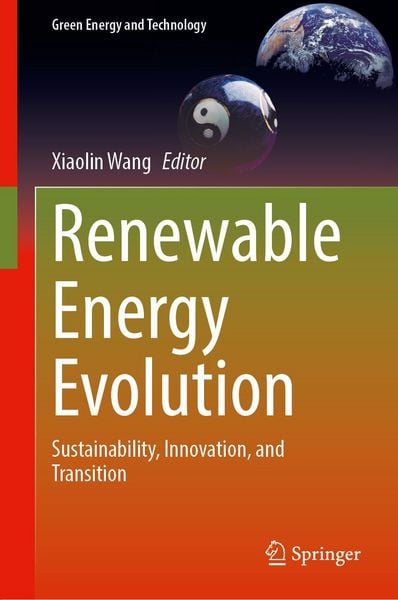
Produktbild: Renewable Energy Evolution
Vorbesteller Neu

Renewable Energy Evolution Sustainability, Innovation, and Transition

163,99 €

inkl. gesetzl. MwSt., Versandkostenfrei


Beschreibung

Produktdetails

Einband

Gebundene Ausgabe

Erscheinungsdatum

28.10.2026

Abbildungen

IV, 534 p. 169 illus., 139 illus. in color.

Herausgeber

Xiaolin Wang

Verlag

Springer

Seitenzahl

534

Maße (L/B)

23,5/15,5 cm

Sprache

Englisch

ISBN

978-3-032-31630-1

Beschreibung

Portrait

Xiaolin Wang, Ph.D. , is a Professor in the School of Engineering, University of Tasmania. He worked as a Research Fellow in the Department of Mechanical Engineering at the National University of Singapore from 2002 to 2005. In 2003, he was a visiting scientist at the University of Siegen, Germany, funded by DAAD. In 2005, Prof. Wang joined the School of Mechanical and Chemical Engineering at the University of Western Australia. In 2012, he joined the School of Engineering at the University of Tasmania, where he is now a Professor and Deputy Director of the Centre for Renewable Energy and Power Systems. His research interests include cooling and power engineering, energy storage and conversion, desalination, and utilization of renewable energy. Prof. Wang is a Fellow of Engineers Australia and was named a National Field Leader in Thermal Sciences by The Australian’s Research Magazine in 2018 and 2026. He is listed among the Stanford/Elsevier Top 2% Scientists since 2021. His national and international reputation in thermal science is evidenced by his achievements and awards, including the DAAD visiting fellowship by DAAD Germany in 2003 and the Ludwig Mond Prize 2005 by the Institute of Mechanical Engineers (IMechE), the Australian China Young Scientist Exchange Program award in 2009, and the Australian Japan Emerging Research Leader Program award in 2016 from the Australia Academy of Technological Sciences and Engineering (ATSE). He received the Dean’s Award for outstanding research performance in 2016 and the College Research Excellence Award in 2023 at the University of Tasmania, as well as the Editor’s Choice Award from Applied Thermal Engineering in 2024. Prof. Wang is a subject editor of Applied Thermal Engineering , an Associate Editor of the  IMechE, Part E: Journal of Process Mechanical Engineering ; Scientific Reports  and Frontiers in Built Environment , and a guest editor of  Applied Sciences , Energies , Sustainability , and Thermo . He has completed many national/international research projects totaling approximately $8.5 million. He is also a member of the Blue Economic CRC ($329 million). To date, he has published more than 330 journal and conference papers. 

Produktdetails

Einband

Gebundene Ausgabe

Erscheinungsdatum

28.10.2026

Abbildungen

IV, 534 p. 169 illus., 139 illus. in color.

Herausgeber

Xiaolin Wang

Verlag

Springer

Seitenzahl

534

Maße (L/B)

23,5/15,5 cm

Sprache

Englisch

ISBN

978-3-032-31630-1

Herstelleradresse

Libri GmbH
Europaallee 1
36244 Bad Hersfeld
DE

Email: gpsr@libri.de

Noch keine Bewertungen vorhanden

Verfassen Sie die erste Bewertung zu diesem Artikel

Helfen Sie anderen Kundinnen und Kunden durch Ihre Meinung.

Kundinnen und Kunden meinen

Bewertungen (0)

  • Produktbild: Renewable Energy Evolution
  • Advanced Renewable Energy Technologies for Sustainable Production.- Thermal Management and Energy Storage Optimization.- Sustainable Transportation Systems and Alternative Fuels.- Smart Grid Technologies and Power Quality Control.- AI-Driven Optimization and Sustainable Energy Planning.