Beschreibung
Produktdetails
Format
ePUB
Kopierschutz
Nein
Family Sharing
Nein
Text-to-Speech
Ja
Erscheinungsdatum
19.02.2027
Herausgeber
Chris Anderton + weitereVerlag
Intellect BooksSeitenzahl
568 (Printausgabe)
Sprache
Englisch
EAN
9781835954249
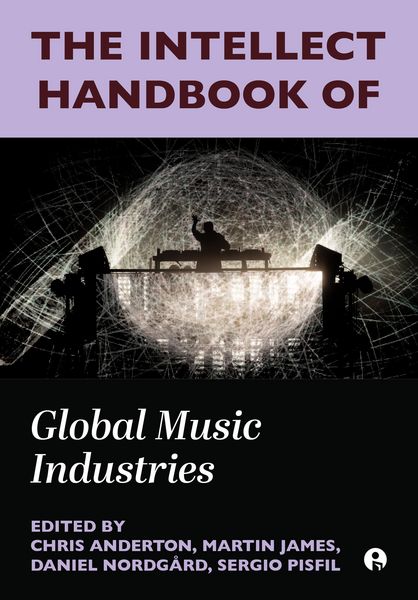
The Handbook of Global Music Industries offers an ambitious and timely account of the contemporary music industries as a dynamic, globally interconnected field shaped by technological transformation, shifting labour conditions, platform economies, cultural policy, and changing forms of musical production and circulation. Bringing together an international group of established and emerging scholars, the collection provides a wide-ranging exploration of the structures, practices, and debates that increasingly define music industries research in the twenty-first century.
The contributing authors address multiple dimensions of the music industries, including artists and managers, recording and publishing, streaming and playlist cultures, live music ecologies, copyright and geopolitics, digital technologies such as artificial intelligence, and the lived realities of creative labour. Particular attention is given to the infrastructures, intermediaries, and power relations that organise contemporary music markets.
Recurring themes include precarity and entrepreneurship, multinational label hierarchies, platform governance, copyright reform, export strategies, discrimination, mental health, and post-pandemic recovery. By combining structural analysis with grounded empirical research, the collection offers a globally situated account of how platform logics and enduring inequalities continue to shape contemporary music industries.
Distinguished by its genuinely global perspective, the handbook moves beyond narrowly Anglo-American frameworks to examine music industries as diverse, uneven, and contested cultural formations operating across multiple geographic, economic, and institutional contexts. Its scope reflects the growing recognition that the music industries can no longer be understood through singular models of production or distribution, but instead require sustained engagement with questions of globalisation, digital mediation, labour, infrastructure, governance, entrepreneurship, live performance, and cultural value.
The collection combines broad disciplinary reach with a strong awareness of emerging developments within the field. Across its chapters, it addresses the rapidly changing conditions of music production and circulation while also engaging critically with the wider economic and political forces shaping contemporary cultural work. Questions of inequality, platform power, precarity, access, and sustainability sit alongside discussions of innovation, participation, audience formation, and industrial transformation, producing a volume that is both analytically rigorous and responsive to contemporary debates.
Structured to support both specialist scholarship and interdisciplinary engagement, the handbook is designed to function simultaneously as a major reference work, a teaching resource, and a framework for future research. Its thematic range and international orientation make it especially relevant to scholars and students working across popular music studies, media and communication, cultural industries, sociology, cultural policy, creative labour, and global media studies.
At a moment when music industries worldwide are undergoing profound structural change, the handbook offers a substantial and intellectually expansive contribution to understanding how music circulates, generates value, organises labour, and shapes cultural life across different global contexts. The result is a collection that positions the study of global music industries not as a narrow subfield, but as a crucial site for examining wider transformations in culture, technology, economics, and power.
Noch keine Bewertungen vorhanden
Verfassen Sie die erste Bewertung zu diesem Artikel
Helfen Sie anderen Kundinnen und Kunden durch Ihre Meinung.
Kurze Frage zu unserer Seite
Vielen Dank für Ihr Feedback
Wir nutzen Ihr Feedback, um unsere Produktseiten zu verbessern. Bitte haben Sie Verständnis, dass wir Ihnen keine Rückmeldung geben können. Falls Sie Kontakt mit uns aufnehmen möchten, können Sie sich aber gerne an unseren Kund*innenservice wenden.
zum Kundenservice