Gutscheinbedingungen

**Gültig bis 06.07.2026 auf fremdsprachige Bücher online auf thalia.at, in der Thalia App ab einem Mindestbestellwert von 30€ und in allen Thalia Buchhandlungen in Österreich. In den Buchhandlungen nur gültig auf lagernde Ware. Einzelne Artikel können ausgeschlossen sein. Ausgenommen sind preisgebundene Artikel & eBooks. Pro Einkauf einmal einlösbar. Nur gültig gegen Vorlage oder im Onlineshop hinterlegter Bonuscard. Infos zur Einlösung in der Buchhandlung sind auf der Bonuscard-Vorteilspreisseite zu finden. Click & Collect nur bei Onlinevorabzahlung möglich. Keine Einlösung bei Scan & Go-Bezahlung. Keine Barauszahlung. Nicht kombinierbar mit anderen Aktionen und Gutscheinen. Gutschein wird auf max. 500€ Bestellwert angerechnet. Nicht gültig für Versandkosten und Services.

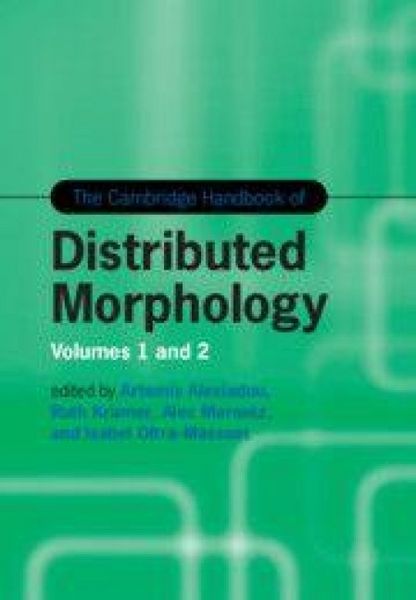
Produktbild: The Cambridge Handbook of Distributed Morphology 2 Volume Set Hardback
Vorbesteller Neu

The Cambridge Handbook of Distributed Morphology 2 Volume Set Hardback

432,99 €

inkl. gesetzl. MwSt., Versandkostenfrei


Beschreibung

Produktdetails

Einband

Gebundene Ausgabe

Erscheinungsdatum

31.12.2026

Herausgeber

Artemis Alexiadou + weitere

Verlag

Cambridge University Press

Sprache

Englisch

ISBN

978-1-00-920614-3

Beschreibung

Produktdetails

Einband

Gebundene Ausgabe

Erscheinungsdatum

31.12.2026

Herausgeber

Verlag

Cambridge University Press

Sprache

Englisch

ISBN

978-1-00-920614-3

Herstelleradresse

Libri GmbH
Europaallee 1
36244 Bad Hersfeld
DE

Email: gpsr@libri.de

Noch keine Bewertungen vorhanden

Verfassen Sie die erste Bewertung zu diesem Artikel

Helfen Sie anderen Kundinnen und Kunden durch Ihre Meinung.

Kundinnen und Kunden meinen

Bewertungen (0)

  • Produktbild: The Cambridge Handbook of Distributed Morphology 2 Volume Set Hardback
  • Volume I: Introduction to the handbook Artemis Alexiadou, Ruth Kramer, Alec Marantz and Isabel Oltra-Massuet; Part I. Distributed Morphology: Basics and Competing Theories: 1. Introduction to distributed morphology Ruth Kramer, Alec Marantz, Artemis Alexiadou and Isabel Oltra-Massuet; 2. Nanosyntax: some key features Pavel Caha; 3. The exoskeletal model Terje Lohndal; 4. Distributed morphology and paradigm function morphology Lindley Winchester; Part II. Core Components: 5 Morphotactics: an overview of positional constraints and repairs Karlos Arregi and Andrew Nevins; 6. Morphological variation in distributed morphology Antonio Fábregas; 7. Impoverishment Stefan Keine and Gereon Müller; 8. Morphological productivity Shiloh Drake; 9. Blocking Itamar Kastner; 10. Abstract morphemes and local contexts David Embick; 11. Adjacency and linearization in distributed morphology Richard Compton and Tom Leu; 12. Phases/cyclicity Anton Ingason; Part III. Morphology as Syntax:13. Case and agreement in distributed morphology Florian Schäfer and Elena Anagnostopoulou; 14. Argument structure in distributed morphology Artemis Alexiadou and Isabel Oltra-Massuet; 15. Movement Vera Gribanova and Boris Harizanov; 16. Nominal inflection in distributed morphology: a case study of Ingush Mark Norris; 17. Derivational morphology Martha McGinnis and Jim Wood; 18. Compounding Jeffrey Punske; 19. Verbal inflection in distributed morphology Bronwyn Bjorkman; Volume II: Introduction to the handbook Artemis Alexiadou, Ruth Kramer, Alec Marantz and Isabel Oltra-Massuet; 1. Introduction to distributed morphology: morphology after syntax and beyond Artemis Alexiadou, Ruth Kramer, Alec Marantz and Isabel Oltra-Massuet; Part I. Morphology after Syntax: Morphophonology: 2. Allomorphy and vocabulary insertion Maria Gouskova and Jonathan David Bobaljik; 3. Non-concatenative morphology Itamar Kastner and Matthew Tucker; 4. Multiple exponence Daniel Siddiqi and Isabelle Boyer; 5. Syncretism in distributed morphology Ruth Kramer; 6. Suppletion Beata Moskal; 7. Markedness in distributed morphology Philipp Weisser; 8. Phonological strata Heather Newell; 9. Suprasegmental phenomena Marjorie Pak; Part II. Morphology after Syntax: Morpho-semantics: 10. Contextual allosemy Alec Marantz and Neil Myler; 11. The Syntax-semantics interface in distributed morphology Marijke De Belder; 12. Feature semantics Daniel Harbour; 13. The interpretation of roots Elena Anagnostopoulou and Roumyana Pancheva; 14. Reprint of the no-agents idioms hypothesis Heidi Harley and Megan Stone; Part III. Distributed Morphology from a Wider Perspective: 15. Distributed morphology and minimalism Peter W Smith; 16. Distributed morphology and acquisition Jennifer Austin and Liliana Sánchez; 17. Distributed morphology and bilingualism: code-switching and mixed languages Luis López; 18. Distributed morphology and psycholinguistics Christopher M. Hammerly and Roland Pfau; 19. Distributed morphology and neurolinguistics Linnaea Stockall and Laura Gwilliams; 20. Distributed morphology and computational linguistics Thomas Graf; 21. Distributed morphology and historical linguistics Andrea Calabrese and Laura Grestenberger; 22. Distributed morphology and anthropology Jason D. Haugen.