KI-Beratung Beta

Gutscheinbedingungen

**Gültig am 20.11.2026 ab einem Mindestbestellwert von 30€ auf Spielzeug, Schreibwaren, Filme, Geschenke & Trends, Musik, tolino eReader & Zubehör, Hörbücher und Hörbuch-Downloads, nicht preisgebundene Bücher und Kalender online auf thalia.at und in der Thalia App. Einzelne Artikel können ausgeschlossen sein. Aufgrund der Buchpreisbindung sind deutschsprachige Bücher und eBooks ausgenommen. Zusätzlich ausgenommen sind Abos & Flatrates, Games, Geschenkkarten/-boxen, Shelfies, Software, Zeitschriften sowie einzelne Artikel von tonies®. Pro Einkauf einmal einlösbar. Click & Collect nur bei Onlinevorabzahlung möglich. Keine Barauszahlung. Nicht kombinierbar mit anderen Aktionen und Gutscheinen. Gutschein wird auf max. 500€ Bestellwert angerechnet. Nicht gültig für Versandkosten und Services. Preisgebundene Artikel sind vom Mindestbestellwert ausgeschlossen.

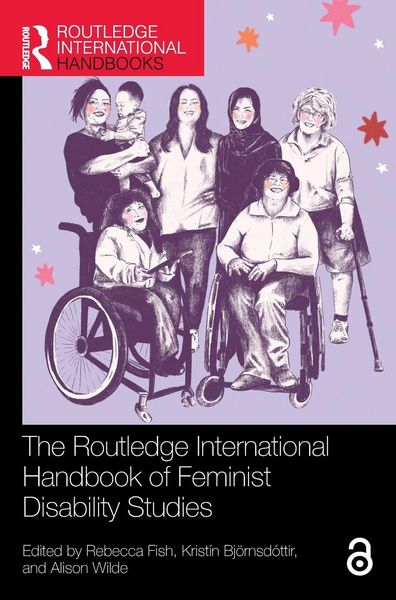
Produktbild: The Routledge International Handbook of Feminist Disability Studies
Neu

The Routledge International Handbook of Feminist Disability Studies

426,99 €

inkl. gesetzl. MwSt., Versandkostenfrei


Beschreibung

The Routledge International Handbook of Feminist Disability Studies captures how discussions about disability have progressed since the 1990s, as well as grappling with the new debates over bodies and autonomy that are dominating various media today.

Providing newly written chapters by scholars from both...

Beschreibung

The Routledge International Handbook of Feminist Disability Studies captures how discussions about disability have progressed since the 1990s, as well as grappling with the new debates over bodies and autonomy that are dominating various media today.

Providing newly written chapters by scholars from both the global north and the global south, this book offers a mix of experiential, creative, and progressive content, combined with theoretical and political commentaries, to provide an eclectic and holistic immersion in feminist disability scholarship. It covers topics as diverse as societal barriers; access to public spaces; neurodiversity, activism; hate crime, bullying and ridicule; media and cultural analyses and representations of disabled women; structural issues such as poverty, policy and their relation to care/autonomy; mothering, both in terms of access to reproductive care and the re-emergence of eugenics, and care ethics of mothering disabled people; and madness, personality disorder and the provocations of the medical model, in terms of the imperative for 'cure' or 'recovery'.

This collection will be of interest to all scholars and students of Disability Studies, feminism, social work, cultural studies, human geography media, media studies and sociology.

Portrait

Rebecca Fish is a Feminist Disability Studies scholar affiliated with the University of Lancashire and Lancaster University. Her research explores the intersections of gender, disability and institutional life, with particular attention to learning disabled women in secure settings. She examines questions of trauma, care and structural violence, and her work has shaped policy and practice in health and justice contexts. She has published widely on disability, gender and violence, drawing on ethnographic and qualitative approaches.

Kristín Björnsdóttir is Professor of Disability Studies in Education at the School of Education, University of Iceland. Her areas of expertise include critical gender and Disability Studies theories, which she has applied in her research on culture, school and social systems.

Alison Wilde is an Assistant Professor in Sociology and Criminology at Northumbria University. She has researched and written mainly on topics of screen media (film and TV), disability, gender and audiences, educational inclusion, parenting, gender, and social and health care. She co-founded the MeCCSA Disability Studies Network and the BSA's Disability Studies Group.

Produktdetails

Einband

Gebundene Ausgabe

Erscheinungsdatum

29.10.2026

Abbildungen

schwarz-weiss Illustrationen, Raster,schwarz-weiss, Zeichnungen, schwarz-weiss, Tabellen, schwarz-weiss

Herausgeber Rebecca Fish + weitere

Produktdetails

Einband

Gebundene Ausgabe

Erscheinungsdatum

29.10.2026

Abbildungen

schwarz-weiss Illustrationen, Raster,schwarz-weiss, Zeichnungen, schwarz-weiss, Tabellen, schwarz-weiss

Herausgeber
Verlag Taylor and Francis
Seitenzahl

560

Maße (L/B/H)

24,4/17/3,2 cm

Gewicht

1129 g

Sprache

Englisch

ISBN

978-1-03-241126-2

Herstelleradresse

Libri GmbH
Europaallee 1
36244 Bad Hersfeld
DE

Email: gpsr@libri.de

Noch keine Bewertungen vorhanden

Verfassen Sie die erste Bewertung zu diesem Artikel

Helfen Sie anderen Kundinnen und Kunden durch Ihre Meinung.

Kundinnen und Kunden meinen

Bewertungen (0)

Weitere Artikel finden Sie in

  • Produktbild: The Routledge International Handbook of Feminist Disability Studies
  • Section 1 - Foundations, Theory, and Feminist Disability Movements 1. Introduction: Feminist Disability Studies Today 2. Discovering Feminist Disability Studies: A Personal Journey 3. Becoming Able(d) Women - Why Ableism is a Promising Feminist Perspective 4. Rethinking the Relation Between Political Action and Collective Identity in the Disability Movement: Beyond the Fragmentation Thesis 5. Feminism/s and Disability: Contributions and Remaining Debates in Latin America 6. The Everyday World as Problematic: Drawing on Dorothy E. Smith to Extend Understanding of the Affirmation Model 7. Disability is a Feminist Issue: Negotiating Feminist Possibilities and Tensions in Women-Led Disability Organizations Section 2 - Bodies, Neurodiversity, and Embodied Identities 8. Feminist Disability Studies, Cul-de-sacs and Radical (Re)Imaginings: 'Becoming' Disabled Girls and Young Women Through Embodied Encounters 9. The Body is Not Fix(ed): Reauthoring Our Neurodivergent Bodies 10. Reimagining Autism, ADHD, and Academia via a Feminist Disability Lens: The Magpie Mind in a Capitalist Cage 11. Being Mad at the System: Why We need Neurospicy Empowerment While Calling Out Sanism 12. Bodies, Ecotones and Disability: Some Personal Reflections 13. The Intersectional Challenges of Being a Non-Binary Person with Learning Difficulties: "I am what I am" Section 3 - Reproduction, Motherhood, and Care 14. Mothering and Disability: From Choice to Reproductive Justice 15. An Autistic Autoethnography of Healthcare for an Ectopic Pregnancy: "Fearing that I could literally die" 16. A Feminist Perspective on Motherhood, Childhood Disability, and Public Health Programming in Low- and Middle-Income Countries 17. Motherhood and Disability: An Intersectional Study of Visually Impaired Women in China Section 4 - Lived Experience, Narrative, and Global Perspectives 18. Narratives from Disabled Refugee Women Living in Sweden: An Intersectional Perspective on Everyday Life 19. The Life I Have as a Woman with Intellectual Disability 20. Reflections on Writing Disability from Beyond Western Preoccupations of Disability Studies: A Creative Reflection 21. Coming Out of the Shell: The Transition from Marginalization to Carving a Niche Section 5 - Health, Psychiatry, and Bioethics 22. Access to Social Health Insurance of Disabled Women in Vietnam 23. Disability Bioethics in the Nordic Welfare States: Intersections Between Legal Frameworks, Models of Disability and Human Rights 24. Experiences of Care and Treatment for People on Community based Compulsory Treatment Orders: An Ethics of Care Analysis 25. Diagnosed and Disciplined: BPD, FASD, and the Feminist Politics of Disability 26. How Suicide Prevention Fails Women: Living at the Intersection of Sexism, Sanism and Suicidism 27. Resisting (Psycho)Pathologisation, Inclusively: An Intersectional Feminist Disability Account of Myalgic Encephalomyelitis/Chronic Fatigue Syndrome 28. Filming Madness: Psychiatric Institutions, Female Voices, and Ethical Considerations Section 6 - Law, Policy, Violence, and Structural Inequality 29. Autonomy in the Lives of People with Learning Disabilities 30. Gender Neutrality or Gender Absence: A Case for Finnish Employment Sector from the Lens of Women with Disabilities 31. Examining Irish Socio-Legal Movements Through a Disabled Feminist Lens 32. 'Time to Pretend': Thoughts on Law, Disability & Feminism in the Anxious University 33. Stories of How Administrative Coloniality (Ab)uses Disabled Women's Labour in Higher Education: Who Cares for Us? 34. Analysing Experiences of Disability Hate Crimes Against Disabled Women in Nigeria and Kenya 35. Disability Hate Speech and Hate Crimes Against Women with Disabilities in Poland: Netnographic Case Study 36. Don't Walk Past Violence: On Feminist Praxis and the 'Lost Voices' of Disabled Women Section 7 - Culture, Media, Representation, and Knowledge Production 37. Fragile Bodies, Equal Voices: Exploring the Representations of Disabled Women Held by Society 38. Gender, Psychiatry, and the Politics of Misdiagnosis: The Womb is Not Allowed to Wander 39. Representations of Disability in the Novels of Daphne du Maurier: "I wondered if she had noticed" 40. Barbie, Feminism, and Disabled Women: "Don't blame me, blame Mattel. I don't care." 41. Normalcy Futurities and Posthuman Enhancement: Disability and Gender in Black Mirror's 'San Junipero' 42. Representations of Disability in Zimbabwe: A Critical Feminist Disability Analysis of Selected Literary Texts 43. Ethical Knowledge Production? Considering University Methods Teaching as Integral to the Feminist Mission of Disabilities Studies 44. A Journey of Leadership and Inclusion in Higher Education: "What, Can I Teach Too?" 45. Data Feminism in Times of Crisis