KI-Beratung Beta

Gutscheinbedingungen

**Gültig am 01.10.2026 ab einem Mindestbestellwert von 30€ auf Spielzeug, Schreibwaren, Filme, Geschenke & Trends, Musik, tolino eReader & Zubehör, Hörbücher und Hörbuch-Downloads, nicht preisgebundene Bücher und Kalender online auf thalia.at und in der Thalia App. Einzelne Artikel können ausgeschlossen sein. Aufgrund der Buchpreisbindung sind deutschsprachige Bücher und eBooks ausgenommen. Zusätzlich ausgenommen sind Abos & Flatrates, Games, Geschenkkarten/-boxen, Shelfies, Software, Zeitschriften sowie einzelne Artikel von tonies®. Pro Einkauf einmal einlösbar. Click & Collect nur bei Onlinevorabzahlung möglich. Keine Barauszahlung. Nicht kombinierbar mit anderen Aktionen und Gutscheinen. Gutschein wird auf max. 500€ Bestellwert angerechnet. Nicht gültig für Versandkosten und Services. Preisgebundene Artikel sind vom Mindestbestellwert ausgeschlossen.

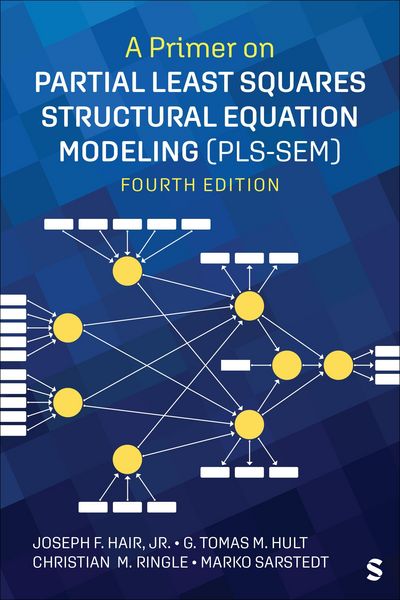
Produktbild: A Primer on Partial Least Squares Structural Equation Modeling (PLS-SEM)
Vorbesteller Neu

A Primer on Partial Least Squares Structural Equation Modeling (PLS-SEM)

Aus der Reihe SAGE Inc

97,99 €

inkl. gesetzl. MwSt., Versandkostenfrei


Beschreibung

Produktdetails

Verkaufsrang

253

Einband

Taschenbuch

Erscheinungsdatum

14.11.2026

Verlag

Sage Publications Inc Ebooks

Seitenzahl

424

Maße (L/B)

22,8/15,2 cm

Gewicht

570 g

Auflage

4 Revised edition

Sprache

Englisch

ISBN

978-1-07-199885-4

Beschreibung

Produktdetails

Verkaufsrang

253

Einband

Taschenbuch

Erscheinungsdatum

14.11.2026

Verlag

Sage Publications Inc Ebooks

Seitenzahl

424

Maße (L/B)

22,8/15,2 cm

Gewicht

570 g

Auflage

4 Revised edition

Sprache

Englisch

ISBN

978-1-07-199885-4

Herstelleradresse

Libri GmbH
Europaallee 1
36244 Bad Hersfeld
DE

Email: gpsr@libri.de

Noch keine Bewertungen vorhanden

Verfassen Sie die erste Bewertung zu diesem Artikel

Helfen Sie anderen Kundinnen und Kunden durch Ihre Meinung.

Kundinnen und Kunden meinen

Bewertungen (0)

  • Produktbild: A Primer on Partial Least Squares Structural Equation Modeling (PLS-SEM)
  • Preface
    About the Authors
    Chapter 1: An Introduction to Structural Equation Modeling
    Chapter Preview
    What Is Structural Equation Modeling?
    Considerations in Using Structural Equation Modeling
    Principles of Structural Equation Modeling
    PLS-SEM, CB-SEM, and Regressions Based on Sum Scores
    Considerations when Applying PLS-SEM
    Guidelines for Choosing Between PLS-SEM and CB-SEM
    Organization of Remaining Chapters
    Summary
    Review Questions
    Critical Thinking Questions
    Key Terms
    Suggested Readings
    Chapter 2: Specifying the Path Model and Examining Data
    Chapter Preview
    Stage 1: Specifying the Structural Model
    Stage 2: Specifying the Measurement Models
    Stage 3: Data Collection and Examination
    Case Study Illustration-Specifying the PLS-SEM Model
    Path Model Creation Using the SmartPLS Software
    Summary
    Review Questions
    Critical Thinking Questions
    Key Terms
    Suggested Readings
    Chapter 3: Path Model Estimation
    Chapter Preview
    Stage 4: The PLS-SEM Algorithm and Model Estimation
    Case Study Illustration-PLS Path Model Estimation (Stage 4)
    Summary
    Review Questions
    Critical Thinking Questions
    Key Terms
    Suggested Readings
    Chapter 4: Assessing PLS-SEM Results-Part I: Evaluation of the Reflective Measurement Models
    Chapter Preview
    Overview of Stage 5: Evaluation of Measurement Models
    Stage 5A: Assessing Results of Reflective Measurement Models
    Case Study Illustration-Evaluation of the Reflective Measurement Models (Stage 5A)
    Summary
    Review Questions
    Critical Thinking Questions
    Key Terms
    Suggested Readings
    Chapter 5: Assessing PLS-SEM Results-Part II: Evaluation of the Formative Measurement Models
    Chapter Preview
    Stage 5B: Assessing Results of Formative Measurement Models
    Case Study Illustration-Evaluation of the Formative Measurement Models (STAGE 5B)
    Summary
    Review Questions
    Critical Thinking Questions
    Key Terms
    Suggested Readings
    Chapter 6: Assessing PLS-SEM Results-Part III: Evaluation of the Structural Model
    Chapter Preview
    Stage 6: Structural Model Results Evaluation
    Case Study Illustration-Evaluation of the Structural Model (Stage 6)
    Summary
    Review Questions
    Critical Thinking Questions
    Key Terms
    Suggested Readings
    Chapter 7: Mediator and Moderator Analysis
    Chapter Preview
    Mediation
    Moderation
    Summary
    Review Questions
    Critical Thinking Questions
    Key Terms
    Suggested Readings
    Chapter 8: Outlook on Advanced Methods
    Chapter Preview
    Importance-Performance Map Analysis
    Necessary Condition Analysis
    Higher-Order Constructs
    Confirmatory Tetrad Analysis
    Examining Endogeneity
    Treating Observed and Unobserved Heterogeneity
    Measurement Model Invariance
    Consistent PLS-SEM
    Summary
    Review Questions
    Critical Thinking Questions
    Key Terms
    Suggested Readings
    Glossary
    References
    Index