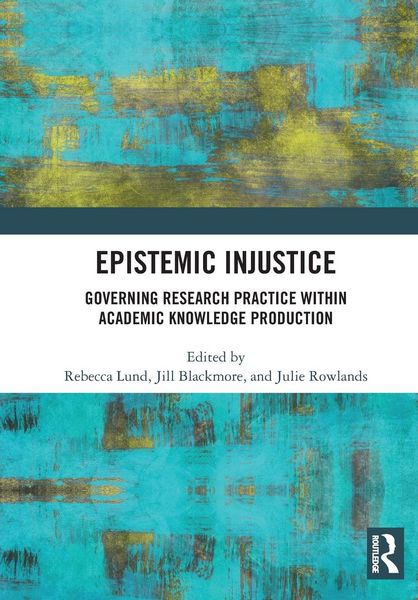
Epistemic Injustice Governing Research Practice Within Academic Knowledge Production
-
- Hardcover
- Taschenbuch ausgewählt
- eBook
-
Sprache:Englisch
72,99 €
inkl. gesetzl. MwSt.,
Beschreibung
Produktdetails
Einband
Taschenbuch
Erscheinungsdatum
21.05.2026
Herausgeber
Rebecca Lund + weitereVerlag
Taylor and FrancisSeitenzahl
126
Maße (L/B/H)
24,4/17/0,7 cm
Gewicht
227 g
Sprache
Englisch
ISBN
978-1-03-288083-9
This book illustrates how feminist knowledge and postcolonial knowledge are marginalized in universities due to policies, organizational structures, and knowledge hierarchies that privilege metrics as measures of success and narrow views of science and research.
The changing relationship between the state and knowledge production is a critical issue for universities and governments when disinformation is creating a crisis in expertise and trust in democratic institutions. Yet academic autonomy is being undermined by processes of corporatization of the university: managerialism, marketisation, technologization and privatization. Epistemic injustice occurs when particular knowledges are privileged due to policy priorities, metrics and organizational practices as these are underpinned by unequal power relations that inform who does what research and with whom. In turn, injustice occurs when knowledge is evaluated primarily on the basis of its usefulness. The chapters in this book illustrate the epistemic implications of changing institutional and organizational conditions produced by narrow conceptions of 'knowledge' and 'good science' and relations between them. It explores these arrangements at the level of colonial and geopolitical relations, and their effects in terms of institutional processes, practices, and agency. The text shows how a lack of epistemic diversity reinforces structural and cultural racial and gender injustices arising from colonialism, patriarchy, and dominant views of science.
This volume will appeal to policy makers and researchers in higher education reform and scholars interested in changing academic practices from feminist and postcolonial perspectives. It was originally published as a special issue of Critical Studies in Education.
Noch keine Bewertungen vorhanden
Verfassen Sie die erste Bewertung zu diesem Artikel
Helfen Sie anderen Kundinnen und Kunden durch Ihre Meinung.
Kurze Frage zu unserer Seite
Vielen Dank für Ihr Feedback
Wir nutzen Ihr Feedback, um unsere Produktseiten zu verbessern. Bitte haben Sie Verständnis, dass wir Ihnen keine Rückmeldung geben können. Falls Sie Kontakt mit uns aufnehmen möchten, können Sie sich aber gerne an unseren Kund*innenservice wenden.
zum Kundenservice