KI-Beratung Beta

Gutscheinbedingungen

**Gültig bis 30.11.2026 auf Spielzeug, Schreibwaren, Filme, Geschenke & Trends, Musik, tolino eReader & Zubehör, Hörbücher und Hörbuch-Downloads, nicht preisgebundene Bücher und Kalender online auf thalia.at und in der Thalia App. Einzelne Artikel können ausgeschlossen sein. Aufgrund der Buchpreisbindung sind deutschsprachige Bücher und eBooks ausgenommen. Zusätzlich ausgenommen sind Abos & Flatrates, Games, Geschenkkarten/-boxen, Shelfies, Software, Zeitschriften sowie einzelne Artikel von tonies®. Pro Einkauf einmal einlösbar. Nur gültig mit im Onlineshop hinterlegter Bonuscard. Click & Collect nur bei Onlinevorabzahlung möglich. Keine Barauszahlung. Nicht kombinierbar mit anderen Aktionen und Gutscheinen. Gutschein wird auf max. 500€ Bestellwert angerechnet. Nicht gültig für Versandkosten und Services.

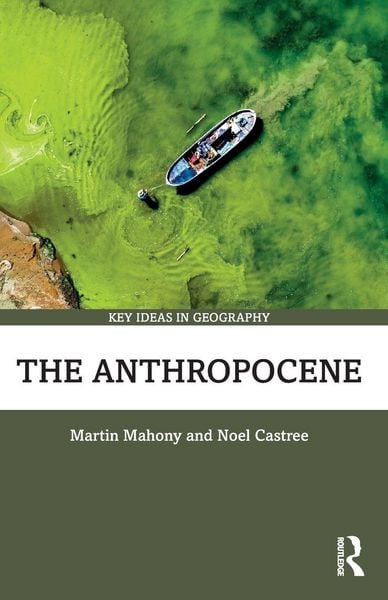
Produktbild: The Anthropocene

The Anthropocene

Aus der Reihe Key Ideas in Geography

61,99 €

inkl. gesetzl. MwSt., Versandkostenfrei


Beschreibung

'The Anthropocene' is one of the most important scientific concepts of our time. It is also one of the most contested. This book offers the most advanced yet accessible introduction to the complex and often heated debates about the meaning, nature, and implications of the Anthropocene.

Drawing on the...

Beschreibung

'The Anthropocene' is one of the most important scientific concepts of our time. It is also one of the most contested. This book offers the most advanced yet accessible introduction to the complex and often heated debates about the meaning, nature, and implications of the Anthropocene.

Drawing on the work of physical and human geographers, alongside geographically-informed contributions from natural and physical scientists, sociologists, historians, anthropologists, philosophers, and others, this book maps and critically evaluates the implications of the Anthropocene for the discipline of Geography and for geographical thinking across other fields. It asks: Does the Anthropocene mark the start of the greatest environmental crisis in history? Which humans are most responsible? What impacts is it having on human well-being and the natural world? What needs to be done to mitigate its threats, and who will bear the costs? How does 'the Anthropocene' challenge the conduct of research, policy, and activism around issues like environmental justice, resilience, nature conservation, or decolonisation? Is 'the Anthropocene' even the best name for this new age?

Essential reading for university students and researchers in Geography and beyond, this book also appeals to general readers interested in understanding how human actions are reshaping the Earth and what this means for the future of people and planet.

Produktdetails

Einband

Taschenbuch

Erscheinungsdatum

15.09.2026

Abbildungen

11 schwarz-weiße und 26 farbige Abbildungen, 8 schwarz-weiße und 22 farbige Fotos, 3 schwarz-weiße und 4 farbige Zeichnungen, 5 schwarz-weiße Tabellen

Verlag Taylor & Francis

Produktdetails

Einband

Taschenbuch

Erscheinungsdatum

15.09.2026

Abbildungen

11 schwarz-weiße und 26 farbige Abbildungen, 8 schwarz-weiße und 22 farbige Fotos, 3 schwarz-weiße und 4 farbige Zeichnungen, 5 schwarz-weiße Tabellen

Verlag Taylor & Francis
Seitenzahl

378

Maße (L/B/H)

15,3/23,4/2,1 cm

Gewicht

676 g

Sprache

Englisch

ISBN

978-0-367-75418-1

Herstelleradresse

Libri GmbH
Europaallee 1
36244 Bad Hersfeld
DE

Email: gpsr@libri.de

Noch keine Bewertungen vorhanden

Verfassen Sie die erste Bewertung zu diesem Artikel

Helfen Sie anderen Kundinnen und Kunden durch Ihre Meinung.

Kundinnen und Kunden meinen

Bewertungen (0)

Weitere Artikel finden Sie in

Die Leseprobe wird geladen.
  • Produktbild: The Anthropocene
  • Prologue: The Anthropocene and Geography PART I. Welcome to the Anthropocene 1. The Anthropocene Event 2. Geographies of the Anthropocene PART II. Geo-histories 3. The Colonial Anthropocene: Empires and Planetary Transformation 4. The Industrial Anthropocene 5. Geographies of the Great Acceleration PART III. Geo-politics 6. Scaling Justice in the Anthropocene 7. Wild Lives: How Should We Relate to the Non-human? 8. Governing Geo: Geographies of Security and Resilience PART IV. Geo-futures 9. Anthropocene Aesthetics 10. Placing the Future Epilogue: What future for the Earth?