Band 1
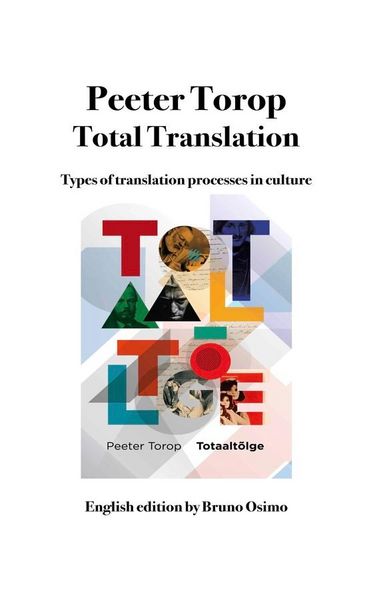
Total Translation Types of translation processes in culture
Aus der Reihe
Translation Studies
-
- Einzelkauf Download ausgewählt
-
Sprache:Englisch
2,99 €
inkl. gesetzl. MwSt.Beschreibung
Produktdetails
Format
ePUB 3
Kopierschutz
Nein
Family Sharing
Ja
Text-to-Speech
Ja
Erscheinungsdatum
01.04.2026
Herausgeber
Bruno OsimoVerlag
Bruno OsimoSeitenzahl
243 (Printausgabe)
Dateigröße
1760 KB
Sprache
Englisch
EAN
9791281358867
Unlock the Master Key to Culture, Semiotics, and Modern Translation Theory. Originally published in 1995 and now available in an updated English edition, Peeter Torop's Total Translation is a landmark work in translation studies and semiotics. Building on the foundational legacy of the Tartu-Moscow Semiotic School, Juri Lotman, and Mikhail Bakhtin, Torop presents a groundbreaking, unified theoretical framework. He demonstrates that translation is not merely a linguistic swap between two natural languages, but a universal mechanism of cultural survival, memory, and autocommunication. Whether translating a classic poem, adapting a literary masterpiece into film, or mediating intra-cultural heritage, every creative act operates within the universal principles of Total Translation. What Is "Total Translation"? At its core, Total Translation moves beyond standard notions of "good" vs. "bad" translations or simple word substitution. Instead, Torop constructs a comprehensive Taxonomic Model of the Translation Process (supported by parametric text and chronotopic analysis) that bridges five key dimensions of translational semiosis:
- Textual Translation: The rendering of a complete source text into a target text across natural languages.
- Metatextual Translation: Intra-cultural mediation through reviews, textbooks, summaries, glossaries, and critical framing-translating a text into a culture.
- Intratextual & Intertextual Translation: Navigating the complex interplay of textual memory, quotations, allusions, parodies, and foreign voices within an author's poetics.
- Extratextual Translation: Intersemiotic translation (transmutation) across non-verbal and visual codes, such as screening books into films or staging drama.
- A Unified Model of the Translation Process: Integrates analytical and synthetic, dominant and autonomous strategies without normative bias.
- Parametric & Chronotopic Text Analysis: Multi-layered operational tools analyzing the objectified, subjectified, and abstract textual worlds across topographical, psychological, and metaphysical chronotopes.
- A Deep Dive into Translation Criticism & History: Essential frameworks for analyzing translation poetics, translator styles, reception codes, and diachronic traditions.
- Interdisciplinary Synthesis: Synthesizes Eastern European semiotics, Slovak and Polish translation research (Popovic, Balcerzan), and Western humanities into transdisciplinary knowledge management.
- What if translation isn't just about converting words from one language to another, but the very engine that drives all of human culture? In Total Translation, Peeter Torop-one of the most influential successors to Juri Lotman at the Tartu-Moscow School of Semiotics-presents a groundbreaking vision that will forever change how you understand translation, culture, and meaning itself. Beyond Words: Translation as a Cultural Mechanism Most people think of translation as a linguistic exchange: English into Italian, Russian into English, and so on. But Torop argues that translation is something far more fundamental. It is the universal mechanism through which culture creates, preserves, and transforms meaning. Culture, Torop explains, is human creation-and like any creative act, it arises from the need for self-expression. Communicating with others simultaneously means communicating with oneself. This insight leads to a radical conclusion: culture itself functions as a vast, ongoing process of total translation. What You Will Discover in This Book Total Translation develops a comprehensive model of the translation process that goes far beyond traditional linguistic approaches. Torop distinguishes between multiple types of translation activity that together form the fabric of cultural life: ¿¿¿¿ Textual Translation The translation of complete texts from one language to another-the foundation upon which all other translation types are built. ¿¿¿¿ Metatextual Translation How texts enter a new culture through criticism, reviews, encyclopedia articles, advertisements, and other forms of commentary that shape a reader's understanding. ¿¿¿¿ Intra- and Intertextual Translation How every text absorbs, transforms, and responds to other texts through quotations, allusions, paraphrases, and stylistic echoes. ¿¿¿¿ Extratextual Translation The translation of literary works into film, theater, music, and other media-what Roman Jakobson called "intersemiotic translation." Why This Book Matters Now In an age of unprecedented cultural exchange, media convergence, and digital communication, understanding translation as a cultural process has never been more urgent. Whether you are:
- A student or scholar of translation studies, semiotics, or cultural theory
- A professional translator seeking deeper insight into your craft
- A teacher or educator looking for a comprehensive framework
- A curious reader fascinated by how meaning is created and shared
- Total Translation offers a unified theoretical framework that connects linguistic translation to the broader dynamics of culture. It equips you with the tools to analyze not just translated texts, but the entire process of cultural mediation. What Makes This Edition Special Originally published in Russian in 1995 as ¿¿¿¿¿¿¿¿¿ ¿¿¿¿¿¿¿ and defended as a doctoral dissertation at the University of Helsinki, this work has been recognized as a landmark contribution to translation studies. Now available in English for the first time, this edition has been carefully prepared and curated by Bruno Osimo, a renowned translator and semiotician who has devoted his career to making the insights of the Tartu-Moscow School accessible to an international audience. The book bridges Western translation studies with the rich intellectual traditions of Eastern Europe, synthesizing ideas from:
- John C. Catford (who first coined "total translation")
- Roman Jakobson (who distinguished three types of translation)
- Juri Lotman (founder of cultural semiotics)
- Anton Popovic (metatext theory)
- Itamar Even-Zohar (polysystem theory)
- And many others
- About the Author Peeter Torop is a professor of semiotics at the University of Tartu, Estonia. He succeeded Juri Lotman as head of the Department of Semiotics and has been a leading figure in the development of cultural semiotics and translation theory. His work has been published in multiple languages and has influenced scholars around the world. About the Curator Bruno Osimo is a translator, semiotician, and author who has translated and curated numerous works on semiotics and translation theory, including books by Juri Lotman, Peeter Torop, and others. Endorsement "Torop's concept of total translation is a major contribution to both translation studies and semiotics. It offers a powerful framework for understanding how culture works as a dynamic system of meaning production."
Noch keine Bewertungen vorhanden
Verfassen Sie die erste Bewertung zu diesem Artikel
Helfen Sie anderen Kundinnen und Kunden durch Ihre Meinung.
Kurze Frage zu unserer Seite
Vielen Dank für Ihr Feedback
Wir nutzen Ihr Feedback, um unsere Produktseiten zu verbessern. Bitte haben Sie Verständnis, dass wir Ihnen keine Rückmeldung geben können. Falls Sie Kontakt mit uns aufnehmen möchten, können Sie sich aber gerne an unseren Kund*innenservice wenden.
zum Kundenservice