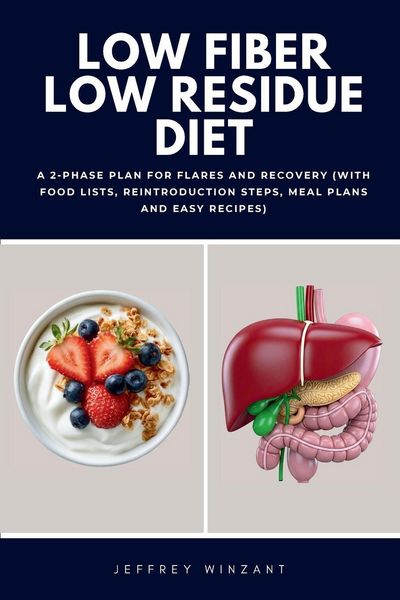
Low Fiber Low Residue Diet A 2-Phase Plan for Flares and Recovery (with Food Lists, Reintroduction Steps, Meal Plans and Easy Recipes)
-
- Englisch ausgewählt
16,99 €
inkl. gesetzl. MwSt.,
- Kostenlose Lieferung ab 30 € Einkaufswert
- Versandkostenfrei für Bonuscard-Kund*innen
Beschreibung
Produktdetails
Einband
Taschenbuch
Erscheinungsdatum
22.03.2026
Verlag
MindplusfoodSeitenzahl
112
Maße (L/B/H)
22,9/15,2/0,7 cm
Gewicht
175 g
Sprache
Englisch
EAN
9798349212253
A low fiber, low residue diet is a carefully designed approach that plays a vital role in managing certain digestive conditions. Its core purpose is to minimize the workload on the digestive system by reducing both dietary fiber and other food components that leave undigested matter (residue) behind in the gastrointestinal tract. This targeted restriction helps alleviate symptoms, provide digestive rest, and support recovery during vulnerable periods for people living with conditions like inflammatory bowel disease (IBD), Crohn's disease, ulcerative colitis, or those recovering from intestinal surgery. To fully appreciate the value of this diet, it is important to understand the distinction between fiber and residue. Dietary fiber, found primarily in plant-based foods such as whole grains, fruits, vegetables, and legumes, refers to the portion of food that the body cannot fully digest. Soluble fiber dissolves in water and forms a gel-like substance, while insoluble fiber adds bulk to stool and aids movement through the gut. Residue, by contrast, encompasses all the undigested parts of food that add volume to stool; this includes dietary fiber, as well as other remnants like some natural sugars, skins, and pulp. While the term "low fiber" focuses solely on restricting fiber, a "low residue" diet is somewhat broader; it limits both fiber and other constituents that remain in the bowel after digestion. People following a low fiber, low residue diet frequently experience significant symptom relief. Common benefits include reduced abdominal pain, decreased bloating, less frequent bowel movements, and an overall calmer digestive experience. By giving the gut time to rest from its usual workload, the bowel lining can recover from inflammation, irritation, or surgical trauma. However, while symptom minimization is a key strength, this diet is not designed for long-term use and requires careful monitoring to prevent nutritional deficiencies. In this guide, you will learn: The science behind low fiber and low residue diets, including clear definitions of fiber and residue When and why these diets are recommended, with a focus on clinical scenarios How to implement the diet safely, including detailed food lists for each phase Sample 7-day meal plans tailored for both acute management and gradual recovery Easy-to-follow recipes developed specifically to meet dietary requirements at every stage Practical tips for success and answers to frequently asked questions This guide presents a practical, two-phase structure to support users through both acute management and gradual recovery. The first phase focuses on strict adherence to low fiber and residue intake the "flare" phase designed to maximize digestive rest. Once symptoms stabilize and healing progresses, the second phase introduces a stepwise reintroduction of fiber and residue, helping individuals safely expand their dietary options while monitoring for tolerance. Throughout, you'll find detailed food lists, sample 7-day meal plans tailored to each phase, and 15 easy-to-follow recipes developed specifically to meet dietary requirements at every stage. Whether you are navigating an IBD flare, supporting someone after surgery, or simply learning how to care for a sensitive gut, this guide provides clear steps, practical tips, and clear answers to frequently asked questions to help you implement and adapt the low fiber, low residue diet safely and effectively.
Noch keine Bewertungen vorhanden
Verfassen Sie die erste Bewertung zu diesem Artikel
Helfen Sie anderen Kundinnen und Kunden durch Ihre Meinung.
Kurze Frage zu unserer Seite
Vielen Dank für Ihr Feedback
Wir nutzen Ihr Feedback, um unsere Produktseiten zu verbessern. Bitte haben Sie Verständnis, dass wir Ihnen keine Rückmeldung geben können. Falls Sie Kontakt mit uns aufnehmen möchten, können Sie sich aber gerne an unseren Kund*innenservice wenden.
zum Kundenservice