KI-Beratung Beta

Gutscheinbedingungen

**Gültig bis 11.11.2026 auf Spielzeug, Schreibwaren, Filme, Geschenke & Trends, Musik, tolino eReader & Zubehör, Hörbücher und Hörbuch-Downloads, nicht preisgebundene Bücher und Kalender online auf thalia.at und in der Thalia App. Einzelne Artikel können ausgeschlossen sein. Aufgrund der Buchpreisbindung sind deutschsprachige Bücher und eBooks ausgenommen. Zusätzlich ausgenommen sind Abos & Flatrates, Games, Geschenkkarten/-boxen, Shelfies, Software, Zeitschriften sowie einzelne Artikel von tonies®. Pro Einkauf einmal einlösbar. Click & Collect nur bei Onlinevorabzahlung möglich. Keine Barauszahlung. Nicht kombinierbar mit anderen Aktionen und Gutscheinen. Gutschein wird auf max. 500€ Bestellwert angerechnet. Nicht gültig für Versandkosten und Services.

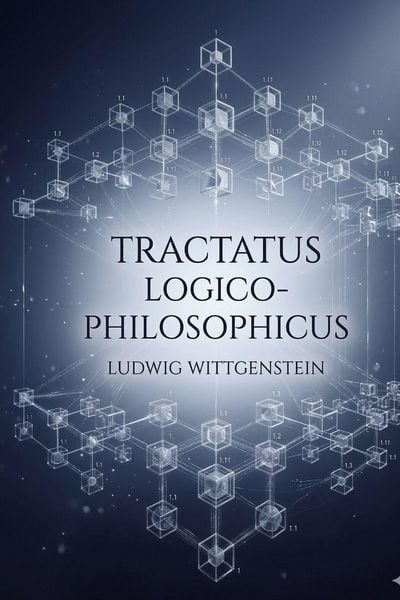
Produktbild: Tractatus Logico-Philosophicus

Tractatus Logico-Philosophicus

25,99 €

inkl. gesetzl. MwSt., zzgl. Versandkosten


  • Kostenlose Lieferung ab 30 € Einkaufswert
  • Versandkostenfrei für Bonuscard-Kund*innen

Beschreibung

Ludwig Wittgenstein is considered by many to be one of the most important philosophers of the 20th century. He was born in Vienna to an incredibly rich family, but he gave away his inheritance and spent his life alternating between academia and various other roles, including serving as an officer during...

Beschreibung

Ludwig Wittgenstein is considered by many to be one of the most important philosophers of the 20th century. He was born in Vienna to an incredibly rich family, but he gave away his inheritance and spent his life alternating between academia and various other roles, including serving as an officer during World War I and a hospital porter during World War II. When in academia Wittgenstein was taught by Bertrand Russell, and he himself taught at Cambridge.He began laying the groundwork for Tractatus Logico-Philosophicus while in the trenches, and published it after the end of the war. It has since come to be considered one of the most important works of 20th century philosophy. After publishing it, Wittgenstein concluded that it had solved all philosophical problems-so he never published another book-length work in his lifetime.The book itself is divided into a series of short, self-evident statements, followed by sub-statements elucidating on their parent statement, sub-sub-statements, and so on. These statements explore the nature of philosophy, our understanding of the world around us, and how language fits in to it all. These views later came to be known as "Logical Atomism."This translation, while credited to C. K. Ogden, is actually mostly the work of F. P. Ramsey, one of Ogden's students. Ramsey completed the translation when he was just 19 years of age. The translation was personally revised and approved by Wittgenstein himself, who, though he was Austrian, had spent much of his life in England.Much of the Tractatus' meaning is complex and difficult to unpack. It is still being interpreted and explored to this day.Ludwig Wittgenstein is considered by many to be one of the most important philosophers of the 20th century. He was born in Vienna to an incredibly rich family, but he gave away his inheritance and spent his life alternating between academia and various other roles, including serving as an officer during World War I and a hospital porter during World War II. When in academia Wittgenstein was taught by Bertrand Russell, and he himself taught at Cambridge.He began laying the groundwork for Tractatus Logico-Philosophicus while in the trenches, and published it after the end of the war. It has since come to be considered one of the most important works of 20th century philosophy. After publishing it, Wittgenstein concluded that it had solved all philosophical problems-so he never published another book-length work in his lifetime.The book itself is divided into a series of short, self-evident statements, followed by sub-statements elucidating on their parent statement, sub-sub-statements, and so on. These statements explore the nature of philosophy, our understanding of the world around us, and how language fits in to it all. These views later came to be known as "Logical Atomism."This translation, while credited to C. K. Ogden, is actually mostly the work of F. P. Ramsey, one of Ogden's students. Ramsey completed the translation when he was just 19 years of age. The translation was personally revised and approved by Wittgenstein himself, who, though he was Austrian, had spent much of his life in England.Much of the Tractatus' meaning is complex and difficult to unpack. It is still being interpreted and explored to this day.

Produktdetails

Einband

Taschenbuch

Erscheinungsdatum

01.03.2026

Verlag Les prairies numériques
Seitenzahl

130

Produktdetails

Einband

Taschenbuch

Erscheinungsdatum

01.03.2026

Verlag Les prairies numériques
Seitenzahl

130

Maße (L/B/H)

22,9/15,2/0,7 cm

Gewicht

201 g

Sprache

Englisch

ISBN

979-10-431-3955-0

Herstelleradresse

Libri GmbH
Europaallee 1
36244 Bad Hersfeld
DE

Email: gpsr@libri.de

Noch keine Bewertungen vorhanden

Verfassen Sie die erste Bewertung zu diesem Artikel

Helfen Sie anderen Kundinnen und Kunden durch Ihre Meinung.

Kundinnen und Kunden meinen

Bewertungen (0)

Die Leseprobe wird geladen.
  • Produktbild: Tractatus Logico-Philosophicus