KI-Beratung Beta

Gutscheinbedingungen

**Gültig am 12.10.2026 auf englische Krimis & Thriller (krimis-thriller-15521) online auf thalia.at und in der Thalia App. Einzelne Artikel können ausgeschlossen sein. Ausgenommen sind preisgebundene Artikel, Abos & Flatrates. Pro Einkauf einmal einlösbar. Click & Collect nur bei Onlinevorabzahlung möglich. Keine Barauszahlung. Nicht kombinierbar mit anderen Aktionen und Gutscheinen. Gutschein wird auf max. 500€ Bestellwert angerechnet. Nicht gültig für Geschenkkarten, Versandkosten und Services.

Produktbild: Artificial Intelligence, Finance, and Sustainability
- 10%

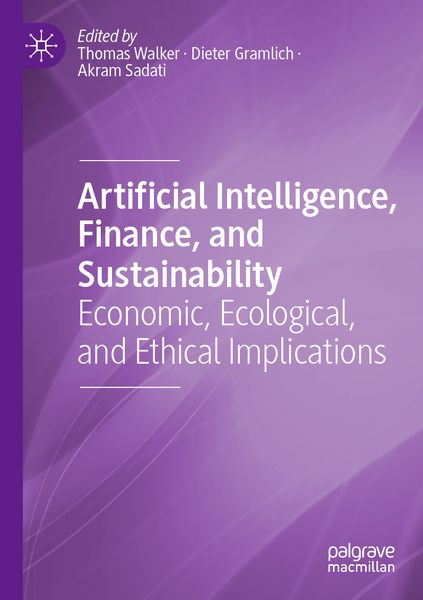
Artificial Intelligence, Finance, and Sustainability Economic, Ecological, and Ethical Implications

10% sparen

195,99 € UVP 219,99 €

inkl. gesetzl. MwSt., Versandkostenfrei


Beschreibung

Produktdetails

Einband

Taschenbuch

Erscheinungsdatum

28.09.2025

Herausgeber

Thomas Walker + weitere

Verlag

Springer

Seitenzahl

309

Maße (L/B/H)

21/14,8/1,9 cm

Gewicht

431 g

Sprache

Englisch

ISBN

978-3-031-66207-2

Beschreibung

Portrait

Thomas Walker  is a Professor of Finance and Concordia University Research Chair in Emerging Risk Management at Concordia University, Montreal, Canada. Prior to academia, he worked for several years in the German consulting and industrial sector at Mercedes Benz, Utility Consultants International, Lahmeyer International, Telenet, and KPMG Peat Marwick.

Dieter Gramlich  is a Professor at DHBW – Baden-Wuerttemberg Cooperative State University in Heidenheim, Germany, where he serves as Head of the Banking Department. He previously studied at the University of Mannheim and was an interim professor and Chair of Banking & Finance at the University of Halle. His research focuses on sustainable finance.

Akram Sadati is a Finance MSc candidate at the John Molson School of Business, Concordia University. She serves as a teaching assistant and research associate for the Emerging Risks Information Center. In addition, she has experience as a financial analyst and data analyst in the banking and financial services industry. Akram completed her undergraduate and graduate degrees in Financial Management in Iran. She has been awarded several scholarships and awards for her academic performance.

Produktdetails

Einband

Taschenbuch

Erscheinungsdatum

28.09.2025

Herausgeber

Verlag

Springer

Seitenzahl

309

Maße (L/B/H)

21/14,8/1,9 cm

Gewicht

431 g

Sprache

Englisch

ISBN

978-3-031-66207-2

Herstelleradresse

Springer-Verlag GmbH
Tiergartenstr. 17
69121 Heidelberg
DE

Email: ProductSafety@springernature.com

Noch keine Bewertungen vorhanden

Verfassen Sie die erste Bewertung zu diesem Artikel

Helfen Sie anderen Kundinnen und Kunden durch Ihre Meinung.

Kundinnen und Kunden meinen

Bewertungen (0)

  • Produktbild: Artificial Intelligence, Finance, and Sustainability
  • INTRODUCTION.- Chapter 1: Artificial Intelligence, Finance, and Sustainability: An Overview.- PART 1: CONCEPTUAL (INTEGRATIVE) FRAMEWORKS.- Chapter 2: A Panoramic Overview of the Opportunities and Challenges Artificial Intelligence Brings to ESG Investing.- Chapter 3: Measuring Sustainability with Artificial Intelligence.- Chapter 4: Enhancing Sustainable Finance Advisory and Literacy through AI-based Personalization.- Chapter 5: Artificial Intelligence to Advance Sustainability: A Review of Progress .- Chapter 6: The Future of Sustainable Finance: AI-Driven Sustainable Pairs Trading in Market-Neutral Investing.- PART II: CLIMATE AND ENERGY.- Chapter 7: Predicting Carbon Emissions with Explainable Machine Learning Models: Applications for Chinese Provinces .- Chapter 8: Assessing Physical Climate Risks: An AI-Powered Tool for Businesses .- Chapter 9: The Role of Artificial Intelligence in Energy Efficiency and Finance.- PART III: REPORTING AND REGULATION.- Chapter 10: Enhancing the Issuance and Monitoring of Sustainable Finance Instruments through Artificial Intelligence.- Chapter 11: The Law of Fintech: How Artificial Intelligence and Innovative Technologies Contribute to a Sustainable Financial Industry and Its Effective Regulation.- Chapter 12: Corporate Digital Responsibility for Artificial Intelligence: Towards a Disclosure Framework.- Chapter 13: The Implications of Adopting Artificial Intelligence in the Auditing Process.