Neu
Beschreibung
Produktdetails
Verkaufsrang
13480
Einband
Taschenbuch
Erscheinungsdatum
01.06.2026
Herausgeber
Natascha Meuser + weitereVerlag
Dom PublishersSeitenzahl
656
Maße (L/B/H)
24,5/14,1/4,5 cm
Gewicht
1181 g
Auflage
1. Auflage
Sprache
Englisch
ISBN
978-3-86922-899-0
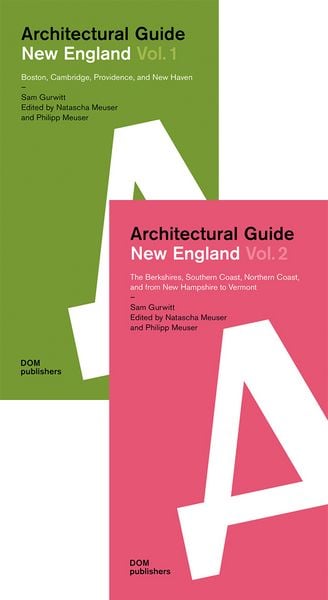
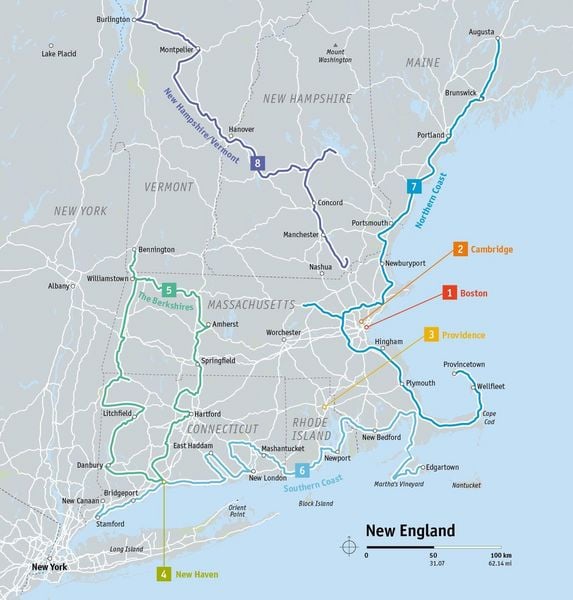
Vol. 1: Boston, Cambridge, Providence, and New Haven
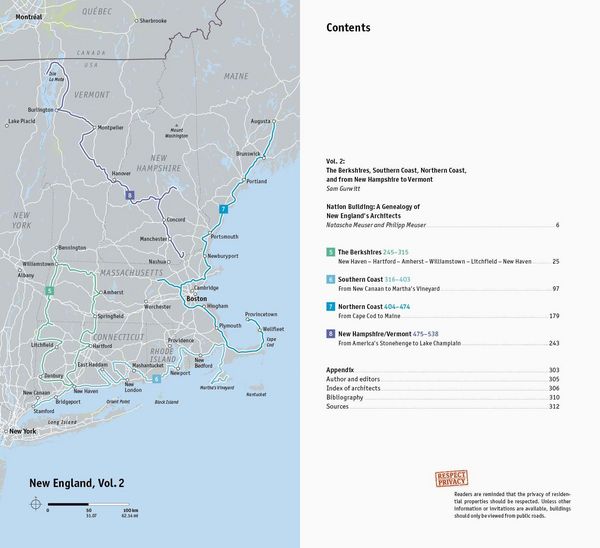
Vol. 2: The Berkshires, Southern Coast, Northern Coast, and from New Hampshire to Vermont
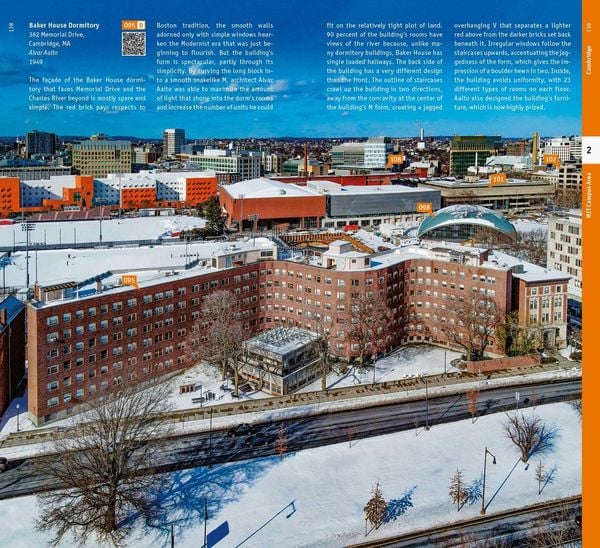
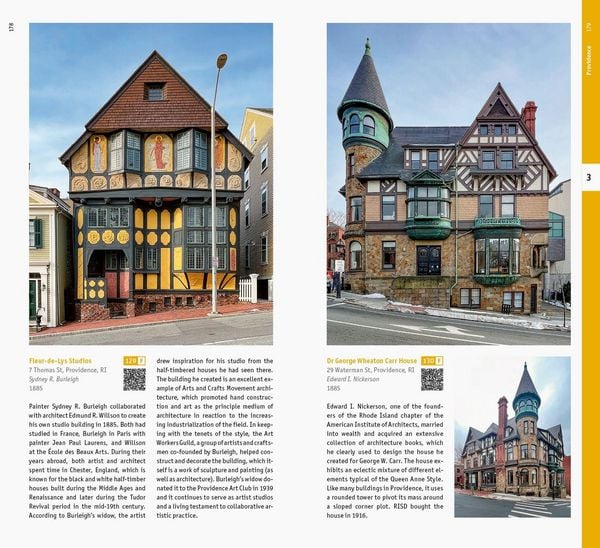
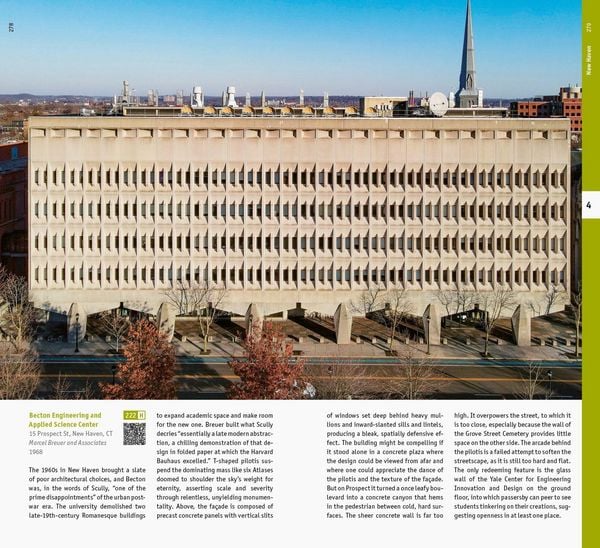
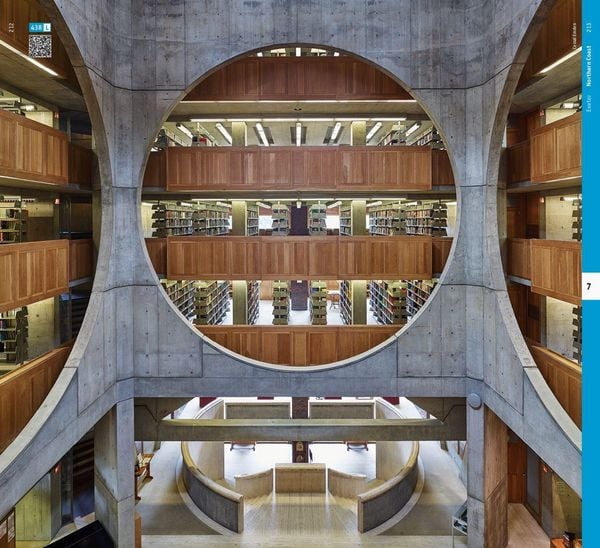
Two volumes, one region: from Boston’s civic and academic institutions to coastal landscapes and post-industrial sites, this 650-page title maps the full spectrum of the built environment in Connecticut, Maine, Massachusetts, New Hampshire, Rhode Island, and Vermont. More than 500 buildings by famous architects such as Marcel Breuer, Charles Bulfinch, Philip Johnson, Louis Kahn, I. M. Pei, Paul Rudolph, Josep Sert, among others.Since independence began here, New England has developed into a laboratory of American architecture, where civic order took on a permanent form.
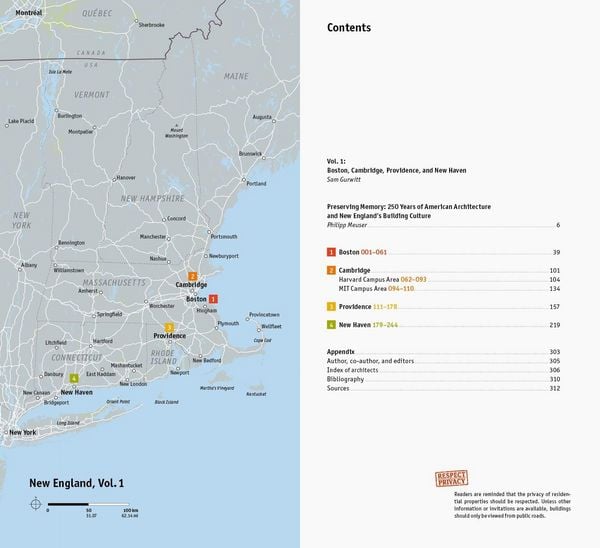
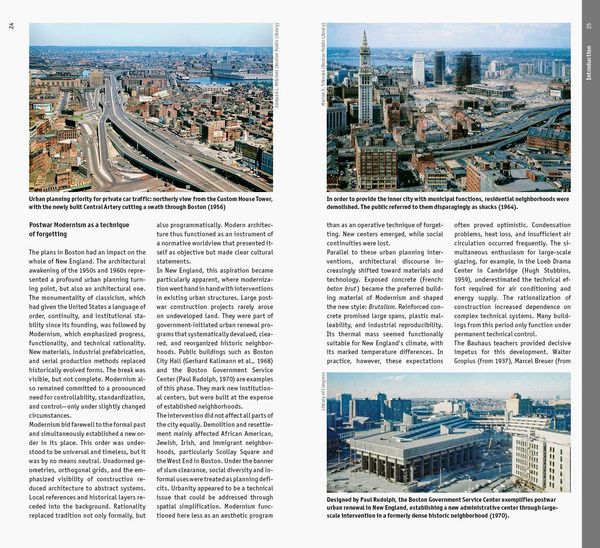
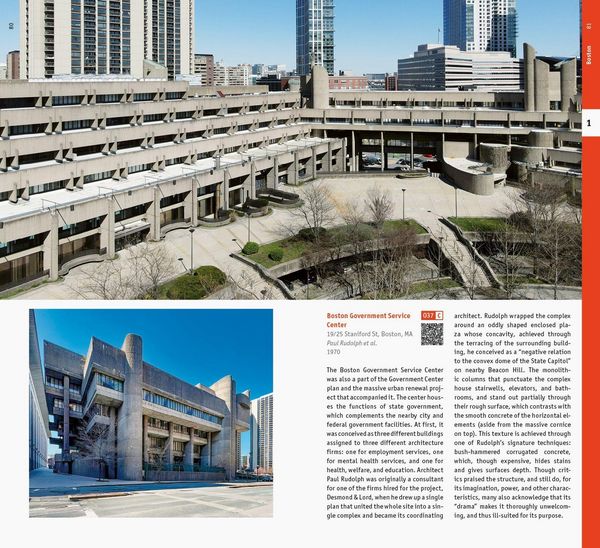
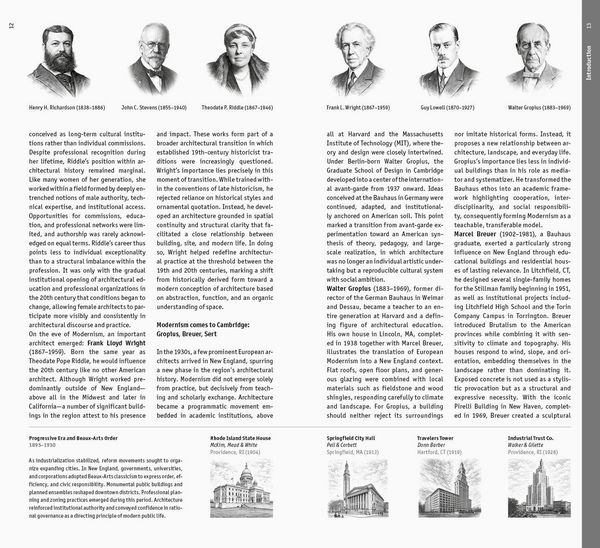
Volume 1 of the Architectural Guide New England focuses on the region’s urban and institutional centers, stretching from Boston to New Haven. It examines those places where architecture developed as a cultural practice, an academic discipline, and a framework for social order. The volume traces the development of key building types, from the meeting house and the state house to the university campus, and shows how European architectural models were transformed into distinct local traditions. Architecture is not presented as a sequence of styles, but as a continuous discourse. Particular attention is given to the roles of schools and professional networks in establishing New England as a formative center of American architectural culture. The almost 250 buildings discussed demonstrate how the principles of restraint, proportion, and durability became guiding forces whose influence extended far beyond New England.
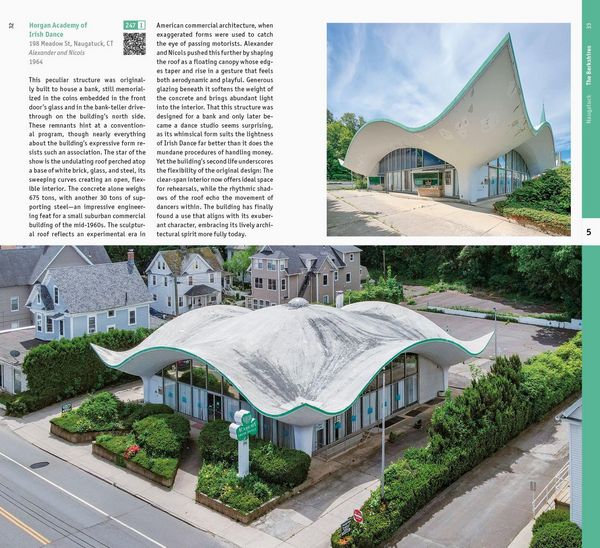
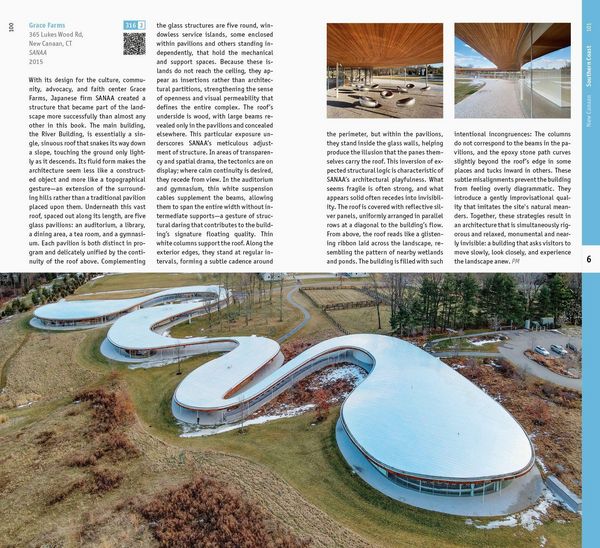
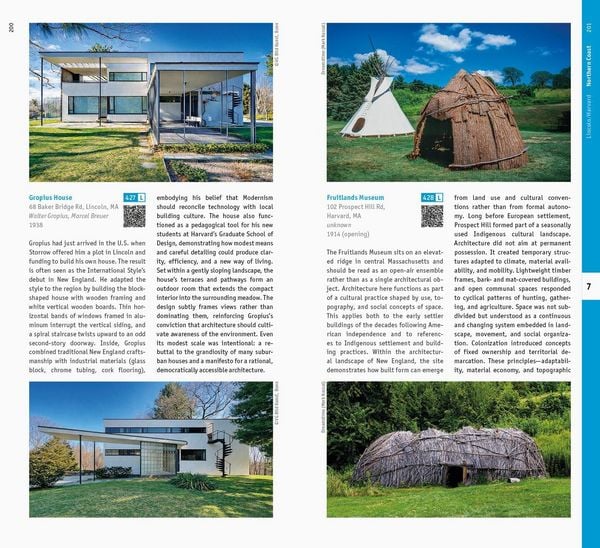
Volume 2 of the Architectural Guide New England examines those regions where building is closely tied to the surrounding landscape. Coastal regions, rural areas, former industrial sites, and islands provide the framework for an architectural history shaped less by institutional concentration than by topographical conditions. The focus mainly lies on questions of adaptation and continuity: adaptive reuse, tourism-related architecture, seasonal buildings, and cultural and religious sites outside of metropolitan centers. The more than 250 buildings in this volume show how architectural concepts are carried forward, modified, or reinterpreted under different social and spatial conditions. In this way, it complements the institutional perspective of Volume 1 with a broader interpretation of the region.
Vol. 2: The Berkshires, Southern Coast, Northern Coast, and from New Hampshire to Vermont
Two volumes, one region: from Boston’s civic and academic institutions to coastal landscapes and post-industrial sites, this 650-page title maps the full spectrum of the built environment in Connecticut, Maine, Massachusetts, New Hampshire, Rhode Island, and Vermont. More than 500 buildings by famous architects such as Marcel Breuer, Charles Bulfinch, Philip Johnson, Louis Kahn, I. M. Pei, Paul Rudolph, Josep Sert, among others.Since independence began here, New England has developed into a laboratory of American architecture, where civic order took on a permanent form.
Volume 1 of the Architectural Guide New England focuses on the region’s urban and institutional centers, stretching from Boston to New Haven. It examines those places where architecture developed as a cultural practice, an academic discipline, and a framework for social order. The volume traces the development of key building types, from the meeting house and the state house to the university campus, and shows how European architectural models were transformed into distinct local traditions. Architecture is not presented as a sequence of styles, but as a continuous discourse. Particular attention is given to the roles of schools and professional networks in establishing New England as a formative center of American architectural culture. The almost 250 buildings discussed demonstrate how the principles of restraint, proportion, and durability became guiding forces whose influence extended far beyond New England.
Volume 2 of the Architectural Guide New England examines those regions where building is closely tied to the surrounding landscape. Coastal regions, rural areas, former industrial sites, and islands provide the framework for an architectural history shaped less by institutional concentration than by topographical conditions. The focus mainly lies on questions of adaptation and continuity: adaptive reuse, tourism-related architecture, seasonal buildings, and cultural and religious sites outside of metropolitan centers. The more than 250 buildings in this volume show how architectural concepts are carried forward, modified, or reinterpreted under different social and spatial conditions. In this way, it complements the institutional perspective of Volume 1 with a broader interpretation of the region.
Kundinnen und Kunden meinen
Verfassen Sie die erste Bewertung zu diesem Artikel
Helfen Sie anderen Kund*innen durch Ihre Meinung
Kurze Frage zu unserer Seite
Vielen Dank für Ihr Feedback
Wir nutzen Ihr Feedback, um unsere Produktseiten zu verbessern. Bitte haben Sie Verständnis, dass wir Ihnen keine Rückmeldung geben können. Falls Sie Kontakt mit uns aufnehmen möchten, können Sie sich aber gerne an unseren Kund*innenservice wenden.
zum Kundenservice