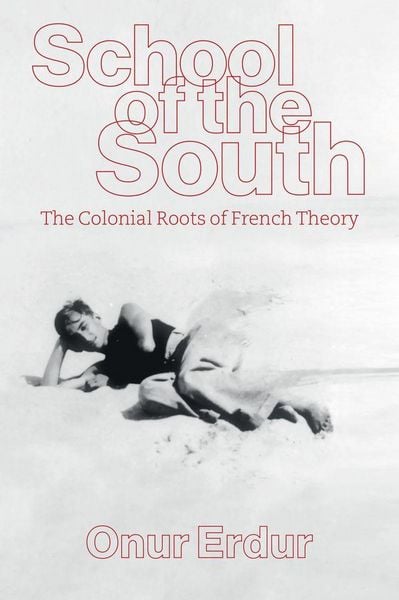
School of the South The Colonial Roots of French Theory
-
- Englisch ausgewählt
29,99 €
inkl. gesetzl. MwSt.,
- Kostenlose Lieferung ab 30 € Einkaufswert
- Versandkostenfrei für Bonuscard-Kund*innen
Beschreibung
Produktdetails
Einband
Gebundene Ausgabe
Erscheinungsdatum
02.07.2026
Verlag
Polity PressSeitenzahl
288
Maße (L/B/H)
23,5/16,3/2,7 cm
Gewicht
567 g
Übersetzt von
Andrew Brown
Sprache
Englisch
ISBN
978-1-5095-6934-2
Michel Foucault, Pierre Bourdieu, Roland Barthes, Jacques Derrida, Hélène Cixous, Jean-François Lyotard, Étienne Balibar, Jacques Rancière: these were among the luminaries of France's golden age of theory from the 1960s to the 1990s. What is less well-known is that all of these thinkers spent time in North Africa and their ideas were shaped by their encounters with French colonialism. In his remarkable history of ideas in eight portraits, Onur Erdur uncovers the colonial roots of French theory.
Erdur's search for these colonial roots leads him to Algiers, where the young Pierre Bourdieu did his military service in the middle of the Algerian war; to the coastal village of Sidi Bou Saïd north of Tunis, where Michel Foucault developed an attitude of philosophical hedonism between sunbathing, walks on the beach and ritualised body culture; and to Casablanca, where Roland Barthes fantasised about becoming a novelist. How did these intellectuals end up in these colonial situations? How did they behave there? And how did the experiences of colonial life affect their theoretical works and ideas? French theory developed a style of thinking that opposed identity and stood for difference, that was against the centre and for the periphery. This book shows how this style of thinking emerged not in the hallowed rooms of Parisian libraries and universities, but on the beach in Tunis and in the streets of Algiers.
Developing a new perspective on the history of ideas, this enthralling book subverts the subversive and shows that some of the best-known works and ideas of the late twentieth century cannot be fully understood without taking account of their origins in encounters with French colonialism in North Africa.
Noch keine Bewertungen vorhanden
Verfassen Sie die erste Bewertung zu diesem Artikel
Helfen Sie anderen Kundinnen und Kunden durch Ihre Meinung.
Kurze Frage zu unserer Seite
Vielen Dank für Ihr Feedback
Wir nutzen Ihr Feedback, um unsere Produktseiten zu verbessern. Bitte haben Sie Verständnis, dass wir Ihnen keine Rückmeldung geben können. Falls Sie Kontakt mit uns aufnehmen möchten, können Sie sich aber gerne an unseren Kund*innenservice wenden.
zum Kundenservice