Gutscheinbedingungen

**Gültig bis 25.06.2026 auf fremdsprachige Bücher online auf thalia.at und in der Thalia App. Einzelne Artikel können ausgeschlossen sein. Ausgenommen sind preisgebundene Artikel & eBooks. Pro Einkauf einmal einlösbar. Click & Collect nur bei Onlinevorabzahlung möglich. Keine Barauszahlung. Nicht kombinierbar mit anderen Aktionen und Gutscheinen. Gutschein wird auf max. 500€ Bestellwert angerechnet. Nicht gültig für Geschenkkarten, Versandkosten und Services.

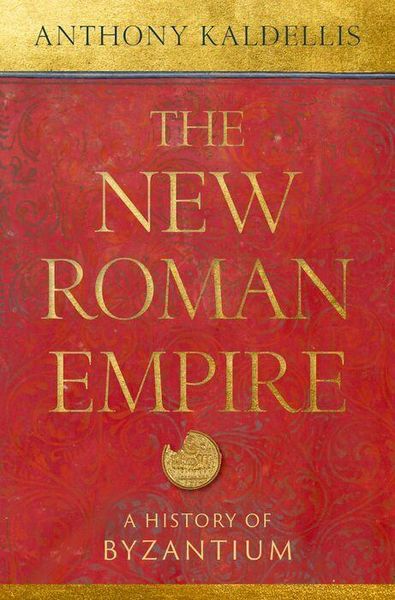
Produktbild: The New Roman Empire
Vorbesteller Neu

The New Roman Empire A History of Byzantium

27,99 €

inkl. gesetzl. MwSt., zzgl. Versandkosten


  • Kostenlose Lieferung ab 30 € Einkaufswert
  • Versandkostenfrei für Bonuscard-Kund*innen

Beschreibung

Produktdetails

Einband

Taschenbuch

Erscheinungsdatum

15.09.2026

Verlag

Oxford Academic

Seitenzahl

1152

Maße (L/B)

23,5/15,6 cm

Sprache

Englisch

ISBN

978-0-19-785526-3

Beschreibung

Produktdetails

Einband

Taschenbuch

Erscheinungsdatum

15.09.2026

Verlag

Oxford Academic

Seitenzahl

1152

Maße (L/B)

23,5/15,6 cm

Sprache

Englisch

ISBN

978-0-19-785526-3

Herstelleradresse

Libri GmbH
Europaallee 1
36244 Bad Hersfeld
DE

Email: gpsr@libri.de

Kundinnen und Kunden meinen

0 Bewertungen

Informationen zu Bewertungen

Zur Abgabe einer Bewertung ist eine Anmeldung im Konto notwendig. Die Authentizität der Bewertungen wird von uns nicht überprüft. Wir behalten uns vor, Bewertungstexte, die unseren Richtlinien widersprechen, entsprechend zu kürzen oder zu löschen.

Die Bewertungen sind nach Format, Anzahl Sterne und Datum sortiert.

Verfassen Sie die erste Bewertung zu diesem Artikel

Helfen Sie anderen Kund*innen durch Ihre Meinung

Kundinnen und Kunden meinen

0 Bewertungen filtern

  • Produktbild: The New Roman Empire
    • Preface

    • Abbreviations

    • List of Maps

    • List of Images

    • Part One: A New Empire

    • New Rome and the New Romans

    • The scaffold of society and personality of government

    • From Christian nation to Roman religion

    • Part Two: Dynastic Insecurities and Religious Passions

    • The first Christian emperors of the east (324-361)

    • Competing religions of empire (337-364)

    • Toward an independent east (364-395)

    • The city and the desert: Cultures old and new

    • Part Three: The Return of Civilian Government

    • The ascendancy of the political class (395-441)

    • Barbarian terrors and military mobilization (441-491)

    • Political consolidation and religious polarization (491-518)

    • Part Four: The Strain of Grand Ambitions

    • Chalcedonian repression and the eastern axis (518-531)

    • The Sleepless Emperor (527-540)

    • War everywhere and plague (540-565)

    • The price of overextension (565-602)

    • Part Five: To the Brink of Despair

    • The great war with Persia (602-630)

    • Commanders of the Faithful (632-644)

    • A contest of wills (641-685)

    • Part Six: Resilience and Recovery

    • Life and taxes among the ruins

    • An empire of outposts (685-717)

    • The lion and the dragon (717-775)

    • Reform and consolidation (775-815)

    • A new confidence (815-867)

    • Part Seven: The Path towards Empire

    • A new David and Solomon (867-912)

    • A game of crowns (912-950)

    • The apogee of Roman arms (950-1025)

    • A brief hegemony (1025-1048)

    • Part Eight: A New Paradigm

    • The walls close in: Losing Italy and the east (1048-1081)

    • Crisis management, the Komnenian way (1081-1118)

    • Good John and the Sun King: A second apogee (1118-1180)

    • Disintegration and betrayal (1180-1204)

    • Part Nine: Exile and Return

    • "A new France": Colonial occupation

    • Romans west and Romans east (1204-1261)

    • Union with Rome and Roman Disunity (1261-1282)

    • Territorial retrenchment and cultural innovation (1282-1328)

    • Part Ten: The Struggle for Dignity at The End

    • Military failure and mystical solace (1328-1354)

    • The walls close in (1354-1402)

    • The cusp of a new world (1402-1461)

    • Glossary

    • State Revenues and Payments to Foreign Groups, Fifth-Seventh Centuries

    • Bibliography