KI-Beratung Beta

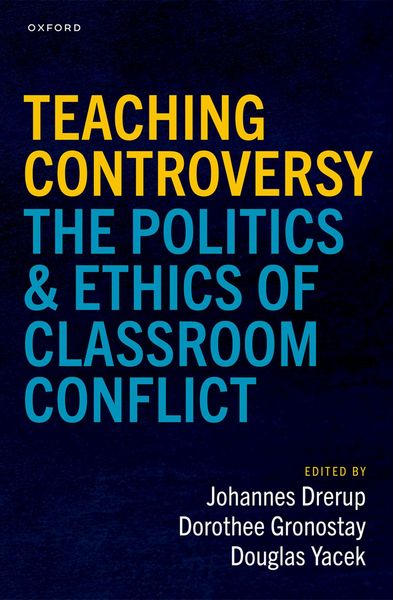
Produktbild: Teaching Controversy

Teaching Controversy The Politics and Ethics of Classroom Conflict

49,99 €

inkl. gesetzl. MwSt., Versandkostenfrei


Beschreibung

Produktdetails

Einband

Taschenbuch

Erscheinungsdatum

26.08.2026

Herausgeber

Dorothee Gronostay + weitere

Verlag

Oxford Academic

Seitenzahl

328

Maße (L/B/H)

23,4/15,7/2 cm

Gewicht

490 g

Sprache

Englisch

ISBN

978-0-19-781810-7

Beschreibung

Produktdetails

Einband

Taschenbuch

Erscheinungsdatum

26.08.2026

Herausgeber

Verlag

Oxford Academic

Seitenzahl

328

Maße (L/B/H)

23,4/15,7/2 cm

Gewicht

490 g

Sprache

Englisch

ISBN

978-0-19-781810-7

Herstelleradresse

Libri GmbH
Europaallee 1
36244 Bad Hersfeld
DE

Email: gpsr@libri.de

Noch keine Bewertungen vorhanden

Verfassen Sie die erste Bewertung zu diesem Artikel

Helfen Sie anderen Kundinnen und Kunden durch Ihre Meinung.

Kundinnen und Kunden meinen

Bewertungen (0)

  • Produktbild: Teaching Controversy
    • Acknowledgments
    • List of Contributors
    • Chapter 1: Introduction: Teaching Controversy: Theoretical Criteria, Practical Challenges and Real-Life Conflict
    • Johannes Drerup, Dorothee Gronostay, and Douglas Yacek
    • Part I: Historical and Philosophical Perspectives
    • Chapter 2: From Religion to History: The New Culture Wars in American Schools
    • Jonathan Zimmerman
    • Chapter 3: Is there a Principled Exception to the Epistemic Criterion of Controversiality?
    • Michael Hand
    • Chapter 4: Seeing the Person Behind a View: A Practical Interpretation of What It Means to Teach an
    • Issue "as Controversial" and What is Necessary for Doing So Fruitfully
    • Anders Schinkel
    • Chapter 5: Teacher Neutrality - Liberal, Democratic, Epistemic
    • Johannes Giesinger
    • Chapter 6: On the Improbability of "Teaching the Controversy" in School
    • Michael Merry
    • Chapter 7: Moving Beyond the Philosophical Controversy over Controversial Issues: Decision-making
    • about Teacher Impartiality as a Problem of Professional Ethics
    • Bruce Maxwell
    • Chapter 8: Is the Indoctrination-education Distinction Controversial?
    • Christopher Martin
    • Part II: Empirical Perspectives
    • Chapter 9: Teachers' Beliefs about Democracy and their Role in Democratic Education: A German perspective
    • Peter große Prues
    • Chapter 10: Conflict and controversy in German Denominational Religious Education: Conceptual Foundations and Empirical Explorations of an Institutionalised Committed Impartiality Approach
    • Jan-Hendrik Herbst
    • Chapter 11: Reflective Balancing: A Guiding Ideal for Teacher Education?
    • Marcus Kindlinger and Katrin Hahn-Laudenberg
    • Chapter 12: Controversial Conversations on College Campuses: What Happens and Why It Matters for Democracy
    • Rachel Wahl
    • Part III: Classrooms and Conflicts
    • Chapter 13: Emotion and Intellect in the Face of Societal Violence
    • Sarah W. Freedman, Karen Murphy, and Gail Weldon
    • Chapter 14: Teaching Controversial Issues in a Populist and Post-truth Context
    • Sarah M. Stitzlein
    • Chapter 15: Teaching Controversial Issues with Normative Case Studies
    • Tatiana Geron, Alexandra Chang, and Meira Levinson
    • Chapter 16: Trust Amidst Controversy: The Ethics of Classroom Conflict in Discussions of Race
    • Sally Moore and Winston C. Thompson
    • Chapter 17: Sexting or Same-Sex Marriage? Shifting the Center of Controversy in School
    • Sex Education
    • Kirsten M. K. Welch
    • Chapter 18: Social Conflicts and the Normative Discourse: Pedagogical Framework for Political
    • Education
    • Prakash Iyer
    • Chapter 19: Controversial Issues and Trust Building: Symbiosis or Disjuncture?
    • Jane C. Lo and candace moore
    • Index
    • 1: Johannes Drerup, Dorothee Gronostay and Douglas Yacek: Teaching Controversy: Theoretical Criteria, Practical Challenges, and Real-life Conflict
    • Part I. Historical and Philosophical Perspectives
    • 2: Jonathan Zimmerman: From Religion to History: The New Culture Wars in American Schools
    • 3: Michael Hand: Is There a Principled Exception to the Epistemic Criterion of Controversiality?
    • 4: Anders Schinkel: Seeing the Person behind a View: A Practical Interpretation of What It Means to Teach an Issue 'As Controversial' and What Is Necessary for Doing So Fruitfully
    • 5: Johannes Giesinger: Teacher Neutrality: Liberal, Democratic, Epistemic
    • 6: Michael S. Merry: On the Improbability of ''Teaching the Controversy'' in School
    • 7: Bruce Maxwell: Moving beyond the Philosophical Controversy over Controversial Issues: Decision-making about Teacher Impartiality as a Problem of Professional Ethics
    • 8: Christopher Martin: Is the Indoctrination-Education Distinction Controversial?
    • Part II. Empirical Perspectives
    • 9: Peter große Prues: Teachers' Beliefs about Democracy and Their Role in Democratic Education: A German Perspective
    • 10: Jan-Hendrik Herbst: Conflict and Controversy in German Denominational Religious Education: Conceptual Foundations and Empirical Explorations of an Institutionalized Committed Impartiality Approach
    • 11: Marcus Kindlinger and Katrin Hahn-Laudenberg: Reflective Balancing: A Guiding Ideal for Teacher Education?
    • 12: Rachel Wahl: Controversial Conversations on College Campuses: What Happens and Why It Matters for Democracy
    • Part III. Classrooms and Conflicts
    • 13: Sarah Warshauer Freedman, Karen Murphy and Gail Weldon: Emotion and Intellect in the Face of Societal Violence
    • 14: Sarah M. Stitzlein: Teaching Controversial Issues in a Populist and Post-truth Context
    • 15: Tatiana Geron, Alexandra K. Chang and Meira Levinson: From Ethical Dilemmas to Teaching Controversy: A Developing Theory of Change for Educator Capacity-building
    • 16: Sally Moore and Winston C. Thompson: Trust Amidst Controversy: The Ethics of Classroom Conflict in Discussions of Race
    • 17: Kirsten M. K. Welch: Sexting or Same-Sex Marriage? Shifting the Center of Controversy in School Sex Education
    • 18: Prakash Iyer: Social Conflicts and the Normative Discourse: A Pedagogical Framework for Political Education
    • 19: Jane C. Lo and Candace Moore: Controversial Issues and Trust Building: Symbiosis or Disjuncture?
    • 1: Johannes Drerup, Dorothee Gronostay and Douglas Yacek: Teaching Controversy: Theoretical Criteria, Practical Challenges, and Real-life Conflict
    • Part I. Historical and Philosophical Perspectives
    • 2: Jonathan Zimmerman: From Religion to History: The New Culture Wars in American Schools
    • 3: Michael Hand: Is There a Principled Exception to the Epistemic Criterion of Controversiality?
    • 4: Anders Schinkel: Seeing the Person behind a View: A Practical Interpretation of What It Means to Teach an Issue 'As Controversial' and What Is Necessary for Doing So Fruitfully
    • 5: Johannes Giesinger: Teacher Neutrality: Liberal, Democratic, Epistemic
    • 6: Michael S. Merry: On the Improbability of ''Teaching the Controversy'' in School
    • 7: Bruce Maxwell: Moving beyond the Philosophical Controversy over Controversial Issues: Decision-making about Teacher Impartiality as a Problem of Professional Ethics
    • 8: Christopher Martin: Is the Indoctrination-Education Distinction Controversial?
    • Part II. Empirical Perspectives
    • 9: Peter große Prues: Teachers' Beliefs about Democracy and Their Role in Democratic Education: A German Perspective
    • 10: Jan-Hendrik Herbst: Conflict and Controversy in German Denominational Religious Education: Conceptual Foundations and Empirical Explorations of an Institutionalized Committed Impartiality Approach
    • 11: Marcus Kindlinger and Katrin Hahn-Laudenberg: Reflective Balancing: A Guiding Ideal for Teacher Education?
    • 12: Rachel Wahl: Controversial Conversations on College Campuses: What Happens and Why It Matters for Democracy
    • Part III. Classrooms and Conflicts
    • 13: Sarah Warshauer Freedman, Karen Murphy and Gail Weldon: Emotion and Intellect in the Face of Societal Violence
    • 14: Sarah M. Stitzlein: Teaching Controversial Issues in a Populist and Post-truth Context
    • 15: Tatiana Geron, Alexandra K. Chang and Meira Levinson: From Ethical Dilemmas to Teaching Controversy: A Developing Theory of Change for Educator Capacity-building
    • 16: Sally Moore and Winston C. Thompson: Trust Amidst Controversy: The Ethics of Classroom Conflict in Discussions of Race
    • 17: Kirsten M. K. Welch: Sexting or Same-Sex Marriage? Shifting the Center of Controversy in School Sex Education
    • 18: Prakash Iyer: Social Conflicts and the Normative Discourse: A Pedagogical Framework for Political Education
    • 19: Jane C. Lo and Candace Moore: Controversial Issues and Trust Building: Symbiosis or Disjuncture?