Beschreibung
Produktdetails
Einband
Taschenbuch
Erscheinungsdatum
14.07.2026
Abbildungen
Over 130 illustrations
Verlag
Oxford AcademicSeitenzahl
392
Maße (L/B/H)
25,3/17,8/2,1 cm
Gewicht
671 g
Auflage
8th edition
Sprache
Englisch
ISBN
978-0-19-774855-8
Conductors today must come to the podium with a wide-ranging set of skills. A modern symphony conductor is expected not only to reveal the spirituality in a Brahms symphony, but also to perform the latest symphonic arrangement of The Lord of the Rings for movie lovers, put together an evening of light classics, and program the first half of a pops concert before reading the charts of a country-western artist while following a click track-to name just a few examples. Modern conductors are charged with maintaining the language and values of the past while also being able to promote todays agenda of outreach and audience building, and at the same time striving to remain true to their role as the composers advocate.
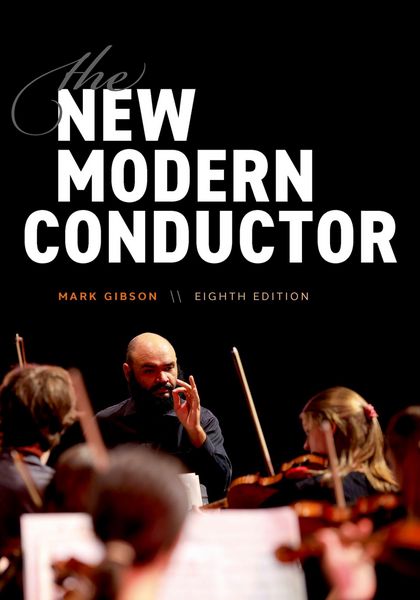
The New Modern Conductor argues that it is time to redefine what it means today to be a "modern conductor" within a cultural landscape transformed by technology and accessibility. In contrast to previous editions of the classic text (first published in 1961), which updated the original work, this eighth edition of The Modern Conductor presents an entirely new approach to conducting designed for the present day. As author (and co-author of the book's seventh edition) Mark Gibson argues, the mastery of the craft involves mastery of a variety of languages--vocabularies both musical and physical, visual and aural. From a technical standpoint, he shows, it is time to reexamine a basic approach to conducting, one that begins not with beating but with music, not with gesture but with score study and stylistic understanding. In doing so, Gibson transforms the basic vocabulary of conducting into a rich language of gesture to reflect one's best understanding of a composer's sound world. Emphasis is placed on learning and understanding music by well-known composers such as Beethoven and Debussy, overlooked masters such as Louise Farrenc and Samuel Coleridge-Taylor, and up and coming composers, including Aya Yoshida, Shawn Okpebholo, and Viet Cuong.
The book is written in two interwoven parts, with chapters devoted to technical skills, both conducting and musical, interspersed with "Score Study" chapters--score analyses that help the reader to understand and conduct a composer's music--and video links to demonstrations of conducting techniques. Written for students in conducting programs and conducting courses from beginner to advanced, this book is a much-needed update to an essential conducting text.
Noch keine Bewertungen vorhanden
Verfassen Sie die erste Bewertung zu diesem Artikel
Helfen Sie anderen Kundinnen und Kunden durch Ihre Meinung.
Kurze Frage zu unserer Seite
Vielen Dank für Ihr Feedback
Wir nutzen Ihr Feedback, um unsere Produktseiten zu verbessern. Bitte haben Sie Verständnis, dass wir Ihnen keine Rückmeldung geben können. Falls Sie Kontakt mit uns aufnehmen möchten, können Sie sich aber gerne an unseren Kund*innenservice wenden.
zum Kundenservice