KI-Beratung Beta

Gutscheinbedingungen

**Gültig bis 18.11.2026 auf englischsprachige Klassiker (klassiker-32728) online auf thalia.at und in der Thalia App. Einzelne Artikel können ausgeschlossen sein. Ausgenommen sind preisgebundene Artikel & eBooks. Pro Einkauf einmal einlösbar. Click & Collect nur bei Onlinevorabzahlung möglich. Keine Barauszahlung. Nicht kombinierbar mit anderen Aktionen und Gutscheinen. Gutschein wird auf max. 500€ Bestellwert angerechnet. Nicht gültig für Geschenkkarten, Versandkosten und Services.

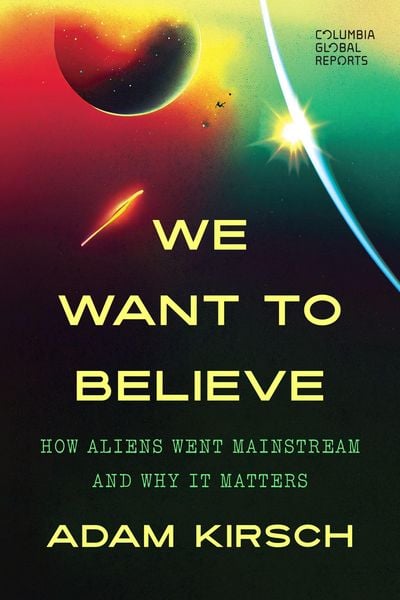
Produktbild: We Want to Believe

We Want to Believe How Aliens Went Mainstream and Why It Matters

18,99 €

inkl. gesetzl. MwSt., zzgl. Versandkosten


  • Kostenlose Lieferung ab 30 € Einkaufswert
  • Versandkostenfrei für Bonuscard-Kund*innen

Beschreibung

Why do we still believe in UFOs, despite repeated efforts to dismiss them? For most of the twentieth century, reports of unidentified flying objects were treated as cultural error: cranks, hoaxes, late-night radio. Then, abruptly, the posture changed. The Pentagon released videos it could not explain....

Beschreibung

Why do we still believe in UFOs, despite repeated efforts to dismiss them?
For most of the twentieth century, reports of unidentified flying objects were treated as cultural error: cranks, hoaxes, late-night radio. Then, abruptly, the posture changed. The Pentagon released videos it could not explain. Navy pilots testified under oath about encounters that defied known technology. Intelligence agencies acknowledged that something unfamiliar appears to move through the skies.
In We Want to Believe, Adam Kirsch, one of our most searching literary critics, traces the intellectual history behind this reversal to see UAPs not as fantasies or threats, but as a mystery closer to home. Moving from Cold War skeptics such as physicists Edward Condon and Carl Sagan—who helped define the boundaries of legitimate inquiry—to figures like Air Force officer Edward Ruppelt and astronomer J. Allen Hynek, who encountered anomalies from within official institutions, Kirsch follows how UAPs migrated from dismissed error to unresolved problem. Tracing how figures such as Pentagon official Luis Elizondo and astrophysicist Avi Loeb have reopened the question under radically different conditions, Kirsch draws on declassified documents, military encounters, and a wide literature of belief and skepticism to examine why some questions endure and what it means for modern societies when certainty fails and curiosity persists.

Produktdetails

Einband

Taschenbuch

Erscheinungsdatum

25.08.2026

Abbildungen

Illustrations

Verlag Columbia Global Reports

Produktdetails

Einband

Taschenbuch

Erscheinungsdatum

25.08.2026

Abbildungen

Illustrations

Verlag Columbia Global Reports
Seitenzahl

128

Maße (L/B/H)

18,7/12,5/1,2 cm

Gewicht

146 g

Sprache

Englisch

ISBN

978-1-967190-16-4

Herstelleradresse

Libri GmbH
Europaallee 1
36244 Bad Hersfeld
DE

Email: gpsr@libri.de

Noch keine Bewertungen vorhanden

Verfassen Sie die erste Bewertung zu diesem Artikel

Helfen Sie anderen Kundinnen und Kunden durch Ihre Meinung.

Kundinnen und Kunden meinen

Bewertungen (0)

  • Produktbild: We Want to Believe