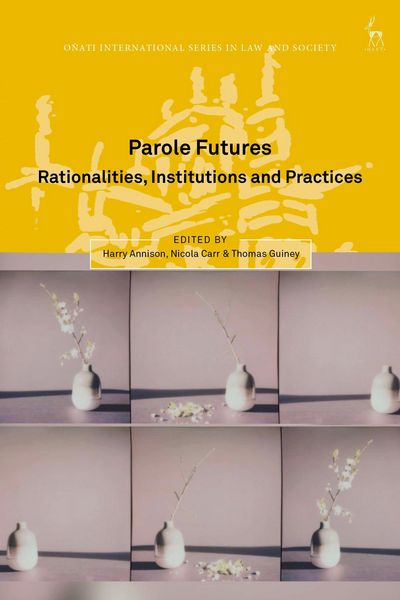
Parole Futures Rationalities, Institutions and Practices
-
- Englisch ausgewählt
77,99 €
inkl. gesetzl. MwSt.,
Beschreibung
Produktdetails
Einband
Taschenbuch
Erscheinungsdatum
21.01.2027
Herausgeber
Harry Annison + weitereVerlag
Hart PublishingSeitenzahl
336
Maße (L/B/H)
23,4/15,6/2,5 cm
Gewicht
454 g
Sprache
Englisch
ISBN
978-1-5099-8226-4
Does parole have a future? If it does, can we begin to imagine a different path? Is progressive penal reform possible, or has the time come to consider more radical alternatives in a context where there is little, if any, consensus on the underlying aims and techniques of contemporary prison release? What does this all mean for the prisoners, families, victims and publics upon whose confidence the parole system ultimately depends?
This book brings together a world-leading panel of 27 experts who draw upon insights from law, sociology, criminology and political science to explore these pressing questions. At a time when many parole systems are experiencing considerable strain, the aims of this collection are twofold: first, to encourage systematic and critical reflection on the rationalities, institutions and practices of parole. Second, to think big, and pose ambitious 'what if' questions about the possible futures of parole and prison release.
Offering novel insights from Asia, Australia, Europe, North America and South America, this collection builds the case for, and then showcases, a 'way of doing' parole research that is global in outlook, interdisciplinary in approach and unapologetically normative in character.
Noch keine Bewertungen vorhanden
Verfassen Sie die erste Bewertung zu diesem Artikel
Helfen Sie anderen Kundinnen und Kunden durch Ihre Meinung.
Kurze Frage zu unserer Seite
Vielen Dank für Ihr Feedback
Wir nutzen Ihr Feedback, um unsere Produktseiten zu verbessern. Bitte haben Sie Verständnis, dass wir Ihnen keine Rückmeldung geben können. Falls Sie Kontakt mit uns aufnehmen möchten, können Sie sich aber gerne an unseren Kund*innenservice wenden.
zum Kundenservice