Beschreibung
Produktdetails
Format
Kopierschutz
Nein
Family Sharing
Nein
Text-to-Speech
Nein
Erscheinungsdatum
06.02.2026
Verlag
Springer Nature SingaporeSeitenzahl
106 (Printausgabe)
Dateigröße
2002 KB
Sprache
Englisch
EAN
9789819554331
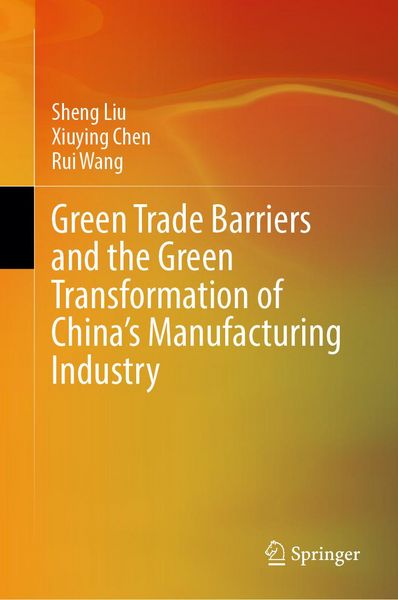
This book presents a China-specific analytical framework for assessing the impact of green trade barriers on the green transformation of the manufacturing sector. As the "greening" trend in trade policies gains momentum, research that addresses China's unique institutional context remains limited. From the unique perspectives of enterprise heterogeneity and differentiated green barriers, this study develops a comprehensive framework that integrates characteristic facts, theoretical mechanisms, impact evaluation, and policy recommendations. This framework enhances our understanding of how green trade barriers influence the green development of manufacturing sector in China. The research introduces a systematic empirical methodology for analyzing the microeconomic effects of these environmental trade shocks. Drawing on an integrated micro-level dataset combining China's Industrial Enterprise Database, Pollution Emission Database, and the WTO Environmental Database (EDB), this study employs a quasi-natural experimental approach by applying propensity score matching combined with difference-in-differences (PSM-DID) for causal identification. This methodological innovation facilitates a thorough investigation of the specific effects and mechanisms of green trade barriers on China's manufacturing green transition, including pollution reduction and green innovation. The findings provide valuable governance insights for aligning the green transformation of manufacturing enterprise with global trade environment regulations. While previous studies have predominantly focused on conventional non-technical trade barriers and pollution transfer via trade, there remains a lack of comprehensive exploration regarding the role of green trade barriers in driving corporate green transformation. By analyzing Chinese enterprises' responses to these barriers, this study offers targeted policy recommendations to effectively cope with external shocks through independent adjustment, while fostering new quality productive forces in the manufacturing sector.
Noch keine Bewertungen vorhanden
Verfassen Sie die erste Bewertung zu diesem Artikel
Helfen Sie anderen Kundinnen und Kunden durch Ihre Meinung.
Kurze Frage zu unserer Seite
Vielen Dank für Ihr Feedback
Wir nutzen Ihr Feedback, um unsere Produktseiten zu verbessern. Bitte haben Sie Verständnis, dass wir Ihnen keine Rückmeldung geben können. Falls Sie Kontakt mit uns aufnehmen möchten, können Sie sich aber gerne an unseren Kund*innenservice wenden.
zum Kundenservice