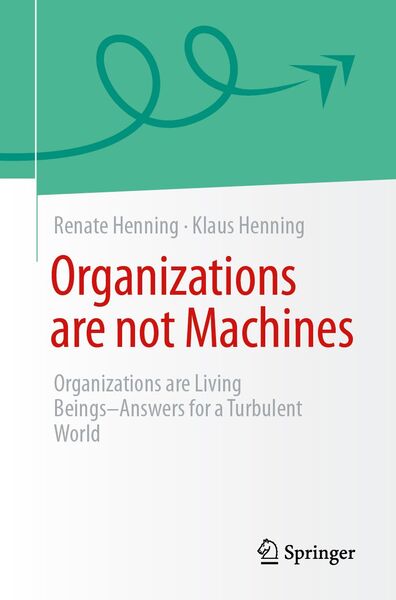
Organizations are not Machines Organizations are Living Beings: Answers for a Turbulent World
-
- Taschenbuch ausgewählt
- eBook
-
Sprache:Englisch
43,99 €
inkl. gesetzl. MwSt.,
Beschreibung
Growing complexity and dynamism characterize this world and most organizations. This book aims to provide a better understanding of the associated increase in turbulence of organizations and how to master it. It shows that organizations are not machines but should be understood and managed as living...
Produktdetails
| Einband |
Taschenbuch |
|---|---|
| Erscheinungsdatum |
31.07.2026 |
| Abbildungen |
XXVII, 119 p. 23 illus., 12 illus. in color. |
| Verlag | Springer Berlin |
Noch keine Bewertungen vorhanden
Verfassen Sie die erste Bewertung zu diesem Artikel
Helfen Sie anderen Kundinnen und Kunden durch Ihre Meinung.
Kurze Frage zu unserer Seite
Vielen Dank für Ihr Feedback
Wir nutzen Ihr Feedback, um unsere Produktseiten zu verbessern. Bitte haben Sie Verständnis, dass wir Ihnen keine Rückmeldung geben können. Falls Sie Kontakt mit uns aufnehmen möchten, können Sie sich aber gerne an unseren Kund*innenservice wenden.
zum Kundenservice