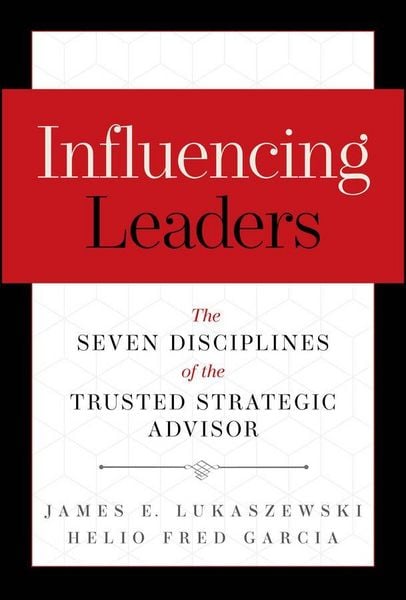
Influencing Leaders The Seven Disciplines of the Trusted Strategic Advisor
-
- Englisch ausgewählt
29,99 €
inkl. gesetzl. MwSt.,
- Kostenlose Lieferung ab 30 € Einkaufswert
- Versandkostenfrei für Bonuscard-Kund*innen
Beschreibung
Produktdetails
Einband
Gebundene Ausgabe
Erscheinungsdatum
28.07.2026
Verlag
WileySeitenzahl
240
Maße (L/B/H)
15,9/23,6/2 cm
Gewicht
492 g
Auflage
2. Auflage
Sprache
Englisch
ISBN
978-1-394-43228-8
Transform yourself from a trusted strategic advisor to a trusted strategic influencer. Become the advisor/influencer leaders rely on for strategic clarity and trusted counsel.
Executives face relentless pressure, ambiguity, and isolation, requiring advisors who deliver actionable counsel. In Influencing Leaders, James E. Lukaszewski and Helio Fred Garcia provide the proven framework for becoming a trusted strategic influencer partner that leaders turn to when facing critical decisions.
The book presents seven essential disciplines: establishing trustworthiness, mastering verbal influence, developing management perspective, thinking strategically, recognizing patterns, structuring constructive advice, and teaching leaders to apply counsel effectively. Practical tools include the Three-Minute Drill, Five Imperatives for Advisors/Influencers, Pattern Recognition techniques, and assessments for developing capabilities.
Readers will also find:
- The five components of trust and ten ways advisors commonly lose it, providing a clear roadmap for building and maintaining credibility with executives
- Frameworks for structuring advice that's clear, actionable, and strategically relevant
- Pattern recognition techniques that enable advisors and influencers to forecast future challenges by identifying recurring organizational and market dynamics
- Methods for developing a management perspective that allows advisors and influencers to see the world through the leader's eyes and understand executive priorities
- Communication strategies for delivering counsel with the clarity, brevity, and impact that time-pressured executives require
Influencing Leaders: The Seven Disciplines of the Trusted Strategic Advisor is perfect for mid-career professionals, external consultants, and anyone aspiring to influence organizational leaders. Influencing Leaders demonstrates that true influence is about mastering the disciplines of foresight, strategic thinking, and trust that make trusted strategic advisors and influencers essential to leaders making their most challenging decisions.
Becoming a trusted strategic advisor and influencer is a personal journey that requires discipline, self-reflection, and a commitment to serving leaders effectively. By mastering the seven disciplines and adopting a strategic mindset, advisors and influencers can achieve the six aspirations common among all trusted strategic advisors and influencers: acceptance, access, impact, inclusion, influence, and respect, all crucial to the leaders they serve.
Ultimately, the strategic influencer brings integrity based on truth and trust to everything they do.
Noch keine Bewertungen vorhanden
Verfassen Sie die erste Bewertung zu diesem Artikel
Helfen Sie anderen Kundinnen und Kunden durch Ihre Meinung.
Kurze Frage zu unserer Seite
Vielen Dank für Ihr Feedback
Wir nutzen Ihr Feedback, um unsere Produktseiten zu verbessern. Bitte haben Sie Verständnis, dass wir Ihnen keine Rückmeldung geben können. Falls Sie Kontakt mit uns aufnehmen möchten, können Sie sich aber gerne an unseren Kund*innenservice wenden.
zum Kundenservice