KI-Beratung Beta

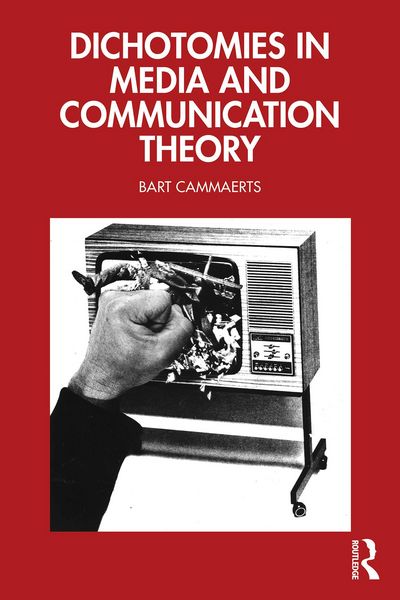
Produktbild: Dichotomies in Media and Communication Theory

Dichotomies in Media and Communication Theory

61,70 €

inkl. gesetzl. MwSt.

Beschreibung

This innovative textbook explores media and communication theory, and its intersections with social and political theory, through the prism of eight core dichotomies - communication/media, private/public, production/reception, material/symbolic, mainstream/alternative, abundance/scarcity, control/freedom,...

Beschreibung

This innovative textbook explores media and communication theory, and its intersections with social and political theory, through the prism of eight core dichotomies - communication/media, private/public, production/reception, material/symbolic, mainstream/alternative, abundance/scarcity, control/freedom, and virtual/real - revealing their complex interrelationships and significance in understanding contemporary media and communication landscapes.

Students will gain a nuanced understanding of media and communication theories by examining both sides of each dichotomy and their dynamic interplay. The book historicizes each concept pair, illustrates them with past and present examples, and demonstrates how competing paradigms often complement rather than contradict each other. This approach helps readers grasp theoretical complexity, recognize the democratic importance of media and communication, and develop critical thinking skills through engaging case studies and discussion questions in each chapter.

This textbook is designed for undergraduate and postgraduate students taking media and communication theory courses. Instructors teaching critical media and communication theory will find the dichotomy-based approach particularly valuable for helping students navigate complex theoretical debates and understand the field's intellectual development. It will also be useful supplementary reading for specific topics within broader media studies programs.

Produktdetails

Format

PDF

Kopierschutz

Ja

Family Sharing

Nein

Text-to-Speech

Nein

Produktdetails

Format

PDF

Format

eBooks im PDF-Format haben eine festgelegte Seitengröße und eignen sich daher nur bedingt zum Lesen auf einem tolino eReader oder Smartphone. Für den vollen Lesegenuss empfehlen wir Ihnen bei PDF-eBooks die Verwendung eines Tablets oder Computers.

Kopierschutz

Ja

Kopierschutz

Zum Lesen dieses eBooks auf Geräten der tolino Familie sowie auf sonstigen eReadern und am PC benötigen Sie eine ByteBook-ID. Weitere Hinweise zum Lesen von kopiergeschützten eBooks finden Sie unter Hilfe/Downloads.

Family Sharing

Nein

Family Sharing

Mit Family Sharing können Sie eBooks innerhalb Ihrer Familie (max. sechs Mitglieder im gleichen Haushalt) teilen. Sie entscheiden selbst, welches Buch Sie mit welchem Familienmitglied teilen möchten. Auch das parallele Lesen durch verschiedene Familienmitglieder ist durch Family Sharing möglich. Um eBooks zu teilen oder geteilt zu bekommen, muss jedes Familienmitglied ein Konto bei Thalia oder einem anderen tolino-Buchhändler haben. Weitere Informationen finden Sie unter Hilfe/Family-Sharing.

Text-to-Speech

Nein

Text-to-Speech

Bedeutet Ihnen Stimme mehr als Text? Mit der Funktion Text-to-Speech können Sie sich im tolino webReader und in der aktuellen Thalia – Lesen & Hören App das eBook vorlesen lassen. Weitere Informationen finden Sie unter Hilfe/Text-to-Speech.

Erscheinungsdatum

27.02.2026

Verlag Taylor & Francis eBooks
Seitenzahl

278 (Printausgabe)

Dateigröße

140963 KB

Sprache

Englisch

EAN

9781040579107

Barrierefreiheit
  • navigierbares Inhaltsverzeichnis
  • kurze Alternativtexte (z.B. für Abbildungen) vorhanden
  • keine Vorlesefunktionen des Lesesystems deaktiviert
  • navigierbarer Index
  • Seitennummerierung folgt dem gedruckten Werk

Noch keine Bewertungen vorhanden

Verfassen Sie die erste Bewertung zu diesem Artikel

Helfen Sie anderen Kundinnen und Kunden durch Ihre Meinung.

Kundinnen und Kunden meinen

Bewertungen (0)

Weitere Artikel finden Sie in

Die Leseprobe wird geladen.
  • Produktbild: Dichotomies in Media and Communication Theory