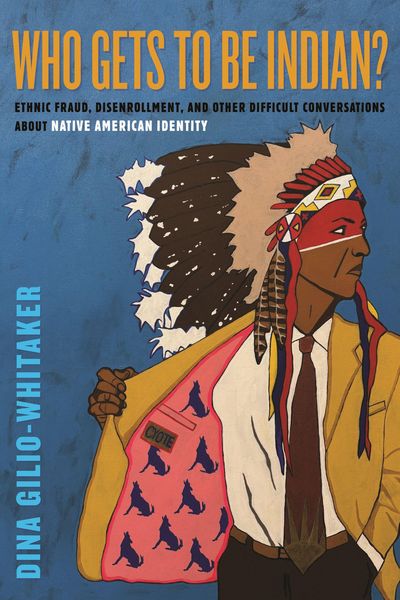
Who Gets to Be Indian? Ethnic Fraud, Disenrollment, and Other Difficult Conversations About Native American Identity
-
- Hardcover
- Taschenbuch ausgewählt
- eBook
-
Sprache:Englisch
22,99 €
inkl. gesetzl. MwSt.,
- Kostenlose Lieferung ab 30 € Einkaufswert
- Versandkostenfrei für Bonuscard-Kund*innen
Beschreibung
Produktdetails
Einband
Taschenbuch
Erscheinungsdatum
06.10.2026
Verlag
Random House N.Y.Seitenzahl
280
Maße (L/B)
22,9/15,2 cm
Gewicht
367 g
Sprache
Englisch
ISBN
978-0-8070-2612-0
“Indigeneity is caught between truth tellers and tricksters.…Dina Gilio-Whitaker boldly espouses our truths while confronting the tricksters among us. Indigenous America needs more truth tellers like her and books like this.”—Gabe Galanda, Indigenous rights attorney
An investigation into how Native American identity became a commodity, from cultural appropriation to ethnic fraud to disenrollment
Settler capitalism has been so effective that the very identities of Indigenous people have been usurped, misconstrued, and weaponized. In Who Gets to Be Indian?, scholar and writer Dina Gilio-Whitaker (Colville Confederated Tribes) explores how ethnic fraud and the commodification of Indianness has resulted in mass confusion about what it means to be Indigenous in the United States.
As an entry point to the seemingly intractable problem of ethnic fraud, Gilio-Whitaker critically looks to the film industry, including a case study of Sacheen Littlefeather, who is most known as the Native American woman that rejected an Oscar on behalf of Marlon Brando in 1973—though later revealed, she was not who she said she was. Gilio-Whitaker argues that this pretendian phenomenon originated in Southern California when the United States was forcing assimilation of Indians into white America culturally, but also into its capitalist economic system. With Indianness becoming a marketized commodity in the Hollywood film business, the field became open to anyone who could convincingly adopt an Indian persona.
Deeply researched using socio-historical analysis, Gilio-Whitaker offers insights from her own experiences grappling with identity to provide clarity and help readers understand how the commodification of Indianness have ultimately left many people of legitimate American Indian heritage to be disconnected from their tribes. Personal and compelling, Gilio-Whitaker takes settler capitalism to task and helps us better understand how we got here in order to counteract the abuses of pretendianism and disenrollment.
Noch keine Bewertungen vorhanden
Verfassen Sie die erste Bewertung zu diesem Artikel
Helfen Sie anderen Kundinnen und Kunden durch Ihre Meinung.
Kurze Frage zu unserer Seite
Vielen Dank für Ihr Feedback
Wir nutzen Ihr Feedback, um unsere Produktseiten zu verbessern. Bitte haben Sie Verständnis, dass wir Ihnen keine Rückmeldung geben können. Falls Sie Kontakt mit uns aufnehmen möchten, können Sie sich aber gerne an unseren Kund*innenservice wenden.
zum Kundenservice