KI-Beratung Beta

Produktbild: Workhouse Lives

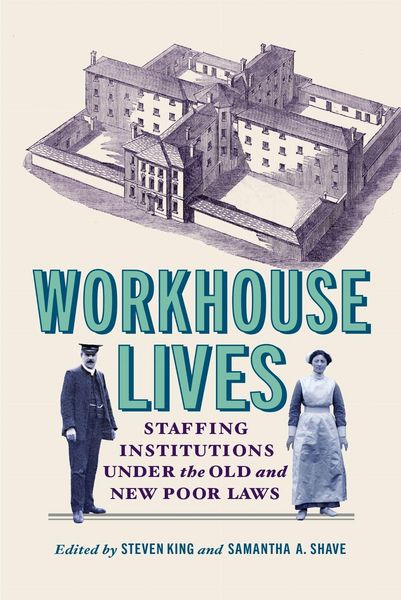
Workhouse Lives Staffing Institutions Under the Old and New Poor Laws

39,99 €

inkl. gesetzl. MwSt., Versandkostenfrei


Beschreibung

Following the passage of the 1834 New Poor Law, parishes in England and Wales were organized into unions, each of which had at least one workhouse, a public institution where impoverished individuals and families were housed, fed, and put to work. Beyond bricks and regulations, the workhouse was shaped...

Beschreibung

Following the passage of the 1834 New Poor Law, parishes in England and Wales were organized into unions, each of which had at least one workhouse, a public institution where impoverished individuals and families were housed, fed, and put to work. Beyond bricks and regulations, the workhouse was shaped and animated by those who ran it. Workhouse Lives reconstructs the careers and experiences of workhouse staff: masters and matrons, nurses, schoolmasters, porters, chaplains, taskmasters, relieving officers, and inspectors.
In the workhouse, roles overlapped, lines of responsibility blurred, and power was constantly negotiated. As the functions of the welfare state expanded, staff were expected to manage dormitories and medical wards, teach children and offer spiritual guidance, resolve disputes, keep records, administer vaccinations, arrange foster placements, and conduct sanitary inspections. Violence was a regular feature of workhouse life, arising from clashes between staff and inmates, conflicts among inmates (including domestic violence), and staff disputes. Officers might abuse their authority, sometimes brutally, while others acted with care and compassion. What moulded the lives of everyone within the workhouse was less the administrative structure than the character of the person appointed to each role. This dynamic continues to resonate in modern welfare systems, which, however bureaucratized, are embodied by the people working on the front lines.
Touching on histories of welfare, labour, poverty, literacy, material culture, and state formation, Workhouse Lives illuminates the personalities, motivations, and community connections of staff whose lives have long been hidden.

Rezension

"This excellent edited volume makes a timely and significant contribution. Its broad scope looks beyond workhouse inmates to explore the staff to a depth that is currently lacking in the historical debate. This will become a seminal work on which further research will be based." - Carol Beardmore, the Open University

Portrait

Steven King is distinguished professor of economic and social history at Nottingham Trent University.Samantha A. Shave is a research associate at the School of Social Work and Social Policy at University of Strathclyde.

Produktdetails

Einband

Taschenbuch

Erscheinungsdatum

30.06.2026

Abbildungen

19 illustrations, 8 tables

Herausgeber Samantha A. Shave + weitere

Produktdetails

Einband

Taschenbuch

Erscheinungsdatum

30.06.2026

Abbildungen

19 illustrations, 8 tables

Herausgeber
Verlag Mcgill-Queen's University Press
Seitenzahl

396

Maße (L/B/H)

22,6/15,2/2,5 cm

Gewicht

581 g

Sprache

Englisch

ISBN

978-0-228-02781-2

Herstelleradresse

Libri GmbH
Europaallee 1
36244 Bad Hersfeld
DE

Email: gpsr@libri.de

Noch keine Bewertungen vorhanden

Verfassen Sie die erste Bewertung zu diesem Artikel

Helfen Sie anderen Kundinnen und Kunden durch Ihre Meinung.

Kundinnen und Kunden meinen

Bewertungen (0)

  • Produktbild: Workhouse Lives
  • Tables and Figures vii
    Acknowledgements xi
    Abbreviations xiii

    1 Introduction 3
    Samantha A. Shave and Steven King

    2 The Workhouse Master 30
    Natalie Carter and Paul Carter

    3 “Mrs Hollings … still declines to resign”: Workhouse Matrons, 1834–1855 57
    Sue Hawkins

    4 Schoolmasters and Schoolmistresses Under the New Poor Law 85
    Peter Jones

    5 Workhouse Nurses in the Northwest of England, 1834–1914 120
    Stuart Wildman

    6 Taskmasters and Old Poor Law Workhouses, c.1750–1834 149
    Susannah Ottaway and Alannah Tomkins

    7 The Workhouse Porter 176
    Elizabeth Hurren and Steven King

    8 Workhouse Chaplains in the Early Years of the New Poor Law, c.1834–1847 202
    Samantha A. Shave

    9 The Relieving Officer: A Liminal Role 231
    Julie-Marie Strange

    10 Assistant Poor Law Commissioners and the Reforming of the Workhouse System Under the New Poor Law 260
    Myungsu Kang

    11 Workhouse Inspectors in Sussex 286
    Mary Rudling

    12 Social Explorers, 1837–1935 316
    Peter Higginbotham

    Bibliography 343
    Contributors 361
    Index 367