Gutscheinbedingungen

**Gültig bis 17.08.2026 auf Schreibwaren & Office-Artikel online auf thalia.at, in der Thalia App und in teilnehmenden Thalia Buchhandlungen in Österreich mit Schulsortiment. In den Buchhandlungen nur gültig auf lagernde Ware. Einzelne Artikel können ausgeschlossen sein. Ausgenommen sind preisgebundene Artikel. Pro Einkauf einmal einlösbar. Nur gültig gegen Vorlage oder im Onlineshop hinterlegter Bonuscard. Infos zur Einlösung in der Buchhandlung sind auf der Bonuscard-Vorteilspreisseite zu finden. Click & Collect nur bei Onlinevorabzahlung möglich. Keine Einlösung bei Scan & Go-Bezahlung. Keine Barauszahlung. Nicht kombinierbar mit anderen Aktionen und Gutscheinen. Gutschein wird auf max. 500€ Bestellwert angerechnet. Nicht gültig für Geschenkkarten, Versandkosten und Services.

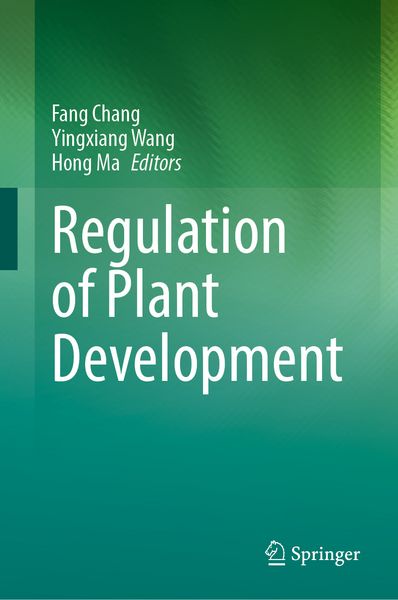
Produktbild: Regulation of Plant Development
- 10%

Regulation of Plant Development

10% sparen

215,99 € UVP 241,99 €

inkl. gesetzl. MwSt., Versandkostenfrei


Beschreibung

Produktdetails

Einband

Gebundene Ausgabe

Erscheinungsdatum

10.04.2026

Abbildungen

X, 103 illus., 95 illus. in color., schwarz-weiss Illustrationen, farbige Illustrationen

Herausgeber

Fang Chang + weitere

Verlag

Springer Singapore

Seitenzahl

863

Maße (L/B/H)

24,1/16/5,2 cm

Gewicht

1459 g

Auflage

1. Auflage

Sprache

Englisch

ISBN

978-981-9570-32-4

Beschreibung

Portrait

Dr. Fang Chang is Professor at the School of Life Sciences, Fudan University. She is a recipient of the National Excellent Youth Science Fund and the Wei Zhiming Young Innovator Award from the Chinese Society of Plant Physiology. She serves on multiple national and regional academic committees, including the Women Scientists Committee and the Plant Structure and Reproduction Committee of the Chinese Society of Plant Physiology and Molecular Biology, the Women Scientists Committee of the Chinese Society for Cell Biology, and the councils of the Shanghai Society of Plant Physiology and Molecular Biology and the Shanghai Society of Biochemistry and Molecular Biology. Her research explores plant reproductive development and environmental adaptation, with a focus on reproductive stem cell fate determination, mechanisms sustaining growth and fertility under stress, and sex determination and directed evolution. Her work has been published in Nature Communications, The Plant Cell, Molecular Plant, and other leading journals.

Dr. Yingxiang Wang is Professor and Dean of the College of Life Sciences at South China Agricultural University, and a recipient of the National Science Fund for Distinguished Young Scholars. He also serves as a principal investigator at the Guangdong Laboratory for Lingnan Modern Agriculture. His research specializes in using model plant Arabidopsis and the crop soybean to investigate the molecular mechanisms of meiotic recombination and its application in breeding, as well as the genetic basis of soybean adaptation to tropical and subtropical climates for new germplasm development. He has published over 80 SCI papers and reviews in prestigious journals including Nature Plants, Nature Communications, The Plant Cell, and PNAS.

Dr. Hong Ma is Professor of Biology and the Huck Endowed Chair in Plant Reproductive Development and Evolution at the Pennsylvania State University. He is a Fellow of AAAS and has served as the President-Elect/President/Immediate Past President of American Society of Plant Biologists from 2023-2026. He has studied plant reproductive development under favorable and stressful conditions using Arabidopsis and rice and a combination of molecular and genomic/transcriptomic approaches, with discoveries of novel genes essential for meiosis and anther development. He has also conducted molecular phylogenetic and evolutionary analyses of large angiosperm families, including Asteraceae, Brassicaceae, Cucurbitaceae, Fabaceae, Orchidaceae, Poaceae, Rosaceae, and Solanaceae, and major angiosperm lineages. He and his collaborators have published >340 scientific articles, including in those in Cell, Nature, Science, Nature Genetics, Molecular Plant, Nature Plant, Nature Communication, The Plant Cell, PNAS, Journal of Integrative Plant Biology, Plant Communication, and Molecular Biology and Evolution.

Produktdetails

Einband

Gebundene Ausgabe

Erscheinungsdatum

10.04.2026

Abbildungen

X, 103 illus., 95 illus. in color., schwarz-weiss Illustrationen, farbige Illustrationen

Herausgeber

Verlag

Springer Singapore

Seitenzahl

863

Maße (L/B/H)

24,1/16/5,2 cm

Gewicht

1459 g

Auflage

1. Auflage

Sprache

Englisch

ISBN

978-981-9570-32-4

Herstelleradresse

Springer-Verlag KG
Sachsenplatz 4-6
1201 Wien
AT

Email: GPSR Kontakt

Noch keine Bewertungen vorhanden

Verfassen Sie die erste Bewertung zu diesem Artikel

Helfen Sie anderen Kundinnen und Kunden durch Ihre Meinung.

Kundinnen und Kunden meinen

Bewertungen (0)

  • Produktbild: Regulation of Plant Development
  • Chapter 1. Arabidopsis Root development.- Chapter 2. Shoot development.- Chapter 3. Leaf development.- Chapter 4. De novo organ regeneration in vegetative propagation.- Chapter 5. Floral transition.- Chapter 6. Reproductive Meristems and Regulatory Genes.- Chapter 7. Floral organ specification.- Chapter 8. Floral Organ Identity Determination.- Chapter 9. Stamen and anther development.- Chapter 10. Ovary and ovule development.- Chapter 11. Regulatory Mechanism of Plant Meiosis.- Chapter 12. Pollen development.- Chapter 13. Female Gametophyte Development.- Chapter 14. Pollination and fertilization.- Chapter 15. Male fertility and hybrid sterility in Plants.- Chapter 16. Genetic and molecular regulation of self-incompatibility in flowering plants.- Chapter 17. A reconsideration of sex: from the perspective of the sexual reproduction cycle.- Chapter 18. Embryogenesis: the establishment of a new life in plants.- Chapter 19. Endosperm development.- Chapter 20. Genomic Imprinting in Plants.- Chapter 21. Developmental genetics and the evolution of endless fruit Forms.