KI-Beratung Beta

Gutscheinbedingungen

**Gültig bis 30.11.2026 auf Spielzeug, Schreibwaren, Filme, Geschenke & Trends, Musik, tolino eReader & Zubehör, Hörbücher und Hörbuch-Downloads, nicht preisgebundene Bücher und Kalender online auf thalia.at und in der Thalia App. Einzelne Artikel können ausgeschlossen sein. Aufgrund der Buchpreisbindung sind deutschsprachige Bücher und eBooks ausgenommen. Zusätzlich ausgenommen sind Abos & Flatrates, Games, Geschenkkarten/-boxen, Shelfies, Software, Zeitschriften sowie einzelne Artikel von tonies®. Pro Einkauf einmal einlösbar. Nur gültig mit im Onlineshop hinterlegter Bonuscard. Click & Collect nur bei Onlinevorabzahlung möglich. Keine Barauszahlung. Nicht kombinierbar mit anderen Aktionen und Gutscheinen. Gutschein wird auf max. 500€ Bestellwert angerechnet. Nicht gültig für Versandkosten und Services.

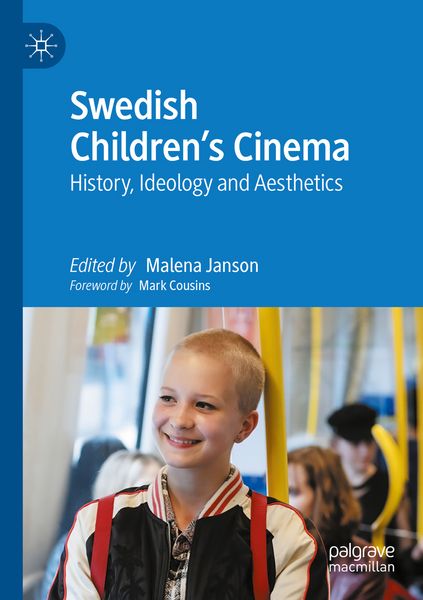
Produktbild: Swedish Children’s Cinema
- 16%

Swedish Children’s Cinema History, Ideology and Aesthetics

16% sparen

146,99 € UVP 175,99 €

inkl. gesetzl. MwSt., Versandkostenfrei


Beschreibung

Swedish children’s cinema has a long and rich history. It encompasses the rascal films of the 1920s, the realism of the 1940s, the ambitious artistic renewal of the 1970s, the child empowering films of the 1990s through the early 2000s, and the multiple, exceedingly popular, Astrid Lindgren adaptations...

Beschreibung

Swedish children’s cinema has a long and rich history. It encompasses the rascal films of the 1920s, the realism of the 1940s, the ambitious artistic renewal of the 1970s, the child empowering films of the 1990s through the early 2000s, and the multiple, exceedingly popular, Astrid Lindgren adaptations across the decades. Devoted to exploring this cinematographic legacy, this book offers close readings across academic disciplines, probing various genres, eras, media debates, transmediations, and audience-receptions. Childhood studies, with its critical comprehension of society’s changing notions of childhood, here serves as a key framework in fruitful combination with, inter alia, feminist, queer, intermedial, postcolonial, and eco-critical perspectives. This collection fills an important knowledge gap on Swedish film history as well as the distinctly Nordic tradition of children’s culture, and thereby contributes to the burgeoning field of international children’s cinema research. It is introduced with a foreword by Mark Cousins.


Portrait


Malena Janson
is a senior lecturer in child culture at Stockholm University. Her research comprises the ideology and aesthetics of children’s cinema, representations of children in audiovisual media, and film education. She has also published extensively on the subjects of film and child culture in national Swedish newspapers and journals.


Produktdetails

Einband

Taschenbuch

Erscheinungsdatum

11.08.2025

Abbildungen

XXII, 301 p. 31 illus., 28 illus. in color.

Herausgeber Malena Janson

Produktdetails

Einband

Taschenbuch

Erscheinungsdatum

11.08.2025

Abbildungen

XXII, 301 p. 31 illus., 28 illus. in color.

Herausgeber Malena Janson
Verlag Springer
Seitenzahl

301

Maße (L/B/H)

21/14,8/1,8 cm

Gewicht

421 g

Sprache

Englisch

ISBN

978-3-031-57003-2

Herstelleradresse

Springer-Verlag GmbH
Tiergartenstr. 17
69121 Heidelberg
DE

Email: ProductSafety@springernature.com

Noch keine Bewertungen vorhanden

Verfassen Sie die erste Bewertung zu diesem Artikel

Helfen Sie anderen Kundinnen und Kunden durch Ihre Meinung.

Kundinnen und Kunden meinen

Bewertungen (0)

  • Produktbild: Swedish Children’s Cinema

  • Chapter 1-Introduction: On the history, ideology, and aesthetics of Swedish children’s cinema.-
    Part I: Histories Of a Nation.- 
    Chapter 2. ‘D’ya know where they’re from?’: Migrants in Swedish children’s film.- Chapter 3. Beauties and beasts: On the child-nature relationship in Swedish children’s film. -Chapter 4. Like other kids, yet different: Sámi children in Swedish children’s film.- Chapter 5. Beyond subjugation and stereotype: The representation of girls in 
    Comedy Queen.-
    Part II: Ideologies of Childhoods.-
    Chapter 6. The prankster, the funster, and the overhelper: The comedy of mischief in the Swedish 
    folkhem.-
    Chapter 7. Foolish fathers in Swedish family film: Involved fatherhood and middle-class masculinity as spectacle.- Chapter 8. A relationship revolution: Child-centred parenthood in contemporary children’s cinema.- Chapter 9. ‘The movie ended quite well, but not that well, and I liked that because that’s how it is in reality’: Reception of and debates on Suzanne Osten’s films for children.- Chapter 10. We’ll never be those kids again: Queer perspectives on children’s cinema.-
    Part III: Aesthetics And Methods of Children’s Cinema.- 
    Chapter 11. Audiovisual empathy: Adopting a child’s perspective in children’s cinema.- Chapter 12. Astrid Lindgren’s early filmmaking: Transmediations across radio, books, and moving images.- Chapter 13. Per Åhlin: The master of Swedish animation.- Chapter 14. Freedom captured: Film adaptations of Maria Gripe’s children’s books.- Chapter 15. ‘We just don’t know!’: A metamodal method for learning through film.