Gutscheinbedingungen

**Gültig bis 25.06.2026 auf fremdsprachige Bücher online auf thalia.at und in der Thalia App. Einzelne Artikel können ausgeschlossen sein. Ausgenommen sind preisgebundene Artikel & eBooks. Pro Einkauf einmal einlösbar. Click & Collect nur bei Onlinevorabzahlung möglich. Keine Barauszahlung. Nicht kombinierbar mit anderen Aktionen und Gutscheinen. Gutschein wird auf max. 500€ Bestellwert angerechnet. Nicht gültig für Geschenkkarten, Versandkosten und Services.

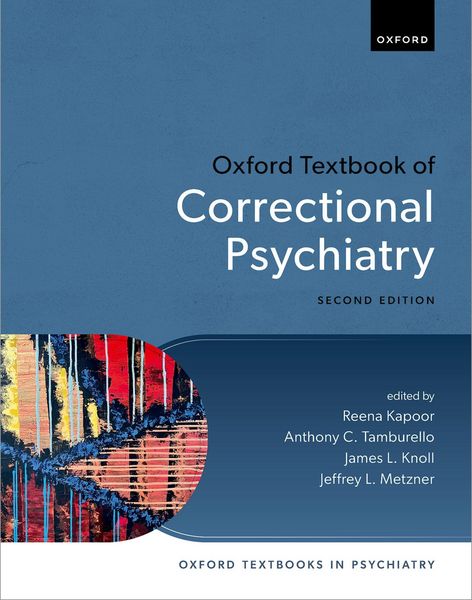
Produktbild: Oxford Textbook of Correctional Psychiatry

Oxford Textbook of Correctional Psychiatry

229,99 €

inkl. gesetzl. MwSt., Versandkostenfrei


Beschreibung

Produktdetails

Einband

Gebundene Ausgabe

Erscheinungsdatum

31.12.2025

Herausgeber

Reena Kapoor + weitere

Verlag

Oxford Academic

Seitenzahl

552

Maße (L/B/H)

28,1/22,4/3,1 cm

Gewicht

2023 g

Auflage

2nd edition

Sprache

Englisch

ISBN

978-0-19-777400-7

Beschreibung

Produktdetails

Einband

Gebundene Ausgabe

Erscheinungsdatum

31.12.2025

Herausgeber

Verlag

Oxford Academic

Seitenzahl

552

Maße (L/B/H)

28,1/22,4/3,1 cm

Gewicht

2023 g

Auflage

2nd edition

Sprache

Englisch

ISBN

978-0-19-777400-7

Herstelleradresse

Libri GmbH
Europaallee 1
36244 Bad Hersfeld
DE

Email: gpsr@libri.de

Kundinnen und Kunden meinen

0 Bewertungen

Informationen zu Bewertungen

Zur Abgabe einer Bewertung ist eine Anmeldung im Konto notwendig. Die Authentizität der Bewertungen wird von uns nicht überprüft. Wir behalten uns vor, Bewertungstexte, die unseren Richtlinien widersprechen, entsprechend zu kürzen oder zu löschen.

Die Bewertungen sind nach Format, Anzahl Sterne und Datum sortiert.

Verfassen Sie die erste Bewertung zu diesem Artikel

Helfen Sie anderen Kund*innen durch Ihre Meinung

Kundinnen und Kunden meinen

0 Bewertungen filtern

  • Produktbild: Oxford Textbook of Correctional Psychiatry
    • SECTION I

    • Context and perspective

    • 1. History of imprisonment

    • Bruce A. Arrigo

    • 2. Mental illness management: The shift from

    • community to corrections

    • Charles L. Scott

    • 3. Formative case law and litigation

    • Mohamedu F. Jones

    • 4. Human rights

    • Jamie Fellner and Mohamedu F. Jones

    • 5. The lived experience of incarceration

    • Barbara Fair and Reena Kapoor

    • SECTION II

    • Organization, structure, and function of

    • correctional institutions

    • 6. Diversion programs and alternatives to

    • incarceration

    • Merrill Rotter, Virginia Barber-Rioja, and Zoe R. Feingold

    • 7. Jails and prisons

    • Joel A. Dvoskin and Sarah M. Broom

    • 8. Population management

    • Robert L. Trestman

    • 9. Levels of care

    • Jeffrey L. Metzner

    • 10. Restrictive housing and disciplinary

    • infractions

    • Mary Perrien and Maureen L. O'Keefe

    • 11. Funding of correctional health care and

    • its implications

    • Robert L. Trestman and Jeremiah W. Burkhart

    • SECTION III

    • Adapting psychiatric practice to correctional

    • settings

    • 12. Ethics in carceral mental health

    • Philip J. Candilis and Lindsay M. Poplinski

    • 13. Working inside the walls

    • Cecilia Vigil and Anthony C. Tamburello

    • 14. Communicating with interdisciplinary

    • professionals

    • Dean Aufderheide

    • 15. Mental health screening and brief

    • assessments

    • Daisy Ort, Michael P. Maloney, Joel Dvoskin,

    • and Jeffrey L. Metzner

    • 16. Interviewing

    • Anthony C. Tamburello

    • 17. Diagnostic review and revision

    • Suma Yarrapureddy and Sohrab Zahedi

    • 18. Transition of pharmacology from community

    • to corrections

    • Badr Ratnakaran and Robert L. Trestman

    • 19. Management of sleep complaints

    • Bernice S. Elger

    • 20. Evaluation of malingering

    • James L. Knoll IV and Vikram Kumar

    • 21. Use of telepsychiatry

    • Ashley J. B. MacLean and Danielle B. Kushner

    • 22. Cultural and structural competence

    • Stephanie Eng, Harshit Sharma, Luca Pauselli,

    • and Reena Kapoor

    • 23. Community reentry preparation and

    • coordination

    • Henry A. Dlugacz

    • SECTION IV

    • Management of psychiatric emergencies

    • 24. Crisis assessment and management

    • Reena Kapoor

    • 25. Seclusion, restraint, and involuntary

    • medication

    • Darren L. Lish

    • 26. Hospitalization

    • Michael A. Norko, Thomas Kocienda, and Charles Dike

    • SECTION V

    • Psychopharmacology

    • 27. Formulary management

    • Nathaniel P. Morris and Paul R. S. Burton

    • 28. Medication administration and

    • management

    • Catherine M. Knox

    • 29. Prescribing hypnotic agents and controlled

    • substances

    • Rusty Reeves and Sadé D. Frazier

    • 30. Misuse of noncontrolled medications

    • Anthony C. Tamburello

    • SECTION VI

    • Disorders and syndromes

    • 31. Diagnostic prevalence and comorbidity

    • Stuart D. M. Thomas

    • 32. Psychotic disorders

    • Todd Tomita and Rakesh Lamba

    • 33. Mood disorders

    • Jayesh Kamath and Brian Wasicek

    • 34. Adjustment disorders

    • Graham D. Glancy

    • 35. Anxiety disorders

    • Catherine F. Lewis

    • 36. Posttraumatic stress disorder and

    • trauma-informed care

    • Nancy Wolff and Catherine F. Lewis

    • 37. Personality disorders

    • Donald E. McLawhorn and Daniel Jackson

    • 38. Attention deficit disorders

    • Todd Tomita and Michael K. Champion

    • 39. General medical disorders with psychiatric

    • implications

    • Jennifer S. Bradford and Erik J. Garcia

    • 40. Psychiatric assessment and management of

    • chronic pain

    • Robert L. Trestman and Anthony C. Tamburello

    • SECTION VII

    • Psychotherapy and other nonpharmacologic

    • treatments

    • 41. Applying the recovery model in prisons and

    • jails

    • Joel T. Andrade and Debra A. Pinals

    • 42. Individual psychotherapy

    • James L. Knoll IV and Adam Bernstein

    • 43. Group psychotherapy

    • Brittany Brizendine and Ruben Valencia

    • 44. Peer support programs

    • Melissa J. Lavoie and Charlotte M. Schwarz

    • SECTION VIII

    • Substance use disorders

    • 45. Substance use in facilities

    • Jason D. Ourada

    • 46. Detoxification or supervised withdrawal

    • Rebecca A. Ballard

    • 47. Treatment models for substance use

    • disorders

    • Ingrid A. Binswanger and Jennifer M. Tippett

    • 48. Dual diagnosis

    • CJ Appleton and Faye S. Taxman

    • 49. Pharmacotherapy for substance use

    • disorders

    • James Q. Zhou and Sarah E. Wakeman

    • 50. Transition of substance use disorder

    • treatment to the community

    • Nadeen Ibrahim and Jaimie P. Meyer

    • SECTION IX

    • Self-injury, aggression, and misconduct

    • 51. Suicide risk reduction

    • Lindsay M. Hayes and Jeffrey L. Metzner

    • 52. Self-injurious behaviors

    • Sharen Barboza

    • 53. Aggression

    • Robert L. Trestman

    • 54. Behavior management plans

    • Henry Schmidt III, André Ivanoff, and William Kuo

    • SECTION X

    • Distinct populations

    • 55. Incarcerated women

    • Catherine F. Lewis

    • 56. Lesbian, gay, bisexual, and transgender

    • individuals

    • Elie G. Aoun and Lama Bazzi

    • 57. Developmental disabilities

    • Barbara E. McDermott and George W. Hebert

    • 58. Traumatic brain injury

    • William R. McBride and Anthony C. Tamburello

    • 59. Justice-involved youth

    • Rosa E. Negrón Muñoz

    • 60. Aging incarcerated persons

    • Nicole Mushero and Lisa C. Barry

    • 61. Incarcerated veterans

    • James F. DeGroot, Sarah Shelton, John Penezic,

    • and Savannah Shaw

    • 62. Immigrants in detention

    • Maria Masotta and Rose Kleman

    • 63. Sex offenders

    • Fabian M. Saleh and Reena Kapoor

    • 64. Clinical and legal implications of gangs

    • Annette L. Hanson

    • SECTION XI

    • Special topics

    • 65. Staff wellness

    • Elizabeth B. Ford

    • 66. Forensic and legal issues

    • Erik Roskes and Charles D. Cash

    • 67. Psychological testing

    • Virginia Barber Rioja, Tasha R. Phillips, and Ira K. Packer

    • 68. Pandemic management

    • Nathaniel P. Morris

    • 69. Hunger strikes

    • Haseeb Haroon and Emily A. Keram

    • 70. Responding to sexual abuse of incarcerated

    • persons

    • Robert W. Dumond and Doris A. Dumond

    • 71. Jail-based competency restoration

    • Peter Ash and Reema Dedania

    • 72. International perspectives and practice

    • differences

    • Lindsay D. G. Thomson and Lindsey Gilling

    • SECTION XII

    • Education, research, and quality

    • improvement

    • 73. Standards and accreditation for jails, prisons,

    • and juvenile facilities

    • Joseph V. Penn

    • 74. Systems monitoring and quality

    • improvement

    • Jeffrey L. Metzner

    • 75. Leadership, training, and educational

    • opportunities

    • Raymond F. Patterson and Marcus R. Patterson

    • 76. Role of clinical trainees

    • Charles L. Scott

    • 77. Correctional mental health research

    • Nancy Wolff

    • 78. The future of correctional psychiatry: Evolving

    • and recommended standards

    • Jeffrey L. Metzner, Reena Kapoor, Anthony C. Tamburello, and

    • James L. Knoll

    • Appendix