KI-Beratung Beta

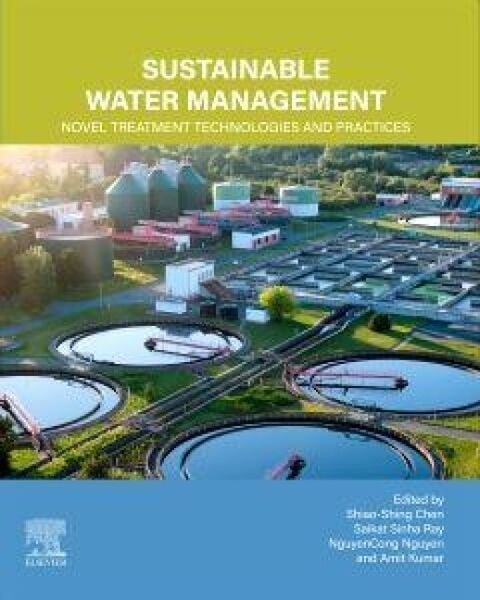
Produktbild: Sustainable Water Management

Sustainable Water Management Novel Treatment Technologies and Practices

205,99 €

inkl. gesetzl. MwSt., Versandkostenfrei


Beschreibung

Sustainable Water Management: Novel Treatment Technologies and Practices offers a comprehensive and interdisciplinary resource that connects cutting-edge water treatment technologies with sustainable management strategies. The book covers essential information about Advanced desalination technologies...

Beschreibung

Sustainable Water Management: Novel Treatment Technologies and Practices offers a comprehensive and interdisciplinary resource that connects cutting-edge water treatment technologies with sustainable management strategies. The book covers essential information about Advanced desalination technologies (RO), forward osmosis (FO), multistage flash (MSF), membrane distillation (MD), brine valorization, and their comparative efficiency. It covers digital innovations such as Digital Twins, artificial intelligence (AI), Internet of Things (IoT), and real-time data monitoring for smart water systems. By bridging the domains of environmental engineering, digital innovation, water science, and policy to support SDG -6 and global water security, this book provides a comprehensive resource.
It is designed for students and researchers, practitioners, engineers, and policymakers who want to learn more about integrating emerging innovations in membrane science, desalination, electrochemical methods, and smart digital systems with climate-resilient and circular economy principles. Special emphasis is placed on low-cost, decentralized solutions for resource-limited and water-stressed regions.

Portrait

Professor Shiao-Shing Chen is a professor at the Institute of Environmental Engineering and Management, National Taipei University of Technology (Taipei Tech), Taiwan. Prof. Chen earned his Ph.D. in Civil and Environmental Engineering from the University of Central Florida, USA, in 1998. His research focuses on membrane separation processes, physicochemical treatment methods, and environmental nanotechnology. He leads the Water Treatment Technology Laboratory at Taipei Tech, contributing significantly to the field of environmental engineering. Throughout his career, Prof. Chen has published over 140 peer-reviewed articles. Prof. Chen's work has been recognized through various awards, including the Outstanding Research Award at Taipei Tech. His expertise and leadership continue to influence the field of environmental engineering, particularly in the development of innovative water treatment technologies.​

Dr Saikat Sinha Ray is an accomplished environmental engineer and academic, currently serving as an Assistant Professor (Sr.) in the Department of Environmental Science and Engineering at SRM University, Andhra Pradesh, India. His expertise encompasses membrane technology, seawater desalination, and the development of self-cleaning and functional surfaces for advanced environmental applications. Dr. Ray earned his Ph.D. in Environmental Engineering from the National Taipei University of Technology, Taiwan. He further strengthened his academic and research profile through postdoctoral research and a subsequent appointment as a Research Assistant Professor at the Ulsan National Institute of Science and Technology (UNIST), South Korea, where he contributed significantly to advancements in membrane fabrication, nanocomposite materials, and next-generation water treatment technologies. His research has been published in leading international journals such as Desalination, Journal of Membrane Science, and Chemical Engineering Journal. His work on integrating artificial intelligence with water treatment systems and designing superhydrophobic membranes for enhanced desalination and separation processes has gained considerable recognition in the global scientific community. In addition to his research articles, Dr. Ray has made notable contributions to academic publishing through books and edited volumes, including conference proceedings. He has already published several books, including Sustainable Water Solutions: Proceedings of the Water Elixir Meet 2025, Water Security for Ecosystems: Metrics and Pathways for a Sustainable Future (July 1, 2026), and Sustainable Water Management (August 1, 2026), reflecting his commitment to disseminating knowledge and fostering interdisciplinary dialogue in water research. Beyond his scholarly output, Dr. Ray actively engages in editorial responsibilities, international collaborations, and academic event organization, further demonstrating his dedication to advancing innovative and sustainable solutions in environmental engineering and water resource management.

Dr. Nguyen Cong Nguyen is currently serving as an Associate Professor at the Faculty of Environment and Natural Resources, Dalat University, Vietnam. His research focuses on advanced membrane technologies for water and wastewater treatment, including forward osmosis, membrane bioreactors, and desalination processes.​ Dr. Nguyen has authored over 60 peer-reviewed publications, accumulating more than 3000 citations. ​In addition to his research contributions, Dr. Nguyen is actively involved in academic collaborations and has participated in various international conferences and projects, furthering the development of sustainable water treatment solutions.

Dr. Amit Kumar is a Professor of Hydrology and Water Resources at Nanjing University of Information Science and Technology. He obtained his M.Tech and PhD from the Indian Institute of Technology (IIT) Roorkee and conducted his postdoctoral research at Hohai University, China. Dr. Kumar’s research spans the ecological health of aquatic habitats, water quality modeling, and water security practices to meet the Sustainable Development Goals. He has published five books, including Elsevier’s Climate Change in the Himalayas, and is an advisory board member for the Elsevier journal Ecological Indicators.
Produktdetails

Einband

Taschenbuch

Erscheinungsdatum

13.08.2026

Herausgeber Shiao-Shing Chen + weitere
Verlag Elsevier

Produktdetails

Einband

Taschenbuch

Erscheinungsdatum

13.08.2026

Herausgeber
Verlag Elsevier
Seitenzahl

554

Maße (L/B/H)

23,4/18,8/3 cm

Gewicht

1066 g

Sprache

Englisch

ISBN

978-0-443-44853-9

Herstelleradresse

Libri GmbH
Europaallee 1
36244 Bad Hersfeld
DE

Email: gpsr@libri.de

Noch keine Bewertungen vorhanden

Verfassen Sie die erste Bewertung zu diesem Artikel

Helfen Sie anderen Kundinnen und Kunden durch Ihre Meinung.

Kundinnen und Kunden meinen

Bewertungen (0)

  • Produktbild: Sustainable Water Management
  • Part I: Vision, Challenges, and Strategic Frameworks
    1. A Global Overview of Sustainable Water Management Challenges, Frameworks, and Policy-Driven Technological Shifts

    Part II: Advanced Treatment Technologies for Sustainable Water Systems
    2. Sustainable Desalination Approaches and Brine Management Strategies for Freshwater Production in Water-Stressed Regions
    3. Forward Osmosis and Pressure-Retarded Osmosis: Emerging Membrane Platforms for Low-Energy Desalination

    Part III: Breakthroughs in Membrane Science for Water Treatment
    4. Advanced Anti-Fouling and Biodegradable Membrane Materials: Innovations in Material Science and Fabrication Technologies
    5. Understanding Membrane Fouling: Mechanisms, Transport Physics, and Mitigation Strategies
    6. Smart and Selective Membrane Technologies for the Removal of Micropollutants and Trace Metals from Wastewater systems
    7. Bio-Inspired and Multifunctional Membranes: Design Strategies for Fouling Resistance and Catalytic Water Treatment

    Part IV: Complementary Treatment Technologies for Complex Contaminants
    8. Advanced Adsorption and Ion Exchange Technologies for Removing Complex and Emerging Pollutants from Water Sources
    9. Electrochemical Processes for Treating Contaminants in Industrial and Municipal Wastewaters

    Part V: Digital Innovations and Smart Monitoring
    10. Digital Twin and IoT-Enabled Smart Water Treatment Systems: Foundations, Frameworks, and Applications
    11. AI-Driven Predictive Modeling and Real-Time Optimization in Water Systems

    Part VI: Contaminants of Emerging Concern and Health Risk Management
    12. Treatment and Risk Mitigation of Emerging Water Contaminants Including PFAS, Microplastics, and Pharmaceuticals

    Part VII: Water Use Efficiency and Circularity in Industrial Systems
    13. Circular Economy in Industrial Water Use: Approaches to Water Recovery, Recycling, and Sustainable Effluent Treatment

    Part VIII: Resilience Building and Public Participation
    14. Building Climate-Resilient Water Systems: Strategies for Water Security Amidst Urbanization and Environmental Change
    15. Policy Innovation, Financing Mechanisms, and Community Participation for Scaling Sustainable Water Solutions

    Part IX: Future Horizons and Transformational Pathways in Water Treatment Innovation
    16. Emerging Frontiers in Water Treatment Technologies, Research Integration, and Global Collaboration Pathways
    17. Next-Generation Smart Water Solutions for Water Security and Achieving Sustainable Development Goals