Gutscheinbedingungen

**Gültig nur für Bestellungen an die Wunsch-Poststation bis 10.06.2026 auf Spielzeug, Schreibwaren, Filme, Geschenke & Trends, Musik, tolino eReader & Zubehör, Hörbücher und Hörbuch-Downloads (außer Abo), nicht preisgebundene Bücher und Kalender online auf thalia.at und in der Thalia App. Einzelne Artikel können ausgeschlossen sein. Aufgrund der Buchpreisbindung sind deutschsprachige Bücher und eBooks ausgenommen. Zusätzlich ausgenommen sind preisgebundene Artikel, Abos & Flatrates, eBooks, Games, Geschenkkarten/-boxen, Shelfies, Software, Zeitschriften sowie einzelne Artikel von tonies®. Pro Einkauf einmal einlösbar. Kein Click & Collect möglich. Keine Barauszahlung. Nicht kombinierbar mit anderen Aktionen und Gutscheinen. Gutschein wird auf max. 500€ Bestellwert angerechnet. Nicht gültig für Versandkosten und Services.

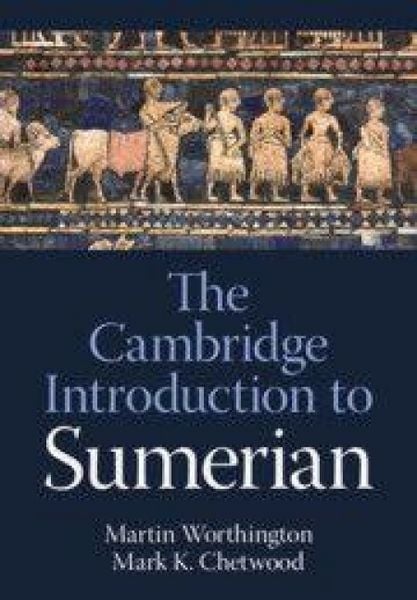
Produktbild: The Cambridge Introduction to Sumerian
Vorbesteller Neu

The Cambridge Introduction to Sumerian

44,99 €

inkl. gesetzl. MwSt., Versandkostenfrei


Beschreibung

Produktdetails

Verkaufsrang

18665

Einband

Taschenbuch

Erscheinungsdatum

30.11.2026

Verlag

Cambridge Academic

Seitenzahl

812

Sprache

Englisch

ISBN

978-1-00-957408-2

Beschreibung

Produktdetails

Verkaufsrang

18665

Einband

Taschenbuch

Erscheinungsdatum

30.11.2026

Verlag

Cambridge Academic

Seitenzahl

812

Sprache

Englisch

ISBN

978-1-00-957408-2

Herstelleradresse

Libri GmbH
Europaallee 1
36244 Bad Hersfeld
DE

Email: gpsr@libri.de

Kundinnen und Kunden meinen

0 Bewertungen

Informationen zu Bewertungen

Zur Abgabe einer Bewertung ist eine Anmeldung im Konto notwendig. Die Authentizität der Bewertungen wird von uns nicht überprüft. Wir behalten uns vor, Bewertungstexte, die unseren Richtlinien widersprechen, entsprechend zu kürzen oder zu löschen.

Die Bewertungen sind nach Format, Anzahl Sterne und Datum sortiert.

Verfassen Sie die erste Bewertung zu diesem Artikel

Helfen Sie anderen Kund*innen durch Ihre Meinung

Kundinnen und Kunden meinen

0 Bewertungen filtern

  • Produktbild: The Cambridge Introduction to Sumerian
  • 1. Sumerian through the ages; 2. How Sumerian was spoken: pronunciation; 3. More on pronunciation; 4. How Sumerian was written: the Cuneiform script; Reading A. An UR III Tablet in Minneapolis; 5. Basics of nouns and adjectives; 6. Function endings and function bubbles; Exercise I. Selecting and applying function endings; 7. More on function endings; 8. Sumerian's alternative to subjects and objects: absolutive and ergative; Exercise II. Dividing English clauses into function bubbles; Reading B. An UR III Tablet in Turin; 9. More on ergative and absolutive; 10. The order of function bubbles; Reading C. An early dynastic marble tablet in Chicago; 11. more on -A.K 'of'; Exercise III. Practising -A.K phrases; Exercise IV. Translating -A.K phrases; 12. Other 'parts of speech'; Reading D. A stone tablet of Ur-Namma in London; Exercise V. Flipped -A.K constructions and possessive endings; 13. Compound nouns; Reading E. An old Babylonian royal inscription in Glasgow and elsewhere; 14. Interactions of noun endings; Exercise VI. Two simple brick inscriptions; 15. General principles of numbers and measurements; 16. General principles of Sumerian verbs; 17. The verbal base; Exercise VII. Use of the fixed, primary and secondary verbal base; 18. Actor zones 1 and 2; Exercise VIII. Ergative and absolutive markers and the verbal base; Reading F. An UR III tablet in Leuven with a grammatical change of mind; 19. Completive and incompletive; 20. 'Two-part verbs'; Exercise IX. Practising verbs; Reading G. A Gude¿a inscription in London and elsewhere; 21. Saying 'to be': the suffixed copula; Exercise X. The suffixed copula; 22. Syllables vs morphemes; Exercise XI. Dividing words into syllables; 23. How Sumerian spelling works; Exercise XII. Identifying 'dummy doubles'; Exercise XIII. A stone wig; 24. The prefixes i-, mu- and nu; Exercise XIV. Simple statements - part 1; Exercise XV. Simple statements - part 2; 25. The dimensional zone; Exercise XVI. Practising the dimensional zone; 26. The prefixes ba- and bi; Reading H. an UR III record in Ontario about delivering sheep skins; Exercise XVII. More complex statements - part 1; Exercise XVIII. More complex statements - part 2; 27. Working out missing sounds; Exercise XIX. Pronouncing verbs; Exercise XX. Pronouncing clauses; Exercise XXI. Pronouncing more complex verbs; 28. Topics in syntax; 29. The 'clausal -a'; Exercise XXII. The 'clausal -a'; Reading I. Specimens of the clausal -a in the third millennium; 30. Non-finite verbal forms; Exercise XXIII. Non-finite forms; Reading J. An extract from Sulge X; READING K. An extract from Gude¿a, Cylinder B (in the Louvre); 31. Pseudo-finite clauses; Reading L. Extract from Innana and Ebi¿; 32. Introduction to 'emphatic expressions'; 33. The prefix ga; Exercise XXIV. Using the prefix ga; 34. The prefix ¿e; Exercise XXV: Using the prefix ¿e; 35. The prefix na(n); Exercise XXVI. Using the prefix na(n); Reading M. An incantation in Jena against snakes and scorpions; 36. The prefix bara; Exercise XXVII. Using the prefix bara; Exercise XXVIII. The multiple readings of ba-ra; 37. ¿e- and nan- (and ga- and bara-) clauses with other meanings; 38. The imperative: positive you-commands; Exercise XXIX. Recapitulation of emphatic expressions; 39. More on verbs; 40. Advanced verbal prefixes; 41. Advanced syntax; 42. Emesal; Readings N-P. Three readings in Emesal; 43. The interaction of Sumerian and Akkadian; Reading Q. A creation story on a middle Assyrian manuscript; Readings R-W. Other longer texts; Taking things further: other learning resources; Reference; Key to the exercises; Conventions used in this book; List of sources; References; Starting cuneiform: fifty common signs; Sign list; Glossary; Index; Charts of the Sumerian finite verb.