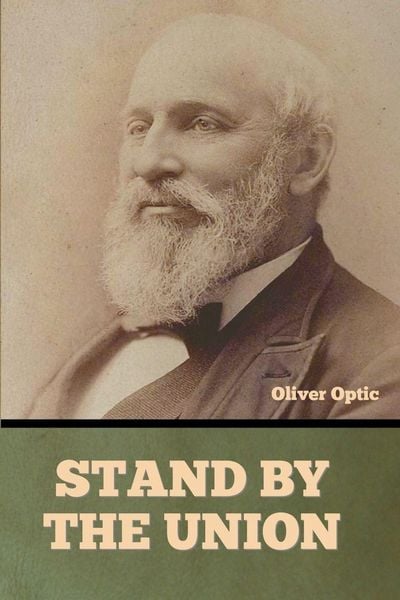
Stand By the Union
-
- Englisch ausgewählt
16,99 €
inkl. gesetzl. MwSt.,
- Kostenlose Lieferung ab 30 € Einkaufswert
- Versandkostenfrei für Bonuscard-Kund*innen
Beschreibung
Produktdetails
Einband
Taschenbuch
Erscheinungsdatum
28.10.2025
Verlag
Bibliotech PrSeitenzahl
136
Maße (L/B/H)
22,9/15,2/0,9 cm
Gewicht
233 g
Sprache
Englisch
EAN
9798897732739
"Stand By the Union" is a historical novel by Oliver Optic (a pen name for William Taylor Adams), first published in 1863 during the American Civil War. The book was part of the series "Army and Navy Stories", which aimed to inspire patriotism and support for the Union cause during the war. The novel tells the story of a young boy named Harry Hazard, who is inspired by the events of the Civil War and joins the Union army. The book focuses on themes of loyalty, duty, and patriotism, promoting a positive and heroic image of the Union cause. Optic's stories often depicted young men who, through courage and selflessness, contributed to the larger cause of American progress and liberty. About the Author William Taylor Adams (July 30, 1822 - March 27, 1897), pseudonym Oliver Optic, was an academic, author, and a member of the Massachusetts House of Representatives. Adams first began to write at the age of 28, and his first book, Hatchie, the Guardian Slave (1853), was published under the pseudonym of Warren T. Ashton. It was only a modest success, but Adams was undaunted. In 1854 Adams produced his first real hit, the initial volume in the Boat Club series. Adams continued to write until he died in Dorchester, March 27, 1897. Among his best-known works were the two "Blue & Gray" series, which were set during the Civil War. Adams wrote well over 100 books in total, most of them for a boy audience, and the majority of these in series of four to six volumes published under a pseudonym. Two novels published in his own name, The Way of the World and Living Too Fast, were aimed at adult readers but fell flat. Though "Oliver Optic" was the pseudonym he used most, his work also appeared under the bylines "Irving Brown," "Clingham Hunter, M.D.," and "Old Stager." Like many children's authors of his day, he was additionally an editor, and many of his works first appeared in Oliver Optic's Magazine. Adams' writing was criticized by Louisa May Alcott, among others. Alcott used her story Eight Cousins to deplore Adams' use of slang, his cast of bootblacks and newsboys, and his stories of police courts and saloons. Adams responded in kind, pointing out Alcott's own use of slang and improbable plot twists. (wikipedia.org)
Noch keine Bewertungen vorhanden
Verfassen Sie die erste Bewertung zu diesem Artikel
Helfen Sie anderen Kundinnen und Kunden durch Ihre Meinung.
Kurze Frage zu unserer Seite
Vielen Dank für Ihr Feedback
Wir nutzen Ihr Feedback, um unsere Produktseiten zu verbessern. Bitte haben Sie Verständnis, dass wir Ihnen keine Rückmeldung geben können. Falls Sie Kontakt mit uns aufnehmen möchten, können Sie sich aber gerne an unseren Kund*innenservice wenden.
zum Kundenservice