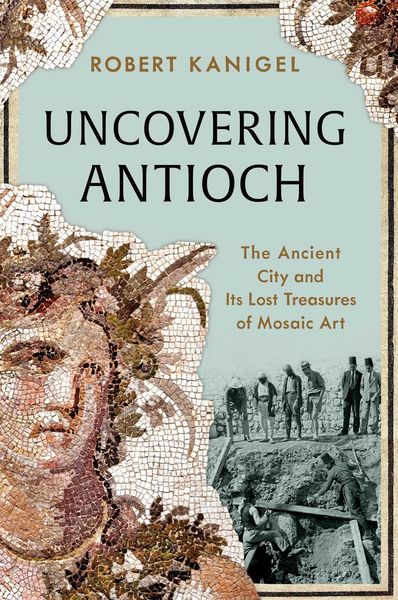
Uncovering Antioch The Ancient City and Its Lost Treasures of Mosaic Art
25,99 €
inkl. gesetzl. MwSt.,
- Kostenlose Lieferung ab 30 € Einkaufswert
- Versandkostenfrei für Bonuscard-Kund*innen
Beschreibung
Produktdetails
Einband
Gebundene Ausgabe
Erscheinungsdatum
22.10.2026
Abbildungen
4-C 8-pg insert; b-w photos t-o;
Verlag
HarperCollinsSeitenzahl
320
Maße (L/B/H)
16,2/23,6/3,1 cm
Gewicht
504 g
Sprache
Englisch
ISBN
978-1-66800-625-2
The story of the making, loss, and recovery of some of the greatest treasures of antiquity, raising questions about ancient mosaic art and its creation, the work of archaeology, and museum practice.
In 1932, after years of fundraising and flurries of letters back and forth, an archaeological team from Princeton University gathered in Antioch, Syria. They expected to find sculptures, frescos, palace walls, and busts. Instead, all across this ancient Roman metropolis, they stumbled upon one site after another of extraordinary mosaic treasure, incomparable in number, quality, and historical significance.
There were some three hundred of them in all, glories of color and design, stones and pieces of glass heaped up into spectacular images. Many of them were vast, room-sized tableaus, commissioned by wealthy Antiochenes for their villas. They depict banquets, drinking contests, olive harvests; lions, leopards, peacocks, and gazelles; legends, scenes from mythology, Cupid and Psyche, Narcissus and Dionysus. Though dated to early in the Christian era, they are unabashedly pagan; the animals and plants they depict are so life-like scholars can often identify them by species. A vast, collectively obsessive outpouring of industry and effort, art and artisanship, they stand for beauty, the drive to make it, and the human need to have it as part of life.
The eight-year dig at Antioch was an astonishing human enterprise, one that survived Depression-era financial downturns, interpersonal conflict, and the looming threat of World War II. Gained were mosaics that ultimately ended up in museums around the world—Harvard University, Boston’s Museum of Fine Arts, The Baltimore Museum of Art, New York’s Metropolitan, Paris’s Louvre, and more than a dozen others. But while an archaeological triumph, shedding new light on the ancient world, it also raised profound questions about the nature and progress of art. Who has a right to a work of art—the country of origin or the archaeologists who dig it up? Is art more interesting for its beauty, its history, or the craft and intelligence that goes into its making? What elevates a craftsperson into an artist? Robert Kanigel tackles these questions and more, breathing life into this landmark adventure of intellect and discovery.
Noch keine Bewertungen vorhanden
Verfassen Sie die erste Bewertung zu diesem Artikel
Helfen Sie anderen Kundinnen und Kunden durch Ihre Meinung.
Kurze Frage zu unserer Seite
Vielen Dank für Ihr Feedback
Wir nutzen Ihr Feedback, um unsere Produktseiten zu verbessern. Bitte haben Sie Verständnis, dass wir Ihnen keine Rückmeldung geben können. Falls Sie Kontakt mit uns aufnehmen möchten, können Sie sich aber gerne an unseren Kund*innenservice wenden.
zum Kundenservice