Gutscheinbedingungen

**Gültig am 28.06.2026 auf Spielzeug, Schreibwaren, Filme, Geschenke & Trends, Musik, tolino eReader & Zubehör, Hörbücher und Hörbuch-Downloads (außer Abo), nicht preisgebundene Bücher und Kalender online auf thalia.at und in der Thalia App. Einzelne Artikel können ausgeschlossen sein. Aufgrund der Buchpreisbindung sind deutschsprachige Bücher und eBooks ausgenommen. Zusätzlich ausgenommen sind preisgebundene Artikel, Abos & Flatrates, eBooks, Games, Geschenkkarten/-boxen, Shelfies, Software, Zeitschriften sowie einzelne Artikel von tonies®. Pro Einkauf einmal einlösbar. Click & Collect nur bei Onlinevorabzahlung möglich. Keine Barauszahlung. Nicht kombinierbar mit anderen Aktionen und Gutscheinen. Gutschein wird auf max. 500€ Bestellwert angerechnet. Nicht gültig für Versandkosten und Services.

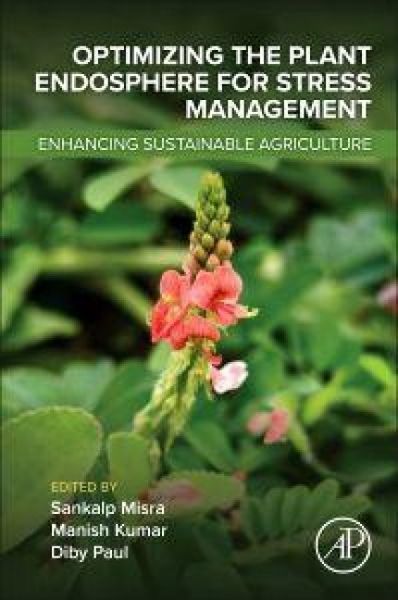
Produktbild: Optimizing the Plant Endosphere for Stress Management
Vorbesteller Neu

Optimizing the Plant Endosphere for Stress Management Enhancing Sustainable Agriculture

184,99 €

inkl. gesetzl. MwSt., Versandkostenfrei


Beschreibung

Produktdetails

Einband

Taschenbuch

Erscheinungsdatum

01.11.2026

Herausgeber

Sankalp Misra + weitere

Verlag

Elsevier

Seitenzahl

350

Maße (L/B)

22,9/15,2 cm

Gewicht

450 g

Sprache

Englisch

ISBN

978-0-443-27793-1

Beschreibung

Portrait

Sankalp Misra is an Assistant Professor at Shri Ramswaroop Memorial University (SRMU), Uttar Pradesh, India. He completed his Ph.D. in Biological Sciences from CSIR-National Botanical Research Institute (NBRI), Lucknow, and was awarded by the Academy of Scientific and Innovative Research (AcSIR). He has qualified for CSIR-UGC NET and has been awarded a Senior Research Fellowship (SRF) and Research Associateship (RA) from ICMR (Indian Council of Medical Research), New Delhi, India. He has been felicitated with the Young Researcher Award from the Institute of Scholars and SRMU. Dr. Misra has also received Best Poster Awards at international and national conferences. He holds a Life membership of “The Association of Microbiologists of India (AMI)”. He has published over 20 SCI research articles, authored over 20 book chapters, and edited one book. He has received research grants from different funding agencies including ICMR, UPCST, and SRMU. His research interests include sustainable agriculture, abiotic stress-resilient agriculture, and biofertilizer-based technologies for improving soil fertility and crop productivity.

Dr. Manish Kumar, Associate Professor, Amity University, Noida, Uttar Pradesh, India has done his PhD in Microbiology from ICAR-National Bureau of Agriculturally Important Microorganisms & RD University, Jabalpur. He has expertise in the field of plant-microbe interaction, microbial metagenomics, microbial diversity, and in-silico vaccine designing. He has qualified ICAR-NET with experiences like RA and SRF in ICAR and CSIR labs. He is a recipient of SERB SIRE (SERB International Research Experience-2022) fellowship from DST (Department of Science & Technology), Govt. of India. He worked under the guidance of Dr. Marina Kalyuzhnaya, Professor, Department of Biology, San Diego State University, USA. He is the Editor and reviewer of different reputed research journals in the field of microbiology. He has organized several workshops, and national/international conferences as organizing and joint organizing secretary.

Diby Paul is a professor of biology at the College of Life and Health Sciences at Truett McConnell University in Georgia, USA. He has published numerous research articles on topics such as plant growth-promoting rhizobacteria, rhizosphere microbial ecology, bacterial salt-stress tolerance, quorum sensing, and quorum quenching. His postdoctoral research involved characterizing bacterial proteins associated with salt stress tolerance. He is a recipient of the Endeavour Executive Research Fellowship and conducted advanced research on the molecular characterization of the rhizosphere microbiome at Murdoch University in Perth, Australia. His research at the Sociomicrobiology & Microbial Interactions Laboratory (SMIL) focuses on using quorum-quenching phytomolecules to inhibit harmful bacterial biofilm formation.

Produktdetails

Einband

Taschenbuch

Erscheinungsdatum

01.11.2026

Herausgeber

Verlag

Elsevier

Seitenzahl

350

Maße (L/B)

22,9/15,2 cm

Gewicht

450 g

Sprache

Englisch

ISBN

978-0-443-27793-1

Herstelleradresse

Libri GmbH
Europaallee 1
36244 Bad Hersfeld
DE

Email: gpsr@libri.de

Kundinnen und Kunden meinen

0 Bewertungen

Informationen zu Bewertungen

Zur Abgabe einer Bewertung ist eine Anmeldung im Konto notwendig. Die Authentizität der Bewertungen wird von uns nicht überprüft. Wir behalten uns vor, Bewertungstexte, die unseren Richtlinien widersprechen, entsprechend zu kürzen oder zu löschen.

Die Bewertungen sind nach Format, Anzahl Sterne und Datum sortiert.

Verfassen Sie die erste Bewertung zu diesem Artikel

Helfen Sie anderen Kund*innen durch Ihre Meinung

Kundinnen und Kunden meinen

0 Bewertungen filtern

  • Produktbild: Optimizing the Plant Endosphere for Stress Management
  • Part I: Introduction to Plant-Endophyte Interactions
    1. Outlook of Plant-Endophyte Interaction for Sustainable Agriculture
    2. Significance of Endophytes in Plant Stress Management

    Part II: Colonization of Endophytes in Plants
    3. Mechanisms of Endophyte Entry and Transmission
    4. Factors Influencing Endophyte Colonization Success

    Part III: Molecular Aspects of Plant-Endophyte Interactions
    5. Signaling Pathways and Gene Expression Changes
    6. Recognition of Endophytes by Plants and Evasion of Plant Defenses

    Part IV: Endophyte-Mediated Alleviation of Abiotic Stresses
    7. Enhancing Tolerance to Drought, Salinity, and Heavy Metals
    8. Modulation of Antioxidant Systems and Osmolyte Biosynthesis

    Part V: Endophyte-Mediated Mitigation of Biotic Stresses
    9. Induction of Systemic Resistance against Pathogens and Pests
    10. Production of Antimicrobial Compounds and Enzymes

    Part VI: Endophyte-Mediated Improvement of Nutrient Acquisition
    11. Nutrient Acquisition by Endophytes
    12. Enhancing Nutrient Uptake under Limiting Conditions

    Part VII: Screening and Selection of Stress-Tolerant Endophytes
    13. Identification of Beneficial Traits and Functional Genes
    14. Compatibility Assessment with Target Plant Species

    Part VIII: Manipulation of Endophyte Communities for Stress Management
    15. Strategies for Modifying Endophyte Composition and Diversity
    16. Challenges in Plant Endosphere Community Engineering

    Part IX: Endophytic Nanotechnology
    17. Endophytic Fungi Mediated Nano-solutions for Biotic or Abiotic Plant Stress
    18. Endophytic Bacteria Mediated Nano-solutions for Biotic or Abiotic Plant Stress

    Part X: Challenges and Future Perspectives
    19. Addressing the Complexity of Plant-Endophyte-Environment Interactions
    20. Integrating Omics Technologies and Synthetic Biology Approaches
    21. Harnessing Omics Technologies for Plant-Endophyte Association
    22. Synthetic Biology Approaches for Plant Endosphere Engineering
    23. Recent Advances in Endophyte-Mediated Techniques in Agriculture
    24. Bridging Research and Practice: Engaging Stakeholders in Agricultural Innovation
    25. Leaf Phyllosphere Endophytes Contributing in the Nano-Dye Synthesis: A Case Study