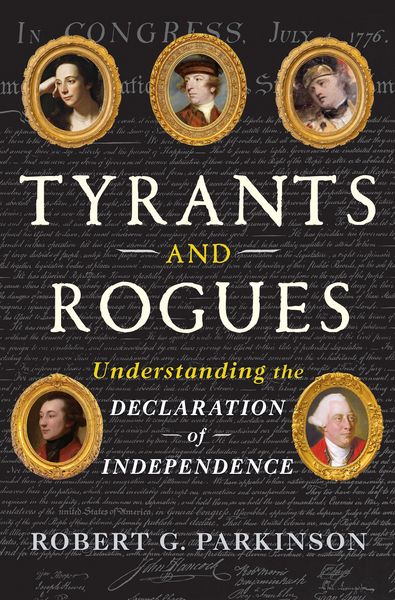
Tyrants and Rogues Understanding the Declaration of Independence
29,15 €
inkl. gesetzl. MwSt.Beschreibung
Produktdetails
Format
ePUB
Kopierschutz
Nein
Family Sharing
Nein
Text-to-Speech
Ja
Erscheinungsdatum
09.06.2026
Verlag
W. W. Norton & CompanySeitenzahl
352 (Printausgabe)
Dateigröße
31632 KB
Sprache
Englisch
EAN
9781324124559
"A timely and highly useful book in this semiquincentennial yearand far beyond." Kirkus Reviews, starred review
From an acclaimed historian, a revelatory account of the Declaration of Independence, centered not on the lofty preamble but on the specific grievances that make up the bulk of the document and that offer an entirely new view into the Revolutionary era.
We think of the Declaration of Independence as timeless. We know the sacred phrases: all men are created equal, life, liberty, and the pursuit of happiness, self-evident truths, certain inalienable rights. These are some of the most important words human beings have ever written. And they are all from the Declaration's preamble, which has inspired people for centuries, including generations of revolutionaries all over the world.
But as historian Robert G. Parkinson points out, the Declaration was not written as a timeless statement of political philosophy. It was, rather, produced in the heat of a confusing, bloody, and desperate war. And in that moment, it wasn't high ideals alone that drove the patriots forward. Parkinson's great innovation is to allow us, 250 years on, to see the Declaration as its authors did. For them, the opening paragraphs were not the main event. It was the body of the Declarationthe twenty-seven grievances against King Georgethat formed the essential part. Even Thomas Jefferson would have been puzzled by history's fixation on his opening sentences.
Parkinson takes us into the grievances, giving us stories of the Revolutionary era that are little known today but loomed large for the patriots. As the leaders of the Revolution saw it, they had been pushed to the breaking point by British officials who undermined colonial legislatures and courts, corrupted the judiciary, turned military power against civilians, inflamed slave revolts, forced colonists to fight one anotherultimately, waging war on their own people.
In his brilliantly original reading of the Declaration, Parkinson asks fundamental questions that have too often been overlooked: Why did the colonies declare independence when they did? What were their nonnegotiable demands? Who were the individuals whose actions made reconciliation impossible? By recovering the people and conflicts behind the Declaration's grievances, Parkinson offers a strikingly new account of the American Revolutionand shows that the issues that most alarmed colonists in 1776 are urgent once again today.
Kundinnen und Kunden meinen
Verfassen Sie die erste Bewertung zu diesem Artikel
Helfen Sie anderen Kund*innen durch Ihre Meinung
Kurze Frage zu unserer Seite
Vielen Dank für Ihr Feedback
Wir nutzen Ihr Feedback, um unsere Produktseiten zu verbessern. Bitte haben Sie Verständnis, dass wir Ihnen keine Rückmeldung geben können. Falls Sie Kontakt mit uns aufnehmen möchten, können Sie sich aber gerne an unseren Kund*innenservice wenden.
zum Kundenservice