Gutscheinbedingungen

**Gültig am 28.06.2026 auf Spielzeug, Schreibwaren, Filme, Geschenke & Trends, Musik, tolino eReader & Zubehör, Hörbücher und Hörbuch-Downloads (außer Abo), nicht preisgebundene Bücher und Kalender online auf thalia.at und in der Thalia App. Einzelne Artikel können ausgeschlossen sein. Aufgrund der Buchpreisbindung sind deutschsprachige Bücher und eBooks ausgenommen. Zusätzlich ausgenommen sind preisgebundene Artikel, Abos & Flatrates, eBooks, Games, Geschenkkarten/-boxen, Shelfies, Software, Zeitschriften sowie einzelne Artikel von tonies®. Pro Einkauf einmal einlösbar. Click & Collect nur bei Onlinevorabzahlung möglich. Keine Barauszahlung. Nicht kombinierbar mit anderen Aktionen und Gutscheinen. Gutschein wird auf max. 500€ Bestellwert angerechnet. Nicht gültig für Versandkosten und Services.

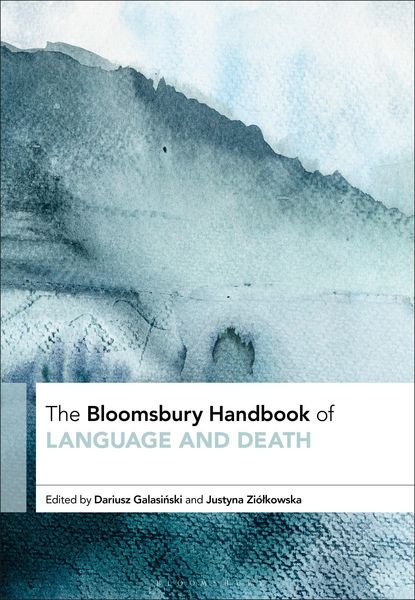
Produktbild: The Bloomsbury Handbook of Language and Death

The Bloomsbury Handbook of Language and Death

Aus der Reihe Bloomsbury Handbooks

206,99 €

inkl. gesetzl. MwSt., Versandkostenfrei


Beschreibung

Produktdetails

Einband

Gebundene Ausgabe

Erscheinungsdatum

05.03.2026

Herausgeber

Dariusz Galasinski + weitere

Verlag

Bloomsbury Academic

Seitenzahl

424

Maße (L/B/H)

25/17,5/2,7 cm

Gewicht

900 g

Sprache

Englisch

ISBN

978-1-350-30201-3

Beschreibung

Produktdetails

Einband

Gebundene Ausgabe

Erscheinungsdatum

05.03.2026

Herausgeber

Verlag

Bloomsbury Academic

Seitenzahl

424

Maße (L/B/H)

25/17,5/2,7 cm

Gewicht

900 g

Sprache

Englisch

ISBN

978-1-350-30201-3

Herstelleradresse

Libri GmbH
Europaallee 1
36244 Bad Hersfeld
DE

Email: gpsr@libri.de

Kundinnen und Kunden meinen

0 Bewertungen

Informationen zu Bewertungen

Zur Abgabe einer Bewertung ist eine Anmeldung im Konto notwendig. Die Authentizität der Bewertungen wird von uns nicht überprüft. Wir behalten uns vor, Bewertungstexte, die unseren Richtlinien widersprechen, entsprechend zu kürzen oder zu löschen.

Die Bewertungen sind nach Format, Anzahl Sterne und Datum sortiert.

Verfassen Sie die erste Bewertung zu diesem Artikel

Helfen Sie anderen Kund*innen durch Ihre Meinung

Kundinnen und Kunden meinen

0 Bewertungen filtern

  • Produktbild: The Bloomsbury Handbook of Language and Death
  • List of Figures
    List of Tables
    Introduction, Justyna Ziólkowska (SWPS University, Poland), Dariusz Galasinski (University of Wroclaw, Poland) and Magdalena Witkowicz (University of Wroclaw, Poland)
    Part I: Personal Experiences of Death
    1. The Good Death, Alex Broom, Nadine Ehlers, Henrietta Byrne, Leah Williams Veazey and Katherine Kenny (University of Sydney, Australia)
    2. The Identification of Linguistic Markers of Suicidal Ideation on Social Media: Computational and Corpus Approaches, Andrea Vaughan (University College London, UK)
    3. "There Are no Words": Designating Infant Loss through the Lens of Situated Discourse Analysis, Giuditta Caliendo and Catherine Ruchon (University of Lille, France)
    4. The Sociolinguistics of Dying, Death and Mourning: Remediating Practices of Language, Narrative, and Affect in Digital Contexts, Korina Giaxoglou (Open University, UK)
    5. Medicalisation of Death in COVID-19 Memorials, Dariusz Galasinski (University of Wroclaw, Poland), Magdalena Witkowicz (University of Wroclaw, Poland) and Justyna Ziólkowska (University of Social Sciences and Humanities, Poland)
    6. Corpse Poetry, Dead Bodies and Linguistic Survival, Katrina Jaworski (Adelaide University, Australia) and Daniel G. Scott (University of Victoria, Canada)
    Part II: Death from a Professional Perspective
    7. Communicating Death in Intensive Care: The Impact of Prior Family Interactions on Breaking the News, Ana Cristina Ostermann (Universidade Federal do Rio Grande do Sul (UFRGS), Brazil), Paola Gabriela Konrad (Universidade do Vale do Rio dos Sinos (Unisinos), Brazil) and José Roberto Goldim (Hospital de Clínicas de Porto Alegre (HCPA), Brazil)
    8. Psychiatrists, Suicide and Clinical Communication, Rob Poole (Bangor University, UK)
    9. Medicalised or Criminalised? Gendered Constructions of Killers Within Legal and Psychiatric Narratives, Agnieszka Karlinska (NASK National Research Institute, Poland)
    10. Telling of Killing: The Discursive Construction of Morality in Accounts of Taking Life, Robin Conley Riner (Marshall University, USA)
    11. Discursive Perspectives on Assisted Dying, Gavin Brookes (Lancaster University, UK) and David Wright (University of Southampton, UK)
    12. Assisted Dying: Mapping the Terrain, Jessica Young (University of Otago, New Zealand), Bryanna Moore (University of Texas Medical Branch, USA) and Courtney Hempton (Deakin University, Australia)
    13. The Language of Suicide, David Lester (Stockton University, USA)
    Part III: Public Representations of Death
    14. Death and the Sacred in the Digital Age, Adela Toplean (University of Bucharest, Romania)
    15. Talking about Death to Young Children: The Metaphorical Representation of Death in Children's Literature, Sara Vilar-Lluch (King's College London, UK)
    16. Death in the News: A Corpus-Based Critical Discourse Analysis, Rakan Alibri (Lancaster University, UK)
    17. Dementia, Death and Discourse, Emma Putland and Gavin Brookes (Lancaster University, UK)
    18. Intersecting Discourses of Death and the Climate Crisis, Niall Curry (Manchester Metropolitan University, UK)
    19. Freezing Death: Cryopreservation as a Challenge to the Inevitability of Death, Kim Grego (University of Milan, Italy)
    Index