KI-Beratung Beta

Gutscheinbedingungen

**Gültig bis 11.11.2026 auf Spielzeug, Schreibwaren, Filme, Geschenke & Trends, Musik, tolino eReader & Zubehör, Hörbücher und Hörbuch-Downloads, nicht preisgebundene Bücher und Kalender online auf thalia.at und in der Thalia App. Einzelne Artikel können ausgeschlossen sein. Aufgrund der Buchpreisbindung sind deutschsprachige Bücher und eBooks ausgenommen. Zusätzlich ausgenommen sind Abos & Flatrates, Games, Geschenkkarten/-boxen, Shelfies, Software, Zeitschriften sowie einzelne Artikel von tonies®. Pro Einkauf einmal einlösbar. Click & Collect nur bei Onlinevorabzahlung möglich. Keine Barauszahlung. Nicht kombinierbar mit anderen Aktionen und Gutscheinen. Gutschein wird auf max. 500€ Bestellwert angerechnet. Nicht gültig für Versandkosten und Services.

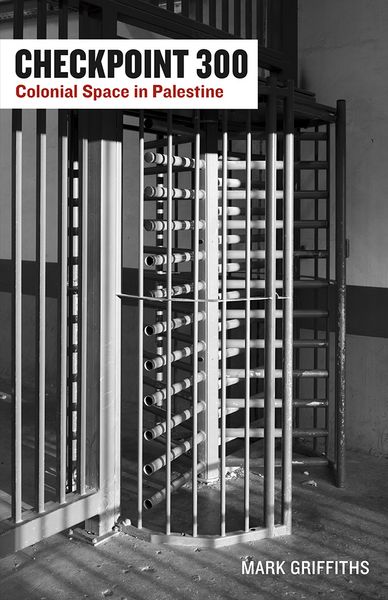
Produktbild: Checkpoint 300

Checkpoint 300 Colonial Space in Palestine

23,99 €

inkl. gesetzl. MwSt., zzgl. Versandkosten


  • Kostenlose Lieferung ab 30 € Einkaufswert
  • Versandkostenfrei für Bonuscard-Kund*innen

Beschreibung

Tracing how a notorious checkpoint shapes power, resistance, and lives in Palestine

Checkpoint 300, the highly securitized border facility between occupied Bethlehem and Jerusalem, is a central feature of Israeli control of Palestinian land and life. An apparatus of turnstiles, overcrowded corridors,...

Beschreibung

Tracing how a notorious checkpoint shapes power, resistance, and lives in Palestine

Checkpoint 300, the highly securitized border facility between occupied Bethlehem and Jerusalem, is a central feature of Israeli control of Palestinian land and life. An apparatus of turnstiles, overcrowded corridors, and invasive inspections, the checkpoint regulates the movement of hundreds of thousands of Palestinians, granting access to some while excluding most. Offering a nuanced exploration of space, Mark Griffiths reveals Checkpoint 300 as a stark symbol of Israeli colonialism that embodies larger systems of control and violence.

Griffiths's sensitive and timely work highlights the myriad ways Palestinians are affected by Israel's spatial control-whether they travel through the checkpoint or not-demonstrating how colonial infrastructures of inequity extend far beyond their physical boundaries to shape daily life. Drawing on nearly a decade of fieldwork, Griffiths examines how colonial power infiltrates family dynamics, enforces gendered mobility restrictions, shapes local economies, and extends into the global exchange of capital and security technologies. He also underscores how Palestinians endure and resist under oppressive conditions and how indigenous forms of life and living are sustained, illuminating how colonial space is contested and countered, unmade and remade.

Blending meticulous research with vivid human stories to show the lived realities of borders, power, and resistance in the West Bank, Checkpoint 300 portrays the checkpoint as an entry into the ways that colonial space is formed through security infrastructure that is both the product and producer of wider geographies of oppression, complicity, and control.

Retail e-book files for this title are screen-reader friendly with images accompanied by short alt text and/or extended descriptions.

Rezension

"Brilliant, sophisticated, and evocative, Checkpoint 300 expands our understanding of the political and material geographies of Israel's occupation of Palestine. Mark Griffiths explores how Checkpoint 300 structures the temporalities of domestic life and the everyday routines of Palestinians, showing not only the everyday mundane violence of the occupation but also how material infrastructures shape emotional and embodied lifeworlds." - Polly Pallister-Wilkins, author of Humanitarian Borders: Unequal Mobility and Saving Lives

"Mark Griffiths has taken the notorious Checkpoint 300 in Bethlehem and drawn concentric circles outwards in his diligent analysis of the checkpoint: from its bearing on individual subjectivity to its impact on those affected by it even if they do not have to go through it, from the way it redefines the landscape of a street and a city to its wider geopolitical implications. Israeli checkpoints define part of contemporary Palestinian life, and this careful study presents both the details of a specific site and the significance of how all checkpoints sever much more than space. Checkpoint 300 is an important read for anyone interested in Palestine, borders, political geography, and material sites of control." - Helga Tawil-Souri, coeditor of Producing Palestine: The Creative Production of Palestine Through Contemporary Media

Produktdetails

Einband

Taschenbuch

Erscheinungsdatum

23.09.2025

Abbildungen

44 black and white illustrations and 1 map

Verlag University Of Minnesota Press

Produktdetails

Einband

Taschenbuch

Erscheinungsdatum

23.09.2025

Abbildungen

44 black and white illustrations and 1 map

Verlag University Of Minnesota Press
Seitenzahl

250

Maße (L/B/H)

1,3/14/21,6 cm

Gewicht

312 g

Sprache

Englisch

ISBN

978-1-5179-1984-9

Herstelleradresse

Mare Nostrum Group B.V.
Doelen 72
4831 GR Breda
NL
gpsr@mare-nostrum.co.uk

Noch keine Bewertungen vorhanden

Verfassen Sie die erste Bewertung zu diesem Artikel

Helfen Sie anderen Kundinnen und Kunden durch Ihre Meinung.

Kundinnen und Kunden meinen

Bewertungen (0)

  • Produktbild: Checkpoint 300
  • Contents

    Introduction. Corridors and Turnstiles: Colonial Control in Palestine

    1. The Punitive Commute: Disciplining Palestinian Labor

    2. Women at the Checkpoint: The Colonial Production of Gender

    3. Beyond the Checkpoint: Domestic Life in Palestine

    4. An Urban Geography of Checkpoint 300 and the Hebron Road

    5. Producing Checkpoint Space: Global Flows of Ideas and Technologies

    6. Re/making Colonial Space: Refusal, Adaptation, Survival

    Conclusion. Geographies for a Decolonized and Free Palestine

    Acknowledgments

    Notes

    Index