Vorbesteller
Neu
Beschreibung
Produktdetails
Einband
Gebundene Ausgabe
Erscheinungsdatum
13.05.2027
Herausgeber
Béligh Elbalti + weitereVerlag
Bloomsbury AcademicSeitenzahl
480
Maße (L/B/H)
24,4/16,9/2,5 cm
Gewicht
454 g
Sprache
Englisch
ISBN
978-1-5099-7259-3
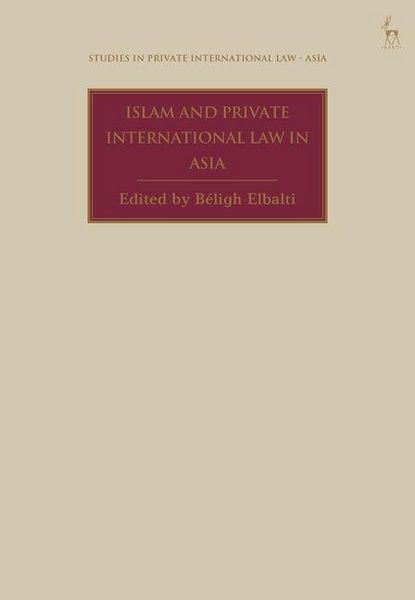
This book examines the interaction between Islam and private international law in Asia.
The analysis distinguishes between Muslim-majority and non-Muslim jurisdictions. Among the former, a further distinction can be drawn between Muslim-majority jurisdictions where Islamic law continues to exert a strong influence on both substantive and procedural law (including Pakistan, Bangladesh, Indonesia, and Brunei), and those where the law has been largely secularized (such as Kazakhstan, and Uzbekistan). Among the latter, non-Muslim jurisdictions can likewise be divided into two groups: those with a significant Muslim minority, often granted a certain degree of judicial or legal autonomy (such as India, the Philippines, and Thailand); and those where Muslims constitute only a small minority and where no special legal or judicial framework exists (including Japan, South Korea, Taiwan, and China). In Muslim-majority jurisdictions, the main question concerns the influence of Islamic law on the private international law treatment of cross-border cases. In non-Muslim jurisdictions, the main question concerns the acceptance of foreign law based on or influenced by Islamic law or judgments rendered in application of such laws. The chapters put the question of the interrelation between Islam and private international law in its broader theoretical context, examining the differences and similarities between the various approaches and proposing suggestions that bridge the gap between sometimes opposing approaches. The book sheds light on the multifaceted interrelation between Islam and private international law in Asia from both a theoretical and practical angle. It offers a unique perspective in which cultural and religious diversity meets private international law. This invaluable book provides judges, practitioners, decision-makers, and scholars with a practical guide and an indispensable reference to understanding this complex issue within the Asian context.Kundinnen und Kunden meinen
Verfassen Sie die erste Bewertung zu diesem Artikel
Helfen Sie anderen Kund*innen durch Ihre Meinung
Kurze Frage zu unserer Seite
Vielen Dank für Ihr Feedback
Wir nutzen Ihr Feedback, um unsere Produktseiten zu verbessern. Bitte haben Sie Verständnis, dass wir Ihnen keine Rückmeldung geben können. Falls Sie Kontakt mit uns aufnehmen möchten, können Sie sich aber gerne an unseren Kund*innenservice wenden.
zum Kundenservice