Gutscheinbedingungen

**Gültig bis 28.07.2026 auf Spielzeug, Schreibwaren, Filme, Geschenke & Trends, Musik, tolino eReader & Zubehör, Hörbücher und Hörbuch-Downloads (außer Abo), nicht preisgebundene Bücher und Kalender in der Thalia App. Einzelne Artikel können ausgeschlossen sein. Aufgrund der Buchpreisbindung sind deutschsprachige Bücher und eBooks ausgenommen. Zusätzlich ausgenommen sind preisgebundene Artikel, Abos & Flatrates, eBooks, Games, Geschenkkarten/-boxen, Shelfies, Software, Zeitschriften sowie einzelne Artikel von tonies®. Pro Einkauf einmal einlösbar. Click & Collect nur bei Onlinevorabzahlung möglich. Keine Barauszahlung. Nicht kombinierbar mit anderen Aktionen und Gutscheinen. Gutschein wird auf max. 500€ Bestellwert angerechnet. Nicht gültig für Versandkosten und Services.

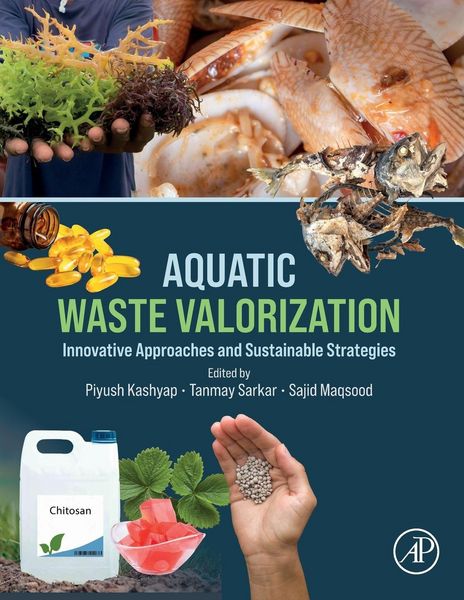
Produktbild: Aquatic Waste Valorization
- 12%

Aquatic Waste Valorization Innovative Approaches and Sustainable Strategies

12% sparen

145,99 € UVP 167,60 €

inkl. gesetzl. MwSt., Versandkostenfrei


Beschreibung

Produktdetails

Einband

Taschenbuch

Erscheinungsdatum

03.02.2026

Herausgeber

Piyush Kashyap + weitere

Verlag

Elsevier Health Science

Seitenzahl

496

Maße (L/B)

27,6/21,6 cm

Gewicht

1340 g

Sprache

Englisch

ISBN

978-0-443-44027-4

Beschreibung

Portrait

Dr. Piyush Kashyap obtained his doctorate in Food Engineering and Technology from Sant Longowal Institute of Engineering and Technology. He currently holds the position of Assistant Professor in Lovely Professional University, Punjab, India. He has more than 25 publications in peer-reviewed journals (SCI/SCIE) and has 6 book chapters in various international publishers. He is also in the editorial board member of Journal of Food Biochemsitry. His research area focuses on valorization of food waste, Polyphenol extraction and encapsulation and Food Proteins.

Dr. Tanmay Sarkar is currently working as a Lecturer in the Government of West Bengal. With 9 years of experience in both teaching and research, his areas of interest include bioactive components from natural sources, ethnic foods, mathematical modeling, and phytochemicals. He is an editor for several SCI, SCIE, and Scopus- indexed journals and has edited numerous books with Elsevier and Springer.

Sajid Maqsood is a Professor at the Department of Food Science - College of Agriculture and Veterinary Medicine, UAEU. His research is dedicated and aligned exclusively with the UAE's food and nutritional needs. He has established an innovative research program at the UAEU that focuses on bioactive molecules in camel milk and dates. Additionally, he is working on a circular economy of food wastes and by-products generated during the UAE's agricultural practices and food processing phases. He is also working food wastes and by-products valorization generated at farm and industry level in UAE and utilization into food fortification, and biodegradable packaging . He has done intensive research on alternative proteins (plant-based proteins, meat analogues etc) and sustainable means of food processing. He has recently started integrating AI and ML in his research, with the intent to make food processing and product development sustainable. He is leading an active research group in Food Science Department of UAE University with multidisciplinary collaboration within UAE and abroad. He has published more than 200 publications in highly reputed journals (mostly Q1 ranked) and was listed amongst the top 2% ranked highly cited scientists by Stanford University based study.

Produktdetails

Einband

Taschenbuch

Erscheinungsdatum

03.02.2026

Herausgeber

Verlag

Elsevier Health Science

Seitenzahl

496

Maße (L/B)

27,6/21,6 cm

Gewicht

1340 g

Sprache

Englisch

ISBN

978-0-443-44027-4

Herstelleradresse

Elsevier B.V.
Radarweg 29
1043 NX Amsterdam
NL
productsafety@elsevier.com

Noch keine Bewertungen vorhanden

Verfassen Sie die erste Bewertung zu diesem Artikel

Helfen Sie anderen Kundinnen und Kunden durch Ihre Meinung.

Kundinnen und Kunden meinen

Bewertungen (0)

  • Produktbild: Aquatic Waste Valorization
  • Section 1: Introduction to Aquatic Food Industry Waste
    1. Overview of Aquatic Food Industry Waste
    2. Chemical composition and properties of Aquatic Food Industry Waste
    3. Economic Implications and Market Trends

    Section 2: Fundamentals of Valorization Techniques
    4. Physical Processes
    5. Chemical Processes
    6. Enzymatic Processes
    7. Genetic and Metabolic Engineering for aquatic Waste Valorization
    8. Microbial Conversion Methods
    9. Nanotechnology and Closed-Loop Systems in the Aquatic Food Industry

    Section 3: Recovery of Valuable Components
    10. Protein, Lipids and Bioactive Peptides
    11. Chitin and chitosan
    12. Collagen and Gelatin
    13. Enzymes, Vitamins and Minerals
    14. Other Bioactive Compounds

    Section 4: Product Applications and Functionalities
    15. Biofuels and Bioplastics
    16. Industrial Colloids and Cosmeceuticals
    17. Applications of Recovered Components in Various Industries
    18. Functional Food Ingredients and Nutraceutical Uses
    19. Industrial Applications: Bioplastics, Cosmetics, and Textiles

    Section 5: Environmental and Economic Sustainability
    20. Environmental Benefits of aquatic Waste Valorization
    21. Economic Viability and Market Opportunities in Aquatic Waste Valorization
    22. Global Policies and Regulations in Aquatic Waste Valorization: Standards, Challenges, and Opportunities