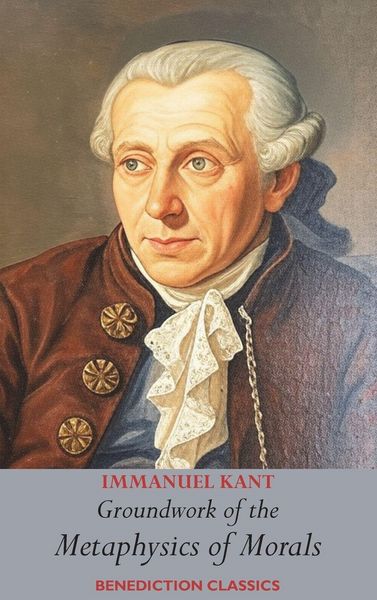
Groundwork of the Metaphysics of Morals (Fundamental Principles of the Metaphysic of Morals)
-
- Hardcover ausgewählt
- Taschenbuch
- eBook
-
Sprache:Englisch
-
Verlag:Benediction Classics
29,99 €
inkl. gesetzl. MwSt.,
- Kostenlose Lieferung ab 30 € Einkaufswert
- Versandkostenfrei für Bonuscard-Kund*innen
Beschreibung
Produktdetails
Einband
Gebundene Ausgabe
Erscheinungsdatum
01.10.2025
Verlag
Benediction ClassicsSeitenzahl
68
Maße (L/B/H)
23,5/15,7/0,9 cm
Gewicht
263 g
Sprache
Englisch
ISBN
978-1-78943-446-0
"What sets Kant apart from almost every other thinker in the Western philosophical canon is his ability to make sense of duties to the self, particularly the duty of self-respect." - Carol Hay, The New York Times. "Two things fill the mind with ever-increasing wonder and awe, the more often and the more intensely the mind of thought is drawn to them: the starry heavens above me and the moral law within me." - Immanuel Kant Immanuel Kant's Groundwork of the Metaphysics of Morals (sometimes known as Groundwork of the Metaphysics of Morals) is one of the most influential works in moral philosophy along with Plato's Republic and Aristotle's Nicomachean Ethics Iand John Stuart Mill's Utilitarianism. This classic lays the foundation for Kant's ethical theory, which emphasizes duty, rationality, and the universality of moral law. Rather than grounding morality in happiness or outcomes, Kant insists that genuine moral principles must arise from reason and the autonomy of the will. The heart of the work is the concept of the categorical imperative, a universal principle that guides moral action. True morality, he argues, arises from the recognition of duty and the capacity of rational beings to legislate universal law for themselves in accordance with reason. Groundwork of the Metaphysics of Morals has enduring importance because it has shaped the world we live in. Kant provides a philosophical basis for later conceptions of human rights, justice, and ethical responsibility. His principle of treating people as ends, not means, is built into constitutions, international law, and UN declarations. This concise philosophical classic is essential reading for students; it also offers the general reader insights into the foundations of morality. Contents: 1. Transition from the Common Rational Knowledge of Morality to the Philosophical. 2. Transition from Popular Moral Philosophy to the Metaphysic of Morals. 3. Transition from the Metaphysic of Morals to the Critique of Pure Practical Reason. Immanuel Kant (1724-1804) was a German philosopher from Königsberg is widely regarded as one of the central figures of philosophy. His Critique of Pure Reason transformed metaphysics and epistemology, while his ethical writings shaped deontological moral theory. Kant lived a disciplined and modest life, rarely leaving his hometown, yet his intellectual influence extended worldwide. He emphasized reason, autonomy, and freedom as the basis of human dignity. Today, Kant's philosophy remains a cornerstone of debates in ethics, political theory, and metaphysics
Noch keine Bewertungen vorhanden
Verfassen Sie die erste Bewertung zu diesem Artikel
Helfen Sie anderen Kundinnen und Kunden durch Ihre Meinung.
Kurze Frage zu unserer Seite
Vielen Dank für Ihr Feedback
Wir nutzen Ihr Feedback, um unsere Produktseiten zu verbessern. Bitte haben Sie Verständnis, dass wir Ihnen keine Rückmeldung geben können. Falls Sie Kontakt mit uns aufnehmen möchten, können Sie sich aber gerne an unseren Kund*innenservice wenden.
zum Kundenservice