Gutscheinbedingungen

**Gültig bis 14.09.2026 auf Spielzeug, Schreibwaren, Filme, Geschenke & Trends, Musik, tolino eReader & Zubehör, Hörbücher, nicht preisgebundene Bücher und Kalender in der Thalia App. Einzelne Artikel können ausgeschlossen sein. Aufgrund der Buchpreisbindung sind deutschsprachige Bücher und eBooks ausgenommen. Zusätzlich ausgenommen sind Abos & Flatrates, Games, Geschenkkarten/-boxen, Shelfies, Software, Zeitschriften sowie einzelne Artikel von tonies®. Pro Einkauf einmal einlösbar. Nur gültig mit im Onlineshop hinterlegter Bonuscard. Click & Collect nur bei Onlinevorabzahlung möglich. Keine Barauszahlung. Nicht kombinierbar mit anderen Aktionen und Gutscheinen. Gutschein wird auf max. 500€ Bestellwert angerechnet. Nicht gültig für Versandkosten und Services.

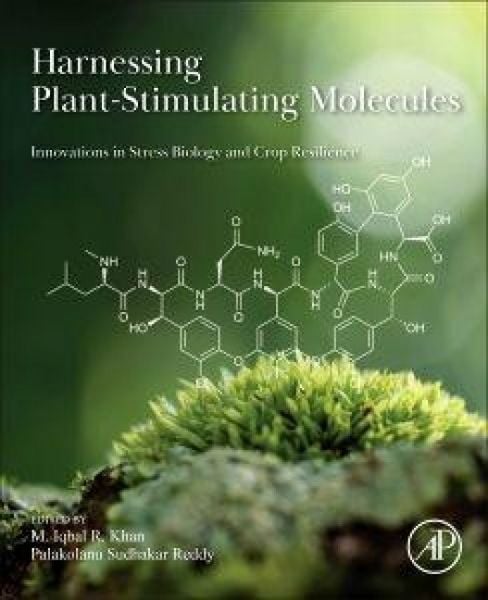
Produktbild: Harnessing Plant-Stimulating Molecules

Harnessing Plant-Stimulating Molecules Innovations in Stress Biology and Crop Resilience

215,99 €

inkl. gesetzl. MwSt., Versandkostenfrei


Beschreibung

Produktdetails

Einband

Taschenbuch

Erscheinungsdatum

10.07.2026

Herausgeber

M. Iqbal R. Khan + weitere

Verlag

Elsevier

Seitenzahl

392

Maße (L/B/H)

23,6/19,1/2 cm

Gewicht

885 g

Sprache

Englisch

ISBN

978-0-443-44994-9

Beschreibung

Portrait

M. Iqbal R. Khan is an Assistant Professor in the Department of Botany and serves as Deputy Director of the Centre for Environment and Sustainable Development (CESD) at Jamia Hamdard, New Delhi, India. He also holds adjunct appointments at Korea University, Seoul, South Korea, and at The University of Western Australia, Perth, Australia. Dr. Khan’s research focuses on major staple crops, particularly wheat, with the objective of reducing their susceptibility to environmental stress under projected future climatic conditions and contributing to the achievement of the Sustainable Development Goals. His work addresses the challenges posed by environmental stressors to agricultural productivity, which remain a critical concern for global food and nutritional security. He has published over 100 research articles and has edited several books and authored multiple book chapters with leading publishers. He has an established citation record, as reflected in widely used bibliometric indicators. Dr. Khan has been recognized as a Clarivate Highly Cited Researcher in the Animal and Plant Science category and has been listed among the top 2% of scientists globally by Elsevier and Stanford University (2021–25). He is a member of the National Academy of Sciences, India (NASI), in Plant and Agricultural Sciences, and a recipient of the Indian National Science Academy (INSA) Young Associates award (2024). His accolades include the R.H. Dastur Gold Medal Award—ISPP (2023), the Young Scientist Platinum Jubilee Award—NASI (2021), and the Young Scientist Award—ISPP (2018). He serves on the editorial boards of many renowned journals, including Plant and Soil, Journal of Plant Growth Regulation, 3-Biotech, and Plant Physiology Reports. He has also served as a guest editor for Agriculture, Frontiers in Plant Science, Sustainability, and Plant Physiology and Biochemistry.

Dr. Sudhakar Reddy Palakolanu has more than 14 years of expertise in plant molecular biology, functional genomics, and gene editing. His research focuses on identifying and analyzing genes associated with complex traits using advanced molecular and biotechnological approaches. His work aims to enhance key agronomic traits in dryland crops, particularly millets, through the application of cutting-edge techniques. By integrating modern biotechnological tools, he seeks to validate candidate genes identified through trait dissection, supporting sustainable crop development. Dr. Reddy’s accomplishments have been recognized through several prestigious national awards, including the Young Scientist Award and the INSPIRE Faculty Award from the Department of Science and Technology, Government of India (DST-GOI). He also received a Postdoctoral Fellowship from the German Academic Exchange Service (DAAD), which supported his research in Germany. In addition, he has served as a guest scientist at the International Rice Research Institute (IRRI) in the Philippines, where he worked on CRISPR–Cas9-mediated genome editing to improve rice grain quality. He has an extensive research portfolio that includes numerous peer-reviewed articles, book chapters, books, and patents. He also serves as a reviewer for leading international journals, including Trends in Plant Science, Genome Biology, Frontiers in Plant Science, Physiologia Plantarum, Plant Cell Reports, Plant Biotechnology Journal, and BMC Plant Biology, among others.

Produktdetails

Einband

Taschenbuch

Erscheinungsdatum

10.07.2026

Herausgeber

Verlag

Elsevier

Seitenzahl

392

Maße (L/B/H)

23,6/19,1/2 cm

Gewicht

885 g

Sprache

Englisch

ISBN

978-0-443-44994-9

Herstelleradresse

Libri GmbH
Europaallee 1
36244 Bad Hersfeld
DE

Email: gpsr@libri.de

Noch keine Bewertungen vorhanden

Verfassen Sie die erste Bewertung zu diesem Artikel

Helfen Sie anderen Kundinnen und Kunden durch Ihre Meinung.

Kundinnen und Kunden meinen

Bewertungen (0)

  • Produktbild: Harnessing Plant-Stimulating Molecules
  • 1. Biostimulants: a sustainable approach to enhancing plant resilience under environmental stress
    2. Utilizing plant growth regulators for sustainable agricultural intensification under abiotic stress
    3. Regulation of auxin and cytokinin signaling in plants during salt stress adaptation
    4. Crosstalk of salicylic acid with other growth regulators and signaling molecules in mediating abiotic stress tolerance in plants
    5. Exploring the protective effects of abscisic acid against salt stress in rice
    6. Endophyte-driven strategies for abiotic stress tolerance in plants
    7. Strigolactone-mediated signaling pathways in sorghum: molecular insights into Striga resistance
    8. Role of reactive carbonyl compounds in plant stress signaling
    9. Integrating gene editing and plant stimulants to develop virus-resilient crops
    10. Biotechnological innovations for sustainable agriculture
    11. Mobile signals in systemic stress response: RNA, peptides, and hormonal interactions
    12. Heterotrimeric G-protein subunits in plant signal transduction: roles in plant development and stress responses
    13. CRISPR-Cas-enabled accelerated breeding pipelines for engineering climate-resilient crops under abiotic stress conditions