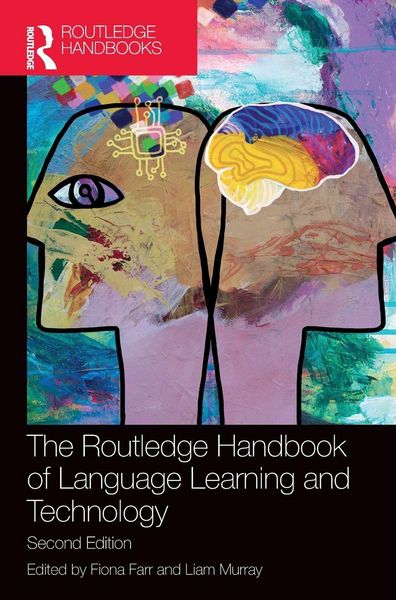
The Routledge Handbook of Language Learning and Technology
-
- Hardcover ausgewählt
- Taschenbuch
- eBook
-
Sprache:Englisch
-
Verlag:Taylor & Francis
405,99 €
inkl. gesetzl. MwSt.,
Beschreibung
Produktdetails
Einband
Gebundene Ausgabe
Erscheinungsdatum
30.06.2026
Abbildungen
schwarz-weiss Illustrationen, Raster,schwarz-weiss, Zeichnungen, schwarz-weiss
Herausgeber
Fiona Farr + weitereVerlag
Taylor & FrancisSeitenzahl
502
Maße (L/B/H)
24,4/17/2,9 cm
Gewicht
1030 g
Auflage
2nd edition
Sprache
Englisch
ISBN
978-1-03-253473-2
The Routledge Handbook of Language Learning and Technology is a comprehensive and accessible resource for teachers, teacher educators, and students navigating the rapid evolution of technology in language education. Now in its second edition, this fully updated volume reflects the accelerated integration of digital tools into pedagogical practices, particularly in the wake of the Covid-19 pandemic.
Building on its original focus-historical and theoretical contexts, interactive and collaborative technologies, corpora and data- driven learning, and computer gaming-the handbook introduces new chapters that explore teacher development and the cultural dimensions of language learning. Emerging voices in the field offer insightful perspectives on cutting-edge technologies such as Artificial Intelligence, advancing a balanced and accessible approach useful to students with a language background who are looking to further their education in the sector. Farr and Murray equip readers with the requisites to make informed pedagogical decisions in both academic and professional settings.
This handbook is essential reference for all students from undergraduate to PhD level, teachers and researchers of Language Learning and TESOL, and professionals in the areas of Applied Linguistics, Education, and Media Studies.
Noch keine Bewertungen vorhanden
Verfassen Sie die erste Bewertung zu diesem Artikel
Helfen Sie anderen Kundinnen und Kunden durch Ihre Meinung.
Kurze Frage zu unserer Seite
Vielen Dank für Ihr Feedback
Wir nutzen Ihr Feedback, um unsere Produktseiten zu verbessern. Bitte haben Sie Verständnis, dass wir Ihnen keine Rückmeldung geben können. Falls Sie Kontakt mit uns aufnehmen möchten, können Sie sich aber gerne an unseren Kund*innenservice wenden.
zum Kundenservice