KI-Beratung Beta

Gutscheinbedingungen

**Gültig am 25.11.2026 auf fremdsprachige Bücher online auf thalia.at und in der Thalia App. Einzelne Artikel können ausgeschlossen sein. Ausgenommen sind preisgebundene Artikel & eBooks. Pro Einkauf einmal einlösbar. Click & Collect nur bei Onlinevorabzahlung möglich. Keine Barauszahlung. Nicht kombinierbar mit anderen Aktionen und Gutscheinen. Gutschein wird auf max. 500€ Bestellwert angerechnet. Nicht gültig für Geschenkkarten, Versandkosten und Services.

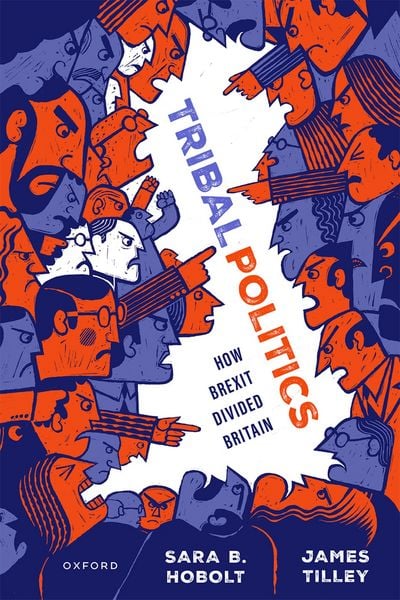
Produktbild: Tribal Politics

Tribal Politics How Brexit Divided Britain

47,99 €

inkl. gesetzl. MwSt., Versandkostenfrei


Beschreibung

The Brexit referendum was a pivotal moment in British politics. Tribal Politics argues this is not only because it led to the UK's departure from the European Union, but also because it created two new, powerful, and enduring political identities in the UK: Leavers and Remainers. These new identities...

Beschreibung

The Brexit referendum was a pivotal moment in British politics. Tribal Politics argues this is not only because it led to the UK's departure from the European Union, but also because it created two new, powerful, and enduring political identities in the UK: Leavers and Remainers. These new identities rapidly became central to how people saw themselves, others, and the world around them, and they continue to underpin British politics. Tribal Politics explores how these identities were created and why they have proved so resilient in the years following the 2016 vote. It does so by treating the Brexit divide as the result of three contingent factors: issue contestation (intense, high-stakes public conflict), issue expression (individual commitment through voting and political engagement), and issue alignment (the way Brexit cut across traditional party lines). Together, these conditions transformed what had been, for many, a distant policy question into a deep and lasting identity divide. Drawing on political psychology and a wide range of original evidence-including surveys, experiments, and analyses of political discourse-Sara B. Hobolt and James Tilley examine the far-reaching consequences of tribal politics for political attitudes and choices. They show that we dislike, look down on, and discriminate against people because they belong to another tribe, and that we also change our views of reality, our policy opinions, and even our perceptions of democratic legitimacy to better fit our tribal loyalties. While rooted in the Brexit experience, Tribal Politics speaks to the origins and consequences of all types of identity-driven affective polarization. As many democracies around the world confront deepening political divides, it offers timely insights into how a single political moment can spark lasting tribalism and why those tribes so often survive long after that moment has passed.

Produktdetails

Einband

Gebundene Ausgabe

Erscheinungsdatum

26.03.2026

Verlag Oxford Academic
Seitenzahl

256

Produktdetails

Einband

Gebundene Ausgabe

Erscheinungsdatum

26.03.2026

Verlag Oxford Academic
Seitenzahl

256

Maße (L/B/H)

23,7/15,8/2,3 cm

Gewicht

540 g

Farbe

Salsa Rot / Marine

Sprache

Englisch

ISBN

978-0-19-891171-5

Herstelleradresse

Libri GmbH
Europaallee 1
36244 Bad Hersfeld
DE

Email: gpsr@libri.de

Noch keine Bewertungen vorhanden

Verfassen Sie die erste Bewertung zu diesem Artikel

Helfen Sie anderen Kundinnen und Kunden durch Ihre Meinung.

Kundinnen und Kunden meinen

Bewertungen (0)

  • Produktbild: Tribal Politics
    • 1: Introduction
    • 2: Tribal Politics: A Theory of Issue-Based Identities
    • 3: The EU Issue: Elite Division and Public Indifference
    • 4: The Trigger: The Brexit Referendum and its Fallout
    • 5: Transformation: From an Issue to an Identity
    • 6: Two Tribes: Affective Polarization and Brexit Identities
    • 7: Tribal Bias: Seeing the World through a Brexit Lens
    • 8: Identity Anchors: Tribes, Traits, and Echo Chambers
    • 9: Realignment: From Identities to Votes
    • 10: Conclusion
    • Appendix 1: Data Sources
    • Appendix 2: Extra Models for Chapter 7