KI-Beratung Beta

Gutscheinbedingungen

**Gültig bis 18.11.2026 auf englischsprachige Klassiker (klassiker-32728) online auf thalia.at und in der Thalia App. Einzelne Artikel können ausgeschlossen sein. Ausgenommen sind preisgebundene Artikel & eBooks. Pro Einkauf einmal einlösbar. Click & Collect nur bei Onlinevorabzahlung möglich. Keine Barauszahlung. Nicht kombinierbar mit anderen Aktionen und Gutscheinen. Gutschein wird auf max. 500€ Bestellwert angerechnet. Nicht gültig für Geschenkkarten, Versandkosten und Services.

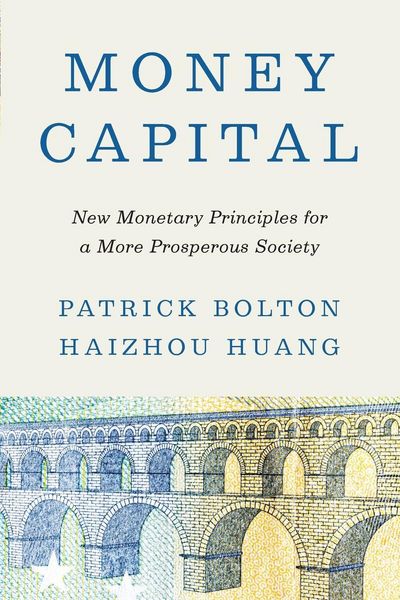
Produktbild: Money Capital

Money Capital New Monetary Principles for a More Prosperous Society

38,99 €

inkl. gesetzl. MwSt., Versandkostenfrei


Beschreibung

A novel perspective on monetary and fiscal policy that views money as the equity capital of a nation A conventional economic theory, monetarism, holds that inflation is a monetary phenomenon driven by changes in the supply of money. Yet recent experience—including the aftermath of the financial crisis...

Beschreibung

A novel perspective on monetary and fiscal policy that views money as the equity capital of a nation A conventional economic theory, monetarism, holds that inflation is a monetary phenomenon driven by changes in the supply of money. Yet recent experience—including the aftermath of the financial crisis of 2008 and the economic development of China—contradicts this basic prediction. In this book, leading economists Patrick Bolton and Haizhou Huang offer a novel perspective, viewing monetary economics through the lens of corporate finance. They propose a rich theory of money supply where money can be seen as the equity capital of a nation, playing a similar role as stocks for a company. This innovative framework integrates the real and monetary sides of the economy, with a banking sector and debt at its core. In the financial world, companies issue new shares only if it results in some kind of value creation; this is a basic principle of corporate finance that Bolton and Huang argue can be applied to monetary economics. When the government increases the money supply to finance positive net value investments—when it prints money to keep the economy going—it increases output, not inflation. This is evidenced by the strong growth in GDP and money in China over the last four decades, and in the United States during World War II. The effect of increasing money supply, they argue, depends on how money enters the system and what the money buys. The principles outlined by Bolton and Huang shed new light on a range of issues, including inflation, monetary and fiscal policy, central banking, money and growth, and the international monetary system.

Produktdetails

Einband

Taschenbuch

Erscheinungsdatum

17.03.2026

Abbildungen

53 b/w illus. 8 tables.

Verlag University Presses

Produktdetails

Einband

Taschenbuch

Erscheinungsdatum

17.03.2026

Abbildungen

53 b/w illus. 8 tables.

Verlag University Presses
Seitenzahl

312

Maße (L/B/H)

23,4/15,6/1,9 cm

Gewicht

534 g

Sprache

Englisch

ISBN

978-0-691-23236-2

Herstelleradresse

Libri GmbH
Europaallee 1
36244 Bad Hersfeld
DE

Email: gpsr@libri.de

Noch keine Bewertungen vorhanden

Verfassen Sie die erste Bewertung zu diesem Artikel

Helfen Sie anderen Kundinnen und Kunden durch Ihre Meinung.

Kundinnen und Kunden meinen

Bewertungen (0)

  • Produktbild: Money Capital