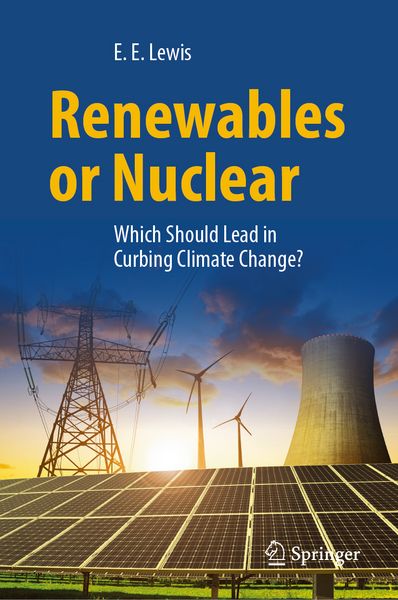
Renewables or Nuclear Which Should Lead in Curbing Climate Change?
29,99 €
inkl. gesetzl. MwSt.,
- Kostenlose Lieferung ab 30 € Einkaufswert
- Versandkostenfrei für Bonuscard-Kund*innen
Beschreibung
Produktdetails
Einband
Gebundene Ausgabe
Erscheinungsdatum
20.04.2026
Abbildungen
XI, 203 p. 53 illus., 47 illus. in color.
Verlag
SpringerSeitenzahl
203
Maße (L/B/H)
24,1/16/1,8 cm
Gewicht
492 g
Sprache
Englisch
ISBN
978-3-032-08073-8
One of the most contentious issues facing policymakers in their efforts to curb climate change is the debate over whether renewable or nuclear energy should play a larger role, and to what extent both are needed, as well as how they can be integrated into electric grids. This book addresses these critical issues directly, providing balanced analyses and detailing the challenges these energy sources face. The primary challenges for renewable energy, particularly wind and solar, include intermittency, grid instability, and concerns regarding land use. Conversely, nuclear energy faces challenges related to high reactor costs and public concerns regarding accidents, waste management, and the potential for weapons proliferation. The book also explores other relevant energy forms, energy storage solutions, the potential of smart grids and artificial intelligence, and the necessity of electrifying transportation and other economic sectors to achieve carbon neutrality by 2050.
Renewables or Nuclear: Which Should Lead in Curbing Climate Change?
addresses the complex technical, economic, and political issues surrounding energy sources. The book is intended for a broad audience concerned about climate change, but lacking extensive knowledge of renewable or nuclear energy sources. It aims to explain the costs and benefits of each energy source and their roles in combating climate change. No technical background is required to understand the content, making this book a valuable reference for advanced high school or undergraduate college courses focused on climate change.
- Addresses the complex technical, economic, and political issues surrounding energy and climate change;
- Specifically examines one of the most contentious issues policymakers face—a debate over renewable and nuclear energy;
- No technical background is required to understand the material covered in the book.
Noch keine Bewertungen vorhanden
Verfassen Sie die erste Bewertung zu diesem Artikel
Helfen Sie anderen Kundinnen und Kunden durch Ihre Meinung.
Kurze Frage zu unserer Seite
Vielen Dank für Ihr Feedback
Wir nutzen Ihr Feedback, um unsere Produktseiten zu verbessern. Bitte haben Sie Verständnis, dass wir Ihnen keine Rückmeldung geben können. Falls Sie Kontakt mit uns aufnehmen möchten, können Sie sich aber gerne an unseren Kund*innenservice wenden.
zum Kundenservice