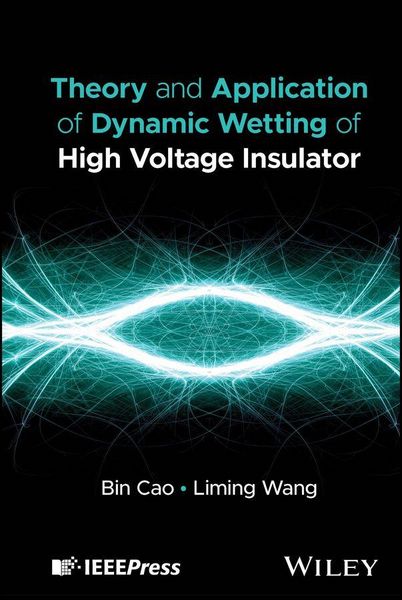
Theory and Application of Dynamic Wetting for High Voltage Insulator
-
- Englisch ausgewählt
135,99 €
inkl. gesetzl. MwSt.,
Beschreibung
Produktdetails
Einband
Gebundene Ausgabe
Erscheinungsdatum
27.07.2026
Verlag
WileySeitenzahl
320
Maße (L/B/H)
17,1/23,9/2,3 cm
Gewicht
580 g
Sprache
Englisch
ISBN
978-1-394-38515-7
Specialized research on high-voltage insulator wetting behavior and contamination flashover
Few books address the wetting characteristics and contamination behavior of high-voltage insulator under varying environmental conditions. Theory and Application of Dynamic Wetting of High Voltage Insulator consolidates a decade of research published in IEEE Transactions and IET Journals into a single authoritative reference. Written by Tsinghua University researchers with extensive IEEE leadership roles, this volume connects fundamental wetting dynamics with practical field applications.
The book examines contamination wetting behavior mechanisms and their impact on insulator performance through on-site examples and engineering applications. Critical findings for ultra-high voltage engineering address contamination flashover prevention, dynamic environmental factors, and power system reliability improvement strategies applicable to modern transmission infrastructure.
Key topics include:
- Wetting characteristics of high-voltage external insulation with detailed analysis of contamination behavior under varying environmental conditions
- Performance and application of insulation materials for reliable operation under complex and harsh service conditions
- Advanced monitoring, assessment, and management approaches for external insulation condition and operational risk
- Fundamental principles of high-voltage and ultra-high-voltage engineering relevant to modern power transmission systems
- Impacts of climate variability and extreme environments on insulation performance and corresponding mitigation strategies
For power system engineers, high-voltage equipment researchers, and graduate students in electrical engineering, this reference provides specialized knowledge previously scattered across journal literature. It delivers both theoretical foundations and practical methodologies for addressing external insulation challenges in modern power transmission systems.
Noch keine Bewertungen vorhanden
Verfassen Sie die erste Bewertung zu diesem Artikel
Helfen Sie anderen Kundinnen und Kunden durch Ihre Meinung.
Kurze Frage zu unserer Seite
Vielen Dank für Ihr Feedback
Wir nutzen Ihr Feedback, um unsere Produktseiten zu verbessern. Bitte haben Sie Verständnis, dass wir Ihnen keine Rückmeldung geben können. Falls Sie Kontakt mit uns aufnehmen möchten, können Sie sich aber gerne an unseren Kund*innenservice wenden.
zum Kundenservice