KI-Beratung Beta

Gutscheinbedingungen

**Gültig bis 31.10.2026 ab einem Mindestbestellwert von 30€ auf Spielzeug, Schreibwaren, Filme, Geschenke & Trends, Musik, tolino eReader & Zubehör, Hörbücher und Hörbuch-Downloads, nicht preisgebundene Bücher und Kalender online auf thalia.at und in der Thalia App. Einzelne Artikel können ausgeschlossen sein. Aufgrund der Buchpreisbindung sind deutschsprachige Bücher und eBooks ausgenommen. Zusätzlich ausgenommen sind Abos & Flatrates, Games, Geschenkkarten/-boxen, Shelfies, Software, Zeitschriften sowie einzelne Artikel von tonies®. Pro Einkauf einmal einlösbar. Click & Collect nur bei Onlinevorabzahlung möglich. Keine Barauszahlung. Nicht kombinierbar mit anderen Aktionen und Gutscheinen. Gutschein wird auf max. 500€ Bestellwert angerechnet. Nicht gültig für Versandkosten und Services. Preisgebundene Artikel sind vom Mindestbestellwert ausgeschlossen.

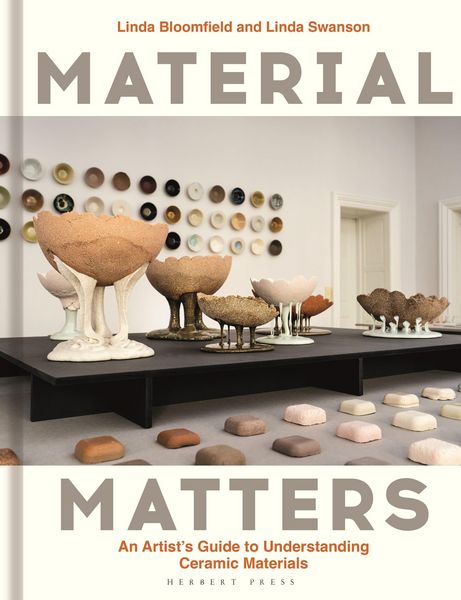
Produktbild: Material Matters

Material Matters An Artist's Guide to Understanding Ceramic Materials

55,99 €

inkl. gesetzl. MwSt., Versandkostenfrei


Beschreibung

Produktdetails

Verkaufsrang

10542

Einband

Gebundene Ausgabe

Erscheinungsdatum

30.07.2026

Abbildungen

Full colour illustrations and photographs throughout

Verlag

Bloomsbury USA

Seitenzahl

240

Maße (L/B/H)

25/19,5/2,5 cm

Gewicht

885 g

Sprache

Englisch

ISBN

978-1-78994-230-9

Herstelleradresse

Libri GmbH
Europaallee 1
36244 Bad Hersfeld
DE

Email: gpsr@libri.de

Noch keine Bewertungen vorhanden

Verfassen Sie die erste Bewertung zu diesem Artikel

Helfen Sie anderen Kundinnen und Kunden durch Ihre Meinung.

Kundinnen und Kunden meinen

Bewertungen (0)

Die Leseprobe wird geladen.
  • Produktbild: Material Matters
  • Introduction

    Chapter 1: Geology and the origins of clay
    Rocks, Clay minerals, Residual and sedimentary clay, Sedimentary and metamorphic processes, Rocks and chemistry, Collecting natural materials

    Chapter 2: Clay
    Understanding clay, Kaolin, Ball clay, Stoneware clay, Fire clay, Earthenware clay, Bentonite, Additional terms for clay

    Chapter 3: Clay bodies
    Clay in clay bodies, Flux in clay bodies, Glass former in clay bodies, Filler in clay bodies, Colour, Clay body types, Clay body applications, Testing, faults and remedies, Glaze fit and thermal expansion

    Chapter 4: Clay as liquid
    Slip, Deflocculation, Terra sigillata, Casting slip, Slip density, Slip - engobe, Local clay, Egyptian paste and solubility

    Chapter 5: Glaze
    Clay versus glaze, Glaze oxides, Alumina, Silica, Boron, Phosphorus, Sodium, Potassium, Lithium, Calcium, Magnesium, Barium, Strontium, Zinc, Lead

    Chapter 6: Glaze materials
    Materials and the oxides they supply, Using local and recycled materials

    Chapter 7: Glaze chemistry and calculation
    Composition of a glaze, Unity molecular formula

    Chapter 8: Colourants and opacifiers
    Colourants and their effects, carbonates, oxides and sulphates, Opacifiers, Stains

    Chapter 9: Firing
    Important stages during firing, Measuring temperature and heat work, Oxidation and reduction, Wood firing, soda firing, Adjusting firing temperature, Glaze faults, Special effect glazes

    Chapter 10: Health and Safety
    Soluble materials, Toxic materials, Studio practice, Firing safely

    Conclusion
    References
    Resources on sustainability
    Glossary

    Appendices
    Periodic Table, Natural Sources of Ceramic Materials, Directions for processing local clay, and more

    Index
    Acknowledgements