Gutscheinbedingungen

**Gültig bis 06.07.2026 auf fremdsprachige Bücher online auf thalia.at, in der Thalia App ab einem Mindestbestellwert von 30€ und in allen Thalia Buchhandlungen in Österreich. In den Buchhandlungen nur gültig auf lagernde Ware. Einzelne Artikel können ausgeschlossen sein. Ausgenommen sind preisgebundene Artikel & eBooks. Pro Einkauf einmal einlösbar. Nur gültig gegen Vorlage oder im Onlineshop hinterlegter Bonuscard. Infos zur Einlösung in der Buchhandlung sind auf der Bonuscard-Vorteilspreisseite zu finden. Click & Collect nur bei Onlinevorabzahlung möglich. Keine Einlösung bei Scan & Go-Bezahlung. Keine Barauszahlung. Nicht kombinierbar mit anderen Aktionen und Gutscheinen. Gutschein wird auf max. 500€ Bestellwert angerechnet. Nicht gültig für Versandkosten und Services.

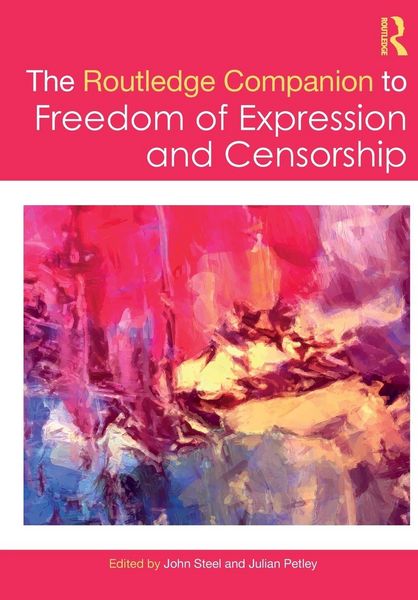
Produktbild: The Routledge Companion to Freedom of Expression and Censorship

The Routledge Companion to Freedom of Expression and Censorship

59,99 €

inkl. gesetzl. MwSt., Versandkostenfrei


Beschreibung

Produktdetails

Einband

Taschenbuch

Erscheinungsdatum

29.09.2025

Abbildungen

schwarz-weiss Illustrationen, Zeichnungen, schwarz-weiss, Tabellen, schwarz-weiss

Herausgeber

Steel John + weitere

Verlag

Taylor & Francis

Seitenzahl

436

Maße (L/B/H)

24,4/17/2,3 cm

Gewicht

810 g

Sprache

Englisch

ISBN

978-1-03-258711-0

Beschreibung

Produktdetails

Einband

Taschenbuch

Erscheinungsdatum

29.09.2025

Abbildungen

schwarz-weiss Illustrationen, Zeichnungen, schwarz-weiss, Tabellen, schwarz-weiss

Herausgeber

Verlag

Taylor & Francis

Seitenzahl

436

Maße (L/B/H)

24,4/17/2,3 cm

Gewicht

810 g

Sprache

Englisch

ISBN

978-1-03-258711-0

EU-Ansprechpartner

Taylor & Francis Verlag GmbH
Kaufingerstraße 24
80331 München
DE
GPSR@taylorandfrancis.com

Herstelleradresse

Taylor & Francis Group
5 Howick Place
SW1P 1WG London
UK
GPSR@taylorandfrancis.com

Noch keine Bewertungen vorhanden

Verfassen Sie die erste Bewertung zu diesem Artikel

Helfen Sie anderen Kundinnen und Kunden durch Ihre Meinung.

Kundinnen und Kunden meinen

Bewertungen (0)

Die Leseprobe wird geladen.
  • Produktbild: The Routledge Companion to Freedom of Expression and Censorship
  • Introduction: Freedom of Expression in Turbulent Times

    John Steel and Julian Petley

    Part One: Concepts and Histories

    Chapter 1: Freedom of Expression as a Pre-Enlightenment Concept

    Jordi Pujol

    Chapter 2: Freedom of Expression, the Enlightenment and the Liberal Tradition

    Geoff Kemp

    Chapter 3: Histories of In/tolerance

    Russell Blackford

    Chapter 4: Literary influence and legal precedent: Censorship in the Court of the Chancery, 1710-1823

    Paul Whickman

    Chapter 5: The Quest for Truth and Knowledge

    Kristoffer Ahlström-Vij

    Chapter 6: Autonomy and Freedom of Expression

    Eric Barendt

    Chapter 7: Bentham and Security against misrule

    Jesse Owen Hearns-Branaman

    Chapter 8: Freedom of Expression in the 20th Century

    Sue Curry-Jansen,

    Chapter 9: Philosophies of Censorship and Control

    Eric Barendt

    Part Two: Global Perspectives

    Chapter 10: Freedom of Expression in Latin America in Times of Populism: Between Western Normative Expectations and the Complexities on the Ground

    Ezequiel Korin and Jairo Lugo-Ocando

    Chapter 11: Protecting the pandemic press: Exploring press freedom in Africa during the Covid-19 pandemic

    Bruce Mutsvairo and Kristin Skare Orgeret

    Chapter 12: Media Freedom in the Arab Region

    Noha Mellor

    Chapter 13: Censorship and Freedom of Expression in China

    Chris Fei Shen and Weiying Shi

    Chapter 14: Oscillating between 'speech freedom' and 'national interests' - the contested boundaries of online Freedom of Expression in China

    Yuan Zeng, and Tongzhou Ran

    Chapter 15: Freedom of Expression and Democracy in Japan in the 2010s

    Ryusaku Yamada

    Chapter 16: Freedom of Expression and the legacy of colonialism: a view from France

    Imen Neffati

    Chapter 17: Faith and Toleration in Neoliberal Times: Australia as a Case Study

    Adam Possamai

    Part Three: Key Controversies

    Chapter 18: The Harm in Hate Speech and in Holocaust Denial

    Raphael Cohen-Almagor

    Chapter 19: Feminism and pornography

    Fionna Attwood and Julian Petley

    Chapter 20: Political Correctness: The Right's Favourite Bugaboo

    Valerie Scatamburlo-D'Annibale

    Chapter 21: Free Speech, Cancel Culture and the 'war on woke'

    John Steel

    Chapter 22: Academic Freedom and Constrained Expression

    Thomas Docherty

    Chapter 23: Breaking News - Media Freedom in Crisis

    Simon Dawes

    Chapter 24: P2P speech regulation - Gossip, Reputation, and Norm Policing on Social Media

    Julie Seaman

    Chapter 25: Vitriol and voice: Battlegrounds to control employee expression on social media in work

    Claire Taylor

    Chapter 26: Emma Briant, "Hack Attacks: How Cyber Intimidation and Conspiracy Theories Drive the Spiral of 'Secrecy Hacking'"

    Chapter 27: Violence, impunity and their impact on press freedom

    Lada Trifonova Price

    Part Four: Institutions, Technologies and Frameworks

    Chapter 28: The Regulation of the Online World

    Julian Petley

    Chapter 29: Freedom of Expression and Human Rights: interrogating the focus at Strasbourg on political expression under Article 10 ECHR

    Helen Fenwick

    Chapter 30: The ECHR Perspective on Whistleblowing as Speech: A case study of 'national security' whistleblowing

    Dimitrios Kagiaros

    Chapter 31: National Security and the Extension of State Power

    Paul Lashmar

    Chapter 32: Marketing Communications and Media: Commercial Speech, Censorship and Control

    Jonathan Hardy

    Chapter 33: Regulating the Press in the UK

    Tom O'Malley

    Chapter 34: Freedom of the Press in Britain: From Radical to Reactionary... to Reinvigoration?

    Aaron Ackerley

    Chapter 35: "Should I stay (on Twitter) or should I go?" Three causes of journalistic self-censorship on Twitter

    Chrysi Dagoula

    Chapter 36: All the news that's fit to report? News values and the 'free press'

    Tony Harcup

    Index