Gutscheinbedingungen

**Gültig bis 24.09.2026 ab einem Mindestbestellwert von 30€ auf Spielzeug, Schreibwaren, Filme, Geschenke & Trends, Musik, tolino eReader & Zubehör, Hörbücher und Hörbuch-Downloads, nicht preisgebundene Bücher und Kalender online auf thalia.at und in der Thalia App. Einzelne Artikel können ausgeschlossen sein. Aufgrund der Buchpreisbindung sind deutschsprachige Bücher und eBooks ausgenommen. Zusätzlich ausgenommen sind Abos & Flatrates, Games, Geschenkkarten/-boxen, Shelfies, Software, Zeitschriften sowie einzelne Artikel von tonies®. Pro Einkauf einmal einlösbar. Click & Collect nur bei Onlinevorabzahlung möglich. Keine Barauszahlung. Nicht kombinierbar mit anderen Aktionen und Gutscheinen. Gutschein wird auf max. 500€ Bestellwert angerechnet. Nicht gültig für Versandkosten und Services. Preisgebundene Artikel sind vom Mindestbestellwert ausgeschlossen.

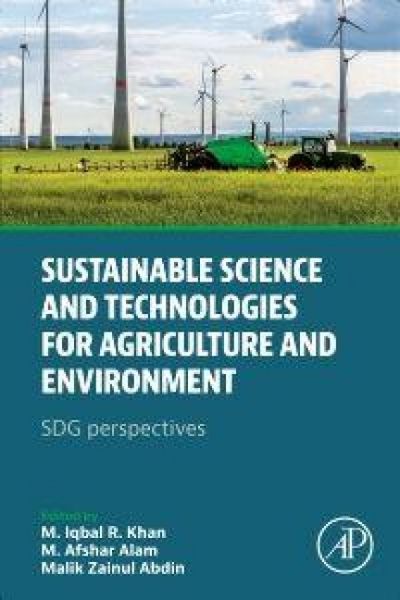
Produktbild: Sustainable Science and Technologies for Agriculture and Environment
Vorbesteller Neu

Sustainable Science and Technologies for Agriculture and Environment SDG Perspectives

185,99 €

inkl. gesetzl. MwSt., Versandkostenfrei


Beschreibung

Produktdetails

Einband

Taschenbuch

Erscheinungsdatum

01.03.2027

Herausgeber

M. Iqbal R. Khan + weitere

Verlag

Elsevier

Seitenzahl

350

Maße (L/B)

22,9/15,2 cm

Gewicht

450 g

Sprache

Englisch

ISBN

978-0-443-36446-4

Beschreibung

Portrait

M. Iqbal R. Khan is an Assistant Professor in the Department of Botany and serves as Deputy Director of the Centre for Environment and Sustainable Development (CESD) at Jamia Hamdard, New Delhi, India. He also holds adjunct appointments at Korea University, Seoul, South Korea, and at The University of Western Australia, Perth, Australia. Dr. Khan’s research focuses on major staple crops, particularly wheat, with the objective of reducing their susceptibility to environmental stress under projected future climatic conditions and contributing to the achievement of the Sustainable Development Goals. His work addresses the challenges posed by environmental stressors to agricultural productivity, which remain a critical concern for global food and nutritional security. He has published over 100 research articles and has edited several books and authored multiple book chapters with leading publishers. He has an established citation record, as reflected in widely used bibliometric indicators. Dr. Khan has been recognized as a Clarivate Highly Cited Researcher in the Animal and Plant Science category and has been listed among the top 2% of scientists globally by Elsevier and Stanford University (2021–25). He is a member of the National Academy of Sciences, India (NASI), in Plant and Agricultural Sciences, and a recipient of the Indian National Science Academy (INSA) Young Associates award (2024). His accolades include the R.H. Dastur Gold Medal Award—ISPP (2023), the Young Scientist Platinum Jubilee Award—NASI (2021), and the Young Scientist Award—ISPP (2018). He serves on the editorial boards of many renowned journals, including Plant and Soil, Journal of Plant Growth Regulation, 3-Biotech, and Plant Physiology Reports. He has also served as a guest editor for Agriculture, Frontiers in Plant Science, Sustainability, and Plant Physiology and Biochemistry.

Professor M. Afshar Alam is presently working as Vice-Chancellor and Professor and Dean of School of Engineering Sciences and Technology at Jamia Hamdard, New Delhi. His research areas include Software Re-engineering, Data Mining, Bio-Informatics, Fuzzy databases, and Sustainable Development. He has authored 10 books, supervised more than 30 Doctoral students and more than 200 Post Graduate research projects and has more than 160 research papers in reputed journals to his credit. He is conferred with many prestigious awards like Bharat Samaj Ratna Award, AMP Award for Excellence in Education, Cooperative Citizen Award, World Environment Day Award, and Spardha Shree Award. He is also the member of various government bodies at both National and International level including University Grants Commission (UGC), All India Council of Technical Education (AICTE), National Assessment and Accreditation Council (NAAC), Department of Science & Technology (DST).

Dr. Malik Zainul Abdin is Professor of Biotechnology in Jamia Hamdard’s School of Chemical and Life Sciences, India. He obtained his B.S. from Aligarh Muslim University and his Ph.D. from the Indian Agricultural Research Institute. Professor Abdin specializes in plant biotechnology, plant-derived therapeutics, and phytopharmaceutical innovation. His work spans metabolic engineering, molecular genetics, and bioactive compound stabilization. He brings more than three decades of research and teaching experience to the project, and has edited six prior volumes, including Elsevier’s Transgenic Technology Based Value Addition in Plant Biotechnology.

Produktdetails

Einband

Taschenbuch

Erscheinungsdatum

01.03.2027

Herausgeber

Verlag

Elsevier

Seitenzahl

350

Maße (L/B)

22,9/15,2 cm

Gewicht

450 g

Sprache

Englisch

ISBN

978-0-443-36446-4

Herstelleradresse

Libri GmbH
Europaallee 1
36244 Bad Hersfeld
DE

Email: gpsr@libri.de

Noch keine Bewertungen vorhanden

Verfassen Sie die erste Bewertung zu diesem Artikel

Helfen Sie anderen Kundinnen und Kunden durch Ihre Meinung.

Kundinnen und Kunden meinen

Bewertungen (0)

  • Produktbild: Sustainable Science and Technologies for Agriculture and Environment
  • Section I: Sustainable agriculture, soil health, and food security
    1. Carbon footprints in agriculture
    2. Soil microbial resources in achieving the Sustainable Development Goals through improving soil health and food security
    3. Driving sustainability in agriculture: an approach via plant growth-promoting rhizobacteria
    4. The role of biofortification in staple crops as a conduit to food security

    Section II: Nanotechnology and environmental sustainability
    5. Impact assessment of nanoparticles on the environment
    6. Harnessing nanomaterials for soil remediation and agricultural sustainability
    7. Nanoparticles as modulators of plant stress signaling

    Section III: Climate change, environmental monitoring, and human well-being
    8. An air quality index prediction model using machine learning
    9. Impact of climate change on secondary metabolite content and therapeutic efficacy of medicinal plants

    Section IV: Molecular and physiological basis of plant stress tolerance
    10. Unlocking the potential of calcium against abiotic stresses in wheat
    11. Proline metabolism as a regulatory hub in plant abiotic stress tolerance

    Section V: Advanced strategies for crop resilience and improvement
    12. Crop improvement strategies for stress resilience
    13. Recent multi-omics approaches for stress resilience in crop plants
    14. Abiotic stress tolerance in pigeonpea: mechanisms, traits, and breeding strategies