Gutscheinbedingungen

**Gültig bis 04.08.2026 ab einem Mindestbestellwert von 30€ auf Spielzeug, Schreibwaren, Filme, Geschenke & Trends, Musik, tolino eReader & Zubehör, Hörbücher und Hörbuch-Downloads (außer Abo), nicht preisgebundene Bücher und Kalender online auf thalia.at und in der Thalia App. Einzelne Artikel können ausgeschlossen sein. Aufgrund der Buchpreisbindung sind deutschsprachige Bücher und eBooks ausgenommen. Zusätzlich ausgenommen sind preisgebundene Artikel, Abos & Flatrates, eBooks, Games, Geschenkkarten/-boxen, Shelfies, Software, Zeitschriften sowie einzelne Artikel von tonies®. Pro Einkauf einmal einlösbar. Click & Collect nur bei Onlinevorabzahlung möglich. Keine Barauszahlung. Nicht kombinierbar mit anderen Aktionen und Gutscheinen. Gutschein wird auf max. 500€ Bestellwert angerechnet. Nicht gültig für Versandkosten und Services. Preisgebundene Artikel sind vom Mindestbestellwert ausgeschlossen.

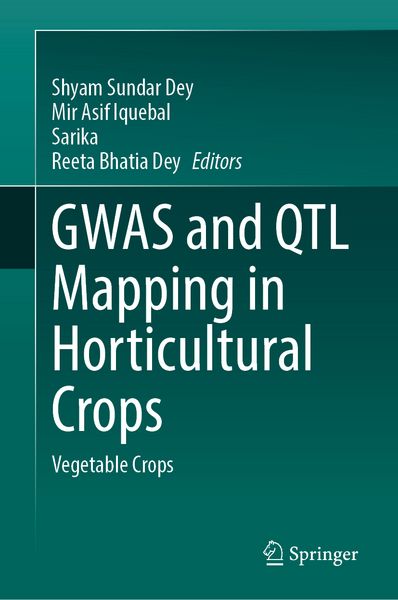
Produktbild: GWAS and QTL Mapping in Horticultural Crops
- 13%

GWAS and QTL Mapping in Horticultural Crops Vegetable Crops

13% sparen

238,99 € UVP 274,99 €

inkl. gesetzl. MwSt., Versandkostenfrei


Beschreibung

Produktdetails

Einband

Gebundene Ausgabe

Erscheinungsdatum

03.01.2026

Abbildungen

XV, 15 illus., 14 illus. in color., schwarz-weiss Illustrationen, farbige Illustrationen

Herausgeber

Shyam Sundar Dey + weitere

Verlag

Springer Singapore

Seitenzahl

535

Maße (L/B/H)

24,1/16/3,5 cm

Gewicht

984 g

Auflage

1. Auflage

Sprache

Englisch

ISBN

978-981-9523-05-4

Beschreibung

Portrait

Dr. Shyam Sundar Dey is Principal Scientist at the Division of Vegetable Science, ICAR-Indian Agricultural Research Institute, New Delhi. He has made notable contributions to the development of doubled haploid lines in crops like cucumber, cabbage & cauliflower, as well as cytoplasmic male sterile lines in cauliflower. He has played a key role in developing 18 hybrids and varieties of various vegetable crops and has registered eight germplasm lines with NBPGR, New Delhi. His research is focused on the development of molecular markers for economically important traits, allele mining, marker-assisted backcross breeding and the creation of genomic resources using indigenous cucumber germplasm and received several awards, including the Fellowship & Associateship of the National Academy of Agricultural Sciences, the INSA Early Career Visiting Scientist award and a postdoctoral fellowship from the University of Western Australia.

Dr. Mir Asif Iquebal is Principal Scientist at the Division of Agricultural Bioinformatics, ICAR-Indian Agricultural Statistics Research Institute, New Delhi. With over 17 years of research and teaching experience, he specializes in computational biology, genomics, transcriptomics and AI/ML applications in agricultural bioinformatics. He has led several multidisciplinary projects supported by organizations such as BMGF, DBT, ICAR and various state governments, contributing to a wide range of systems including crops, animals, fish and microbes. He has over 200 research publications and more than 40 copyrights to his credit. His work includes developing methodologies for the world’s first crop variety and animal breed signature servers, AI-based discovery tools for antimicrobial peptides and miRNAs and over 60 genomic databases and tools. He had advanced training in Bioinformatics at Iowa State University, Ames, Iowa and also honored as a Fellow by the National Academy of Biological Sciences, the National Environmental Science Academy and the West Bengal Academy of Science & Technology. He is an Associate of NAAS and Member of NASI.

Dr. Sarika is Professor and Principal Scientist at the Division of Agricultural Bioinformatics, ICAR-IASRI, New Delhi. With over 17 years of academic and research experience her work spans genome and transcriptome assembly, genome editing, copy number variations and the use of AI/ML in agricultural bioinformatics. She has led numerous high-impact research projects funded by BMGF, DBT, ICAR & NASF. She has developed more than 60 genomic databases, web servers and AI/ML-based tools for DNA marker discovery, GWAS & trait prediction and holds >40 copyrights. Her interdisciplinary contributions continue to advance agricultural genomics and precision breeding. She received advanced international training at Iowa State University, Ames, Iowa. Her scientific excellence has been recognized through awards such as the NABS Best Woman Scientist Award (2020), NAAS Associate (2019), NASI Membership (2020) and Fellowships from NABS & NESA (2023).

Dr. Reeta Bhatia Dey is Principal Scientist at the Division of Floriculture and Landscaping, ICAR-IARI, New Delhi. With over 17 years of research and teaching experience, she has made important contributions to the application of modern biotechnological tools for the improvement of horticultural crops. Her work includes the development of doubled haploids across several floricultural species. She was awarded the prestigious Endeavour Research Fellowship by the Government of Australia, which enabled her to pursue postdoctoral studies at the University of Western Australia. She has been honored with several accolades, including the D. P. Ghosh Young Scientist Award, IARI Best PhD Student Award, Lal Bahadur Shastri Memorial Gold Medal and the Dr. Y.S. Parmar University Gold Medal. She is a Fellow of the Indian Academy of Horticultural Sciences, published over 85 research papers, edited 5 books, written more than 50 review and popular science articles.

Produktdetails

Einband

Gebundene Ausgabe

Erscheinungsdatum

03.01.2026

Abbildungen

XV, 15 illus., 14 illus. in color., schwarz-weiss Illustrationen, farbige Illustrationen

Herausgeber

Verlag

Springer Singapore

Seitenzahl

535

Maße (L/B/H)

24,1/16/3,5 cm

Gewicht

984 g

Auflage

1. Auflage

Sprache

Englisch

ISBN

978-981-9523-05-4

Herstelleradresse

Springer-Verlag KG
Sachsenplatz 4-6
1201 Wien
AT

Email: GPSR Kontakt

Noch keine Bewertungen vorhanden

Verfassen Sie die erste Bewertung zu diesem Artikel

Helfen Sie anderen Kundinnen und Kunden durch Ihre Meinung.

Kundinnen und Kunden meinen

Bewertungen (0)

  • Produktbild: GWAS and QTL Mapping in Horticultural Crops
  • Chapter 1. Development of mapping population in vegetable crops for GWAS and QTL mapping.- Chapter 2. Tools and techniques used for QTL and association mapping studies.- Chapter 3. GWAS and QTL mapping in potato (Solanum tuberosum L.).- Chapter 4. Advances in GWAS and QTL mapping in tomato (Solanum lycopersicum L.).- Chapter 5. QTL Mapping and GWAS triumphs in tackling economic and environmental challenges for Capsicum annuum L.- Chapter 6. Advances in QTL mapping and GWAS: implications for cucumber breeding.- Chapter 7. GWAS and QTL mapping in muskmelon and watermelon.- Chapter 8. GWAS and QTL mapping in Cauliflower.- GWAS and QTL mapping in Cabbage (Brassica oleracea var. capitata L.).- Chapter 9. GWAS and QTL mapping in Cabbage (Brassica oleracea var. capitata L.).- Chapter 10.Advances in GWAS and QTL mapping in gourd vegetables.- Chapter 11. GWAS and QTL mapping in Carrot (Daucus carota L.).- Chapter 12. QTL mapping in onion and garlic.- Chapter 13. Advances in GWAS and QTL mapping in garden Pea.- Chapter 14. GWAS and QTL mapping in Radish, Carrot and Beet Root.- Chapter 15. GWAS and QTL based Improvement of Lettuce (Lactuca spp.).- Chapter 16. GWAS and QTL assisted improvement of squash (Cucurbita pepo L.) .- Chapter 17. A compendium of advances on GWAS and QTL atlas for accelerating trait discovery in eggplant.- Chapter 18. GWAS and QTL mapping in Broccoli.