Gutscheinbedingungen

**Gültig bis 04.08.2026 ab einem Mindestbestellwert von 30€ auf Spielzeug, Schreibwaren, Filme, Geschenke & Trends, Musik, tolino eReader & Zubehör, Hörbücher und Hörbuch-Downloads (außer Abo), nicht preisgebundene Bücher und Kalender online auf thalia.at und in der Thalia App. Einzelne Artikel können ausgeschlossen sein. Aufgrund der Buchpreisbindung sind deutschsprachige Bücher und eBooks ausgenommen. Zusätzlich ausgenommen sind preisgebundene Artikel, Abos & Flatrates, eBooks, Games, Geschenkkarten/-boxen, Shelfies, Software, Zeitschriften sowie einzelne Artikel von tonies®. Pro Einkauf einmal einlösbar. Click & Collect nur bei Onlinevorabzahlung möglich. Keine Barauszahlung. Nicht kombinierbar mit anderen Aktionen und Gutscheinen. Gutschein wird auf max. 500€ Bestellwert angerechnet. Nicht gültig für Versandkosten und Services. Preisgebundene Artikel sind vom Mindestbestellwert ausgeschlossen.

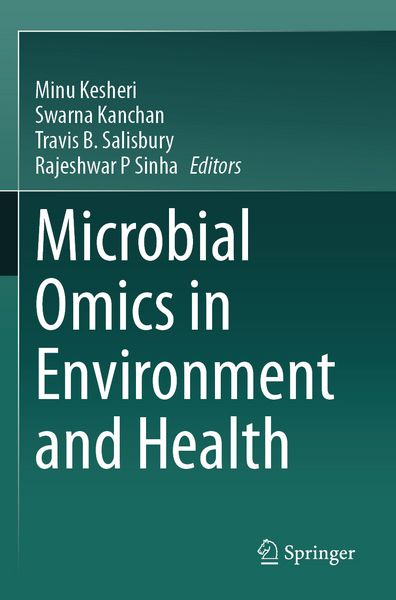
Produktbild: Microbial Omics in Environment and Health

Microbial Omics in Environment and Health

178,99 €

inkl. gesetzl. MwSt., Versandkostenfrei


Beschreibung

Produktdetails

Einband

Taschenbuch

Erscheinungsdatum

28.06.2025

Herausgeber

Minu Kesheri + weitere

Verlag

Springer Singapore

Seitenzahl

415

Maße (L/B/H)

23,5/15,5/2,2 cm

Auflage

1. Auflage

Sprache

Englisch

ISBN

978-981-9717-71-2

Beschreibung

Portrait

Dr. Minu Kesheri graduated with a Ph.D. degree from Banaras Hindu University, Varanasi, Uttar Pradesh, India. She was a Postdoctoral Fellow at Boise State University, Boise, Idaho, USA. She had scientific stays at the University of Bordeaux campus in France, Poland, Switzerland, Germany, Spain and Belgium where she delivered invited talks, presented posters, attended workshops and chaired sessions at conferences. She was former Assistant Professor and Head of Biological and Environmental Sciences Department in India at Shridhar University, Presidency University, and Amity University. She won fundings as Principal Investigator and was awarded as young scientist. She is currently working as Research Associate at Department of Biomedical Sciences, Joan C. Edwards School of Medicine, Marshall University, Huntington, West Virginia, USA. She has high impact peer-reviewed international publications in the form of research articles, book chapters, and books. She is the reviewer and editorial board member of international scientific journals and committees.

Dr. Swarna Kanchan graduated with a Ph.D. degree from Birla Institute of Technology and Science, Pilani, Rajasthan, India. He worked as a Postdoctoral Fellow at several Universities as INRIA Bordeaux in collaboration with University of Bordeaux, France; Nencki Institute of Experimental Biology, Warsaw, Poland and Boise State University, Boise, Idaho, USA. He worked as an Assistant Professor at the Department of Life Sciences, Presidency University, India. He is currently a Staff Scientist at the Bioinformatics core, Department of Biomedical Sciences, Joan C. Edwards School of Medicine, Marshall University, Huntington, West Virginia, USA. He has published several peer-reviewed research articles, book chapters and books with international publishers. He is the reviewer and editorial board member of international scientific journals and committees. He has delivered invited lectures, presented posters and attendedworkshops at national and international institutions in India, France, Germany, Switzerland, Poland and the United States of America.

Dr. Travis B. Salisbury received a Ph.D. degree from Kent State University, Kent, Ohio, USA. He was a Postdoctoral Fellow at Case Western School of Medicine and Washington State University. He is currently working as an Associate Professor and Director of Genomics Core at the Department of Biomedical Sciences, Joan C. Edwards School of Medicine, Marshall University, Huntington, West Virginia, USA. Apart from teaching medical and graduate students he supervises an active laboratory and has more than a decade of experience in studies on the regulation of gene expression in response to signaling. He won several research grants as a Principal investigator from Marshall University, Pharmaceutical Manufacturers Association of America, WV-INBRE next-generation sequencing challenge grant, Cell Differentiation and Development Center grant, Edwards CancerFoundation, Edwards Comprehensive Cancer Center (ECCC) grant. He has numerous peer-reviewed international publications and has to his credit various oral and poster presentations at scientific platforms.

Prof. Dr. Rajeshwar P. Sinha, DAAD Fellowship Awardee and Fellow, Society for Applied Biotechnology, India, is a Professor of Molecular Biology, Department of Botany, Banaras Hindu University (BHU), Varanasi, India. He is also an Adjunct Professor at University Center for Research & Development (UCRD), Chandigarh University, Chandigarh, India. He is working on Physiological, Biochemical, Molecular, Nanobiotechnological and Computational Biology aspects of cyanobacteria. His primary research focus is on UV-B radiation impacts on DNA damage and repair, Phycobiliproteins, Mycosporine-like amino acids, and Scytonemin etc. He has published over 490 research papers/reviews/book chapters/conference proceedings and edited/authored 12 books. He is a lifetime member of several national andinternational scientific societies and an editorial board member of various national and international journals. He has over 15600 citations with an h-index of 56 and i10-index of 146. He is among the top 02% most cited scientists in the world.

Produktdetails

Einband

Taschenbuch

Erscheinungsdatum

28.06.2025

Herausgeber

Verlag

Springer Singapore

Seitenzahl

415

Maße (L/B/H)

23,5/15,5/2,2 cm

Auflage

1. Auflage

Sprache

Englisch

ISBN

978-981-9717-71-2

Herstelleradresse

Springer-Verlag KG
Sachsenplatz 4-6
1201 Wien
AT

Email: GPSR Kontakt

Noch keine Bewertungen vorhanden

Verfassen Sie die erste Bewertung zu diesem Artikel

Helfen Sie anderen Kundinnen und Kunden durch Ihre Meinung.

Kundinnen und Kunden meinen

Bewertungen (0)

  • Produktbild: Microbial Omics in Environment and Health
  • Chapter 1. Impact of the microbiome on cancer progression.- Chapter 2. Integrative Approaches to Understanding Microbial Communities: Insights from Omics Studies.- Chapter 3. Application of Omics in wastewater-based epidemiology as well as antibiotics resistance.- Chapter 4. Multi-omics Analysis Reveals Potential of Intratumor Microbiome in Predicting Cancer Treatment Response.- Chapter 5. Applications of multi-omics technologies in environmental health research.- Chapter 6. The Potential of Microbial Omics in Drug Discovery.- Chapter 7. Microbial Omics in Environmental Waste Management.- Chapter 8. Impact of the microbiome on genetic diseases.- Chapter 9. Advantages of meta-omics strategies in studying the gut microbiome can bring benefits to human health.- Chapter 10. Computational omics protocol for the comparative study of Microbiome Analysis.- Chapter 11. Plant-microbe interactions: An overview.- Chapter 12. Bioremediation – A boon for a sustainable environment.- Chapter 13. Role of microbial omics in alleviating oxidative stress.- Chapter 14. Advances in biotechnological applications of secondary metabolites of microbial origin.- Chapter 15. Recent advances in the Omics application for exploring human brain disorders.- Chapter 16. Recent advances in the production and biotechnological applications of Polyunsaturated fatty acids (PUFAs).- Chapter 17. Microalgal omics approach in understanding human health.- Chapter 18. Microbial multi-species symbiosis: a panomics view.- Chapter 19.  Machine learning approaches for the diagnosis of Pre- and Post-COVID-19 phases.- Chapter 20. Current status and future strategy in crop improvement using epigenomics.- Chapter 21.  Recent development in prokaryotic ribosome binding site prediction.