Beschreibung
Produktdetails
Einband
Taschenbuch
Erscheinungsdatum
26.11.2026
Verlag
WileySeitenzahl
352
Auflage
3. Auflage
Sprache
Englisch
ISBN
978-1-394-34007-1
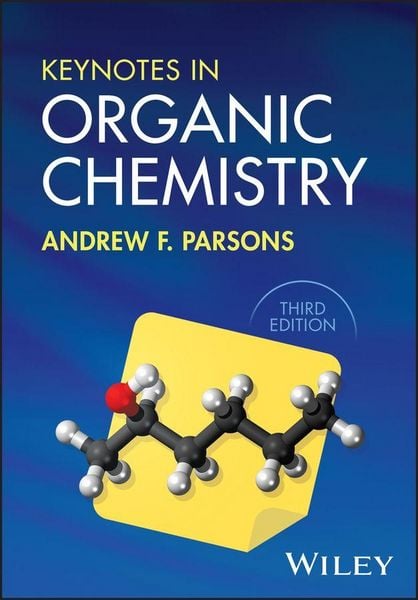
A concise visual guide to core organic chemistry concepts
Modular chemistry curricula demand focused texts that distil organic chemistry to its key principles without sacrificing rigour. Now in its Third Edition, Keynotes in Organic Chemistry delivers an authoritative, visually driven treatment of fundamental concepts and functional group chemistry. The material introduces core principles early and builds systematically, enabling rapid assimilation and reliable recall of critical information throughout undergraduate study.
New to this edition are full-colour figures, extra margin notes linking related topics, additional hints and worked examples, and end-of-chapter multiple choice problems with answers for self-assessment. Links to practical laboratory techniques ground theoretical understanding in the structural characterization of organic compounds. A companion website supplies further practice problems, worked solutions, and revision summaries supporting exam preparation across all major topics.
Readers will also find:
- A structure designed for rapid access to key facts, definitions, and reaction mechanisms across all core functional groups
- Graphical presentation throughout that aids visual learners in assimilating and retaining complex reaction pathways and stereochemical concepts
- New margin notes highlighting connections between topics to reinforce understanding of recurring themes
- Online revision summaries paired with additional worked solutions offering targeted support for exam study and self-directed review
- Coverage organized to complement detailed standard texts, providing a focused alternative for efficient concept review and revision
- New synoptic problems bridge chemical knowledge and its integrated application in real-world research.
Keynotes in Organic Chemistry serves undergraduates studying chemistry as a major or elective who need a focused revision guide and exam preparation resource. Advanced undergraduates, postgraduates, and researchers will find it a reliable desk reference for rapidly locating key concepts, definitions, and reaction details.
Kundinnen und Kunden meinen
Verfassen Sie die erste Bewertung zu diesem Artikel
Helfen Sie anderen Kund*innen durch Ihre Meinung
Kurze Frage zu unserer Seite
Vielen Dank für Ihr Feedback
Wir nutzen Ihr Feedback, um unsere Produktseiten zu verbessern. Bitte haben Sie Verständnis, dass wir Ihnen keine Rückmeldung geben können. Falls Sie Kontakt mit uns aufnehmen möchten, können Sie sich aber gerne an unseren Kund*innenservice wenden.
zum Kundenservice